A wedding invitation says “semi-formal,” and suddenly getting dressed feels harder than it should. Is a suit necessary? Is a maxi dress too much? Can you skip the tie? And where exactly does cocktail attire fit?
The confusion makes sense because semi formal wedding attire deliberately sits in the middle. It asks guests to look polished and celebration-ready without reaching the level of a formal gown, tuxedo, or black-tie ensemble.
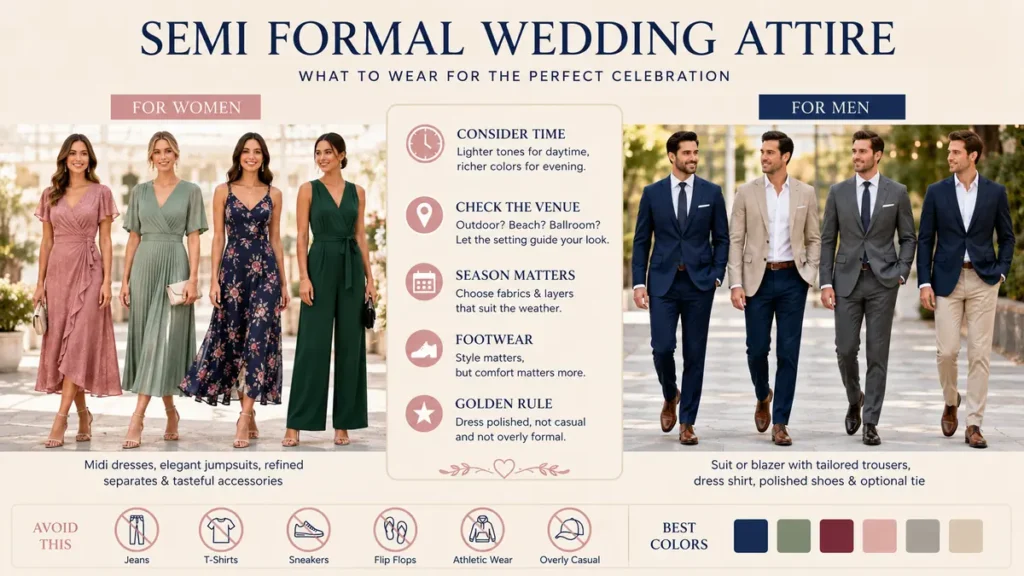
Semi formal wedding attire is dressier than casual or smart-casual clothing but more relaxed than formal, black-tie, and usually cocktail attire. Women can typically wear knee-length or midi dresses, dressy jumpsuits, or polished separates. Men are generally safe in a suit or blazer with tailored trousers, a dress shirt, polished shoes, and an optional tie.
The details depend on the wedding’s time, season, venue, and any instructions the couple provides. Here’s how to interpret the dress code without looking either underdressed or unnecessarily formal.
What Does Semi Formal Wedding Attire Mean?
Think of wedding dress codes as a spectrum rather than a set of completely separate categories.
Casual sits toward the relaxed end. Formal and black tie sit toward the other. Semi-formal occupies the useful middle ground where clothing should look intentional and refined but does not need the ceremony of eveningwear.
Current wedding guidance generally describes semi-formal as polished without being overly dressy. The Knot, for example, places it between casual and formal and notes that the category offers considerable flexibility in suits, dresses, jumpsuits, and separates.
A practical rule is:
Dress as though you’re attending an important celebration, not going to work, brunch, a nightclub, or a black-tie gala.
That distinction matters. Business-casual trousers and a shirt may feel tidy, but they can still look unfinished at a wedding. On the other hand, a tuxedo or elaborate floor-length evening gown can make you look noticeably overdressed.
Where does semi-formal sit among wedding dress codes?
| Dress code | Typical women’s attire | Typical men’s attire | Overall feel |
|---|---|---|---|
| Casual | Sundress, simple separates | Chinos, collared shirt | Relaxed |
| Dressy casual | Elevated dress, jumpsuit, matching set | Trousers, button-down, optional blazer | Smart but easygoing |
| Semi-formal | Knee-length or midi dress, jumpsuit, polished separates | Suit or blazer, tailored trousers, dress shirt | Refined and flexible |
| Cocktail | Cocktail or sophisticated midi dress | Darker suit, usually with tie | Sharper and more festive |
| Formal | Midi or long dress, elegant eveningwear | Dark suit and tie | Highly polished |
| Black tie | Floor-length gown or sophisticated formal eveningwear | Tuxedo | Most traditional evening formality |
There is some overlap between these categories. Couples also use dress-code terminology differently, so the invitation and wedding website should always outrank generic fashion rules.
Quick Takeaway: If you’re torn between two outfits, choose the one that looks slightly more polished. Being a little overdressed is usually easier to carry than arriving noticeably underdressed.
semi formal wedding attire for Women
For women, the easiest formula is an elegant dress or equally polished alternative that feels special without looking like evening-gala clothing.
Midi dresses are particularly useful because their length naturally lands in the semi-formal range. Knee-length and tea-length silhouettes can work just as well.
Good options include:
- Midi dresses
- Knee-length dresses
- Tea-length dresses
- Wrap dresses
- A-line dresses
- Refined slip dresses
- Dressy jumpsuits
- Pantsuits
- Coordinated skirt-and-top sets
- Tailored dressy separates
You don’t have to wear a dress simply because you’re attending a wedding. A well-tailored jumpsuit or sophisticated trouser outfit can satisfy the dress code just as effectively.
What fabrics work best?
Fabric often determines whether an outfit reads as casual or occasion-appropriate.
Chiffon, crepe, satin, silk blends, polished linen, lace, and other elevated fabrics work naturally. Cotton and linen can also be suitable, particularly for daytime, garden, destination, or warm-weather celebrations, provided the garment itself is structured and refined.
A simple dress in a beautiful fabric can look more appropriate than an elaborate silhouette made from something that resembles everyday beachwear.
Avoid relying too heavily on sequins, dense beading, dramatic trains, or extremely ornate embellishment. Those details tend to push an outfit toward cocktail, formal, or black-tie territory.
Can you wear a maxi dress?
Yes, in the right style.
The idea that semi-formal automatically prohibits every ankle-length or maxi dress is too rigid. What matters is the overall impression.
A flowing floral maxi dress at a summer garden ceremony may feel perfectly appropriate. A structured floor-length satin gown with dramatic embellishment, meanwhile, will probably read as formal eveningwear.
Look at the entire outfit rather than judging it by hemline alone.
Can you wear a jumpsuit?
Absolutely. An elegant jumpsuit is one of the simplest alternatives to a dress.
Look for clean tailoring, an elevated fabric, a defined silhouette, and sophisticated footwear. Add jewelry or a small clutch rather than treating the jumpsuit like everyday clothing.
The same principle applies to pantsuits and separates: polish matters more than the specific garment category.
semi formal wedding attire for Men
Men have fewer moving parts to consider, but semi-formal can still create uncertainty—especially around jackets and ties.
A well-fitting suit is the safest all-purpose answer.
Navy, charcoal, medium gray, lighter blue, beige, and seasonally appropriate earth tones can all work depending on the setting. A matching suit is not always mandatory; a blazer or sport coat paired with tailored trousers can also fit a more relaxed interpretation of the dress code.
Modern guidance varies slightly on the minimum level of formality. Some style authorities treat a full suit as the baseline, while others allow a blazer with dress trousers, especially at relaxed daytime events.
When the invitation gives no additional clues, a suit is the least risky option.
Does semi-formal require a tie?
Not always.
A tie adds polish and is a smart choice for a traditional ceremony, upscale venue, evening reception, or whenever you’re uncertain about the couple’s interpretation of semi-formal.
At a relaxed outdoor, daytime, beach, or destination wedding, going without a tie may be completely appropriate.
A useful strategy is to arrive wearing one. You can always remove it later if the atmosphere is more relaxed.
Can men wear a blazer instead of a suit?
Often, yes.
Try combinations such as:
- Navy blazer + gray trousers + white dress shirt
- Textured sport coat + tailored trousers + loafers
- Beige blazer + light shirt + darker trousers
- Dark blazer + crisp shirt + polished leather shoes
The pieces don’t necessarily need to match, but they should look deliberately coordinated.
Fit becomes especially important with separates. A sharply tailored blazer and trousers look sophisticated; an oversized office jacket with unrelated pants can look accidental.
What shirts work?
A crisp button-down or dress shirt is the safest foundation.
White and pale blue are timeless, but subtle colors and understated patterns can work when they complement the suit or blazer. Avoid loud graphics, casual polos unless the couple specifically signals a relaxed dress code, and untucked shirts at more traditional venues.
Is Semi-Formal the Same as Cocktail Attire?
Not quite.
The two dress codes overlap, which is why they are frequently confused. In most contemporary wedding guidance, cocktail attire is a little dressier and more evening-oriented, while semi-formal allows a softer, more relaxed interpretation. The Knot similarly characterizes semi-formal as a toned-down version of cocktail attire.
For women, that could mean choosing a simple midi dress instead of a highly embellished cocktail dress.
For men, it could mean a lighter suit or blazer-and-trouser combination rather than the sharper dark suit and tie typically associated with cocktail events.
Neither normally calls for a tuxedo.
Quick Takeaway: Think polished for semi-formal and polished-plus for cocktail. When the distinction is unclear, the venue and time of day usually settle the question.
How Time of Day Changes semi formal wedding attire
The same dress code can look surprisingly different at 1 p.m. and 7 p.m.
Daytime wedding
Daytime semi-formal clothing generally works well with lighter colors, softer textures, breathable fabrics, and less dramatic accessories.
Women might choose florals, pastels, muted colors, or a flowing midi dress.
Men might wear medium gray, blue, tan, beige, or other lighter tailoring.
The outfit should still feel special. “Daytime” does not turn semi-formal into casual.
Evening wedding
Evening celebrations naturally support richer colors and more structured clothing.
Navy, charcoal, burgundy, emerald, chocolate, deep blue, and other darker tones feel at home after sunset.
Women can introduce satin, crepe, sophisticated jewelry, or dressier heels. Men can lean toward darker suits, leather dress shoes, and a tie.
This doesn’t mean every evening wedding becomes formal. You’re simply moving toward the dressier end of the semi-formal range.
What to Wear by Season
Weather should change your fabric, color, layers, and footwear—not the fundamental level of formality.
Spring semi-formal wedding
Spring works naturally with lighter fabrics and fresh colors.
For women, floral midi dresses, wrap dresses, soft pastels, lightweight jumpsuits, and elegant separates are dependable choices.
For men, navy, medium blue, gray, or lighter neutral suits work well with crisp shirts and loafers or lace-up dress shoes.
Bring a refined layer if the reception continues into a cool evening.
Summer semi-formal wedding
Heat makes fabric choice particularly important.
Linen and breathable cotton blends can work beautifully for men’s tailoring, especially at outdoor or destination weddings. Women can look toward chiffon, lightweight crepe, linen blends, and flowing silhouettes.
Lighter colors make practical sense, but avoid anything so pale that it photographs as bridal white.
Keep comfort in mind without drifting into vacation clothing. Beach shorts, casual sundresses, flip-flops, and athletic footwear remain too relaxed unless the couple specifically asks for them.
Fall semi-formal wedding
Autumn is ideal for texture and richer color.
Burgundy, forest green, rust, navy, plum, brown, and jewel tones suit the season without requiring an especially formal silhouette.
Women can wear midi dresses in satin, crepe, or heavier fabrics. Men can introduce textured blazers, wool blends, darker suits, and seasonally appropriate ties.
Winter semi-formal wedding
Winter gives you room for heavier fabrics and sophisticated layers.
Velvet accents, wool tailoring, heavier crepe, long sleeves, deeper colors, and structured outerwear all make sense.
A winter wedding still doesn’t automatically call for black tie. Keep the silhouette restrained unless the invitation specifies a more formal dress code.
How the Wedding Venue Should Influence Your Outfit
The invitation gives you the dress code; the venue helps you interpret it.
Garden wedding
Garden ceremonies favor breathable fabrics, romantic prints, softer colors, and footwear that can handle grass.
Block heels, wedges, polished flats, and refined loafers are often more practical than narrow stilettos.
Beach wedding
Beach semi-formal attire should feel light rather than sloppy.
Women can choose flowing midi or maxi dresses, elegant jumpsuits, and dressy flat sandals. Men can consider linen-blend tailoring, lighter suits, or a smart blazer-and-trouser combination.
The word “beach” doesn’t automatically make shorts and flip-flops appropriate.
Barn or rustic wedding
Rustic surroundings often support a slightly more relaxed interpretation.
A floral dress, tailored jumpsuit, sport coat, textured blazer, or earth-toned suit can fit comfortably.
But rustic describes the venue—not permission to arrive in distressed denim.
Hotel or ballroom wedding
An upscale indoor setting generally pushes semi-formal toward its dressier end.
Choose refined fabrics, sharper tailoring, elegant footwear, and polished accessories. Men may feel more comfortable keeping the tie; women can choose a more sophisticated midi dress or tailored ensemble.
Restaurant or winery wedding
These venues sit comfortably in the middle.
Imagine what you would wear to an important dinner, then take the outfit one level higher. That usually lands close to the right balance.
Colors, Prints, and Wedding Guest Etiquette
Semi-formal gives you considerable freedom with color.
Pastels, jewel tones, darker neutrals, earth tones, tasteful prints, and seasonal shades can all work.
The bigger question is what not to wear.
Avoid bridal white
Unless the couple specifically requests it, avoid an outfit that is predominantly white, ivory, cream, or another bridal-looking shade.
A patterned outfit containing a small amount of white is different from arriving in a dress that could be mistaken for bridal attire. When in doubt, choose another color.
Be careful with wedding-party colors
Knowing the wedding palette does not automatically mean you must avoid it, but deliberately dressing like a bridesmaid or groomsman can create awkward photos.
If the wedding website clearly identifies the wedding party’s color and you have plenty of alternatives, choosing something else is an easy precaution.
Prints are completely acceptable
Florals, subtle geometric designs, and refined patterns can work particularly well for daytime and warm-weather weddings.
The print should complement the occasion rather than dominate it.
Shoes and Accessories That Complete the Look
Accessories can move a simple outfit into semi-formal territory without making it feel overdressed.
For women, suitable footwear includes:
- Block heels
- Pumps
- Dressy flats
- Refined sandals
- Wedges
- Sleek ankle boots for some fall or winter settings
For men, consider:
- Oxfords
- Derbies
- Loafers
- Monk straps
- Other polished leather or suede dress shoes
Clean, minimalist dress sneakers occasionally work at highly modern or relaxed weddings, but they are not the safest default.
Keep accessories intentional. A small clutch, understated jewelry, elegant watch, pocket square, or tasteful tie can finish an outfit without overwhelming it.
Comfort matters too. Weddings involve standing, walking, sitting, photographs, dinner, and often several hours of dancing. Shoes that look perfect for five minutes but become unbearable after the ceremony aren’t a particularly good choice.
Can You Wear Jeans to a Semi-Formal Wedding?
Generally, no.
Even dark, expensive denim sits on the casual side of the dress-code spectrum. Current semi-formal wedding guides consistently recommend tailored trousers or dress pants instead.
Men can substitute chinos or tailored trousers when a full suit feels too formal for the venue. Women have even more alternatives through dresses, skirts, jumpsuits, pantsuits, and coordinated separates.
Unless the invitation specifically encourages denim, leave the jeans at home.
The same principle usually applies to:
- Graphic T-shirts
- Sweatshirts
- Athletic wear
- Cargo pants
- Running shoes
- Beach flip-flops
- Distressed clothing
Semi-formal is flexible, but it is still a wedding dress code.
Common Semi-Formal Wedding Outfit Mistakes
Most mistakes happen because guests focus on a single garment instead of the entire outfit.
Dressing like you’re going to the office
A work shirt and trousers may technically be tidy, but the outfit can still feel ordinary.
Improve it with a blazer, better shoes, thoughtful accessories, sharper tailoring, or a more occasion-appropriate fabric.
Going all the way to black tie
A tuxedo, dramatic evening gown, or heavily embellished floor-length dress usually exceeds what semi-formal asks for.
Save those choices for formal or black-tie invitations.
Assuming “semi” means mostly casual
This is probably the biggest trap.
Semi-formal doesn’t mean half-dressed-up. The expectation is still polished wedding guest attire.
Ignoring the venue
A lightweight linen suit that looks perfect beside the ocean may feel oddly casual in an ornate city ballroom. A velvet outfit that works beautifully in December could be miserable at an outdoor July ceremony.
Context matters.
Wearing uncomfortable shoes
Outdoor terrain, weather, and the length of the event should influence your choice.
For a garden wedding, for example, block heels or wedges may work far better than stilettos. A destination wedding may call for breathable footwear without dropping to casual flip-flops.
Trying to become the center of attention
Weddings allow personal style, but the couple remains the focus.
Extremely revealing clothing, bridal-looking outfits, costumes, excessive sparkle, or deliberately attention-grabbing styling can miss the spirit of the occasion even if the individual garment technically fits the dress code.
A Simple Formula When You’re Still Unsure
If the invitation provides no further explanation, use this process:
- Start with the stated dress code. Semi-formal means polished, not casual and not black tie.
- Check the time. Go lighter and softer during the day; slightly darker and sharper in the evening.
- Consider the venue. Beach and garden settings allow more relaxed fabrics; hotels and ballrooms favor refined tailoring.
- Account for the season. Adjust fabrics, layers, colors, and footwear for the weather.
- Choose one reliable foundation. A midi dress or jumpsuit for women and a well-fitted suit for men are hard to get wrong.
- Finish with appropriate shoes and accessories. They should make the outfit look intentional rather than transform it into formalwear.
- Check the wedding website. Couples sometimes explain exactly what they mean by their chosen dress code.
If you’re still caught between two choices, move slightly toward the more polished one.
What If the Couple’s Definition Is Different?
This is one of the most overlooked parts of wedding dress-code advice: the hosts ultimately define their own event.
Fashion guides can explain conventional semi-formal attire, but they cannot know whether a particular couple imagines linen suits at a vineyard or dark suits and ties at an evening hotel reception.
Look for clues on:
- The invitation
- Wedding website
- Ceremony time
- Reception venue
- Wedding theme
- Destination
- Any wording about footwear or outdoor conditions
If the couple writes “semi-formal—jackets encouraged” or “semi-formal garden party,” that extra wording is more useful than a generic rule found online.
The Bottom Line on semi formal wedding attire
The easiest way to understand semi formal wedding attire is to stop treating it as a mysterious fashion category. The goal is simply to look polished, intentional, and appropriate for a celebration without dressing for a black-tie gala.
For women, midi and knee-length dresses, elegant jumpsuits, pantsuits, and refined separates provide plenty of flexibility. For men, a well-fitting suit is the safest choice, while a blazer and tailored trousers may work for more relaxed settings. Ties can depend on the time, venue, and level of formality.
Then adjust the formula rather than reinventing it: lighter fabrics for summer, richer textures for winter, softer styling during the day, and sharper details at night.
Most importantly, read the invitation as a whole. The dress code tells you the level of formality; the season, venue, and time tell you how to make that level of formality work.