A black-tie invitation can create an immediate wardrobe dilemma. How formal should your dress be, must it be black, and can you wear something shorter than a gown?
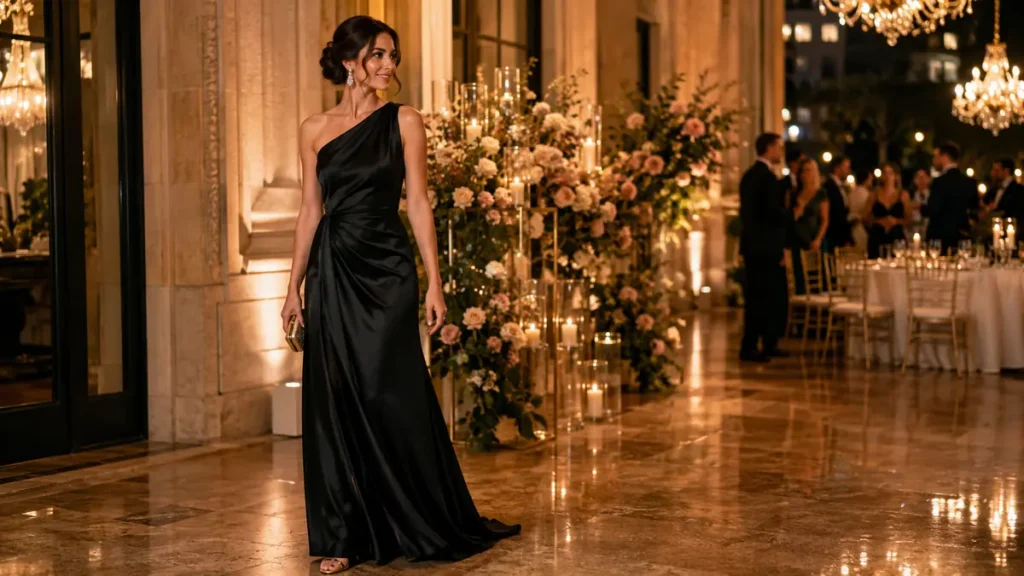
A black tie wedding guest dress is traditionally a floor-length evening gown made from an elegant fabric such as silk, satin, chiffon, crepe, velvet, taffeta, or lace. Choose a polished silhouette, formal shoes, refined jewelry, and a small evening bag while avoiding bridal colors, casual materials, and attention-grabbing details.
The central idea is simple: dress for an elegant celebration without competing with the couple. Current etiquette guidance still treats a floor-length gown as the safest choice, although certain formal midi dresses, tailored jumpsuits, and women’s tuxedos can work in the right setting.
What Does Black Tie Mean at a Wedding?
Black tie is a formal evening dress code. It usually indicates an upscale celebration where traditional evening wear is expected: a tuxedo for men and an evening gown or similarly polished outfit for women.
The phrase describes the degree of formality—not the required color of your clothing. You do not have to wear black.
A black-tie wedding may take place in a ballroom, luxury hotel, historic estate, museum, formal country club, or similarly sophisticated venue. Evening ceremonies and receptions are especially likely to follow the traditional interpretation.
Black Tie vs. Other Wedding Dress Codes
The wording on the invitation matters because seemingly similar dress codes allow different levels of flexibility.
| Dress code | Typical attire for women | Overall formality |
|---|---|---|
| White tie | Full-length evening gown, often with formal gloves and fine jewelry | Most formal |
| Black tie | Floor-length gown or equally formal alternative | Highly formal |
| Black tie optional | Gown, luxurious midi dress, formal jumpsuit, or dressy pantsuit | Formal with flexibility |
| Formal | Long dress, sophisticated midi dress, jumpsuit, or dressy separates | Formal |
| Cocktail | Knee-length, tea-length, or midi cocktail dress | Semi-formal |
| Semi-formal | Midi or knee-length dress, polished jumpsuit, or dressy separates | Moderately formal |
Black tie optional does not mean casual. It simply gives guests more latitude. A floor-length gown remains appropriate, but a refined cocktail dress or beautifully tailored pantsuit may also fit.
If an invitation states only “black tie,” assume the traditional standard unless the couple provides further instructions.
Choosing the Right Black Tie Wedding Guest Dress
The best dress combines four elements: appropriate length, an evening silhouette, a luxurious-looking fabric, and a polished fit.
Price is not the deciding factor. An affordable crepe gown that fits impeccably can appear more formal than an expensive dress with poor proportions or distracting details.
Floor-Length Gowns Are the Safest Choice
A floor-length evening gown remains the clearest interpretation of women’s black-tie attire. The hem should ordinarily skim the floor without dragging so much that walking or dancing becomes difficult.
Suitable silhouettes include:
- A-line gowns
- Column or sheath dresses
- Empire-waist gowns
- Bias-cut slip gowns
- Mermaid silhouettes
- Formal wrap dresses
- Draped one-shoulder gowns
- Structured ball gowns
A full ball gown is acceptable, but it is rarely necessary. Look for restrained grandeur rather than a design that resembles bridalwear or red-carpet costume.
Can You Wear a Midi Dress?
A midi dress can sometimes work, but it must look unmistakably formal. The strongest options feature architectural tailoring, elegant draping, hand-finished embellishment, or a rich fabric such as silk, velvet, brocade, or jacquard.
Consider the wedding’s context. A dramatic tea-length dress may suit an afternoon ceremony at an art museum, while a simple calf-length dress could feel underdressed at an evening ballroom reception.
When you are uncertain, choose the gown. Leading wedding-etiquette guides continue to identify floor-length dresses as the conventional black-tie choice, with formal cocktail dresses providing limited flexibility in some circumstances (Brides, The Knot).
Are Jumpsuits and Pantsuits Appropriate?
A formal jumpsuit, women’s tuxedo, or evening pantsuit can be appropriate when its construction matches the occasion.
Look for:
- Fluid, floor-skimming trousers
- Defined shoulders or elegant draping
- Satin lapels or other evening details
- A clean, tailored waist
- Crepe, silk, velvet, or jacquard
- Minimal visible hardware
- Formal heels, flats, or loafers
Avoid anything that resembles office clothing. A standard business suit with a work blouse generally lacks the ceremony and richness associated with black tie.
Choose a Silhouette You Can Actually Wear
A dress can satisfy every etiquette rule and still be a poor choice if you cannot move comfortably in it. Test the complete outfit before the wedding.
Sit, walk, climb several steps, and raise your arms. Check whether the neckline shifts, the straps slide, the lining rides up, or the hem catches beneath your shoes.
Practical fit often determines whether an outfit looks elegant. Constantly pulling at a bodice or lifting a long train makes even a beautiful gown appear less polished.
Quick takeaway: Floor-length is the safest standard, but fabric, construction, fit, and styling matter as much as the hemline.
Best Colors for a Black Tie Wedding Guest Dress
Black, navy, emerald, burgundy, aubergine, sapphire, forest green, chocolate brown, and other jewel tones naturally suit evening formality. Metallic shades and tasteful prints may also work.
The season can guide your palette, but it should not dictate it. Navy is suitable year-round, while an airy pastel can look elegant in spring if the gown’s fabric and silhouette remain sufficiently formal.
Do You Have to Wear Black?
No. “Black tie” refers to formal eveningwear rather than a black-only color requirement. Black is popular because it is timeless, versatile, and easy to accessorize, but rich color is equally acceptable.
Appropriate alternatives include:
- Midnight blue
- Deep green
- Wine or burgundy
- Plum
- Rust or copper
- Slate blue
- Dusty rose
- Formal pastels
- Silver, bronze, or muted gold
A black gown can be an excellent choice, provided it does not appear funereal or excessively revealing. Jewelry, texture, and an elegant clutch can give it a celebratory finish.
Colors to Approach Carefully
White is normally reserved for the person getting married. Avoid ivory, cream, eggshell, pale champagne, and extremely light blush when the color might photograph as white.
The same caution applies to predominantly white prints. A dark floral pattern containing a small amount of white is usually different from a white dress decorated with a few flowers.
You should also consider:
- Cultural or religious color traditions
- A dress code specified on the invitation
- Wedding-party colors if the couple has shared them
- The venue and time of day
- Whether the outfit resembles bridal attire
Red is not universally prohibited. A sophisticated red gown can be perfectly acceptable at many Western weddings. However, red has important bridal associations in several cultures, so the event’s traditions should guide the decision.
Can You Wear Sequins or Metallics?
Yes, in moderation. Sequins, beading, metallic thread, and crystal embellishment can suit a formal evening event. The issue is not sparkle itself but visual dominance.
If the dress is heavily embellished, keep the accessories restrained. Avoid combining a fully sequined gown with oversized jewelry, glittering shoes, and a highly decorated bag.
The objective is festive elegance—not becoming the brightest object in every photograph.
Fabrics That Look Formal Enough
Fabric is one of the fastest ways to distinguish an evening gown from an ordinary maxi dress.
Strong options include:
- Silk
- Satin
- Chiffon
- Crepe
- Velvet
- Taffeta
- Lace
- Tulle
- Brocade
- Jacquard
- Organza
- High-quality jersey with refined draping
These materials tend to create movement, structure, sheen, or visual depth. They also photograph well under evening lighting.
Cotton jersey, casual linen, sweatshirt fabric, denim, poplin, and beach-cover-up materials usually appear too relaxed. A long hem alone does not make a dress formal; a floor-length cotton sundress is still a sundress.
Match the Fabric to the Season
For a summer black-tie wedding, choose lightweight silk, chiffon, georgette, crepe, organza, or a breathable lined fabric. Formality should come from the cut and finish rather than heavy material.
For fall, consider satin, structured crepe, jacquard, darker florals, and rich jewel tones.
For winter, velvet, brocade, long sleeves, heavier crepe, and layered textures provide warmth without sacrificing refinement.
Spring suits silk, chiffon, lace, soft florals, and formal pastels. Avoid interpreting “spring” as permission to wear a casual garden dress when the invitation still specifies black tie.
Styling a Black Tie Wedding Guest Dress
Accessories should complete the outfit instead of competing with it. Choose a few intentional pieces and allow the gown’s neckline, fabric, and silhouette to guide the decisions.
Shoes
Classic options include:
- Strappy evening sandals
- Pointed pumps
- Slingback heels
- Embellished low heels
- Refined dress flats
- Formal loafers with a tuxedo-inspired outfit
Heels are traditional but not mandatory. An elegant flat is better than a high heel that causes discomfort or instability.
Consider the venue before selecting a narrow stiletto. Block heels, heel protectors, or formal flats are more practical for grass, gravel, cobblestones, and outdoor terraces.
Hem the dress while wearing the intended shoes. Changing heel height at the last minute can leave the gown dragging or noticeably too short.
Jewelry
Match the jewelry to the neckline and decoration of the dress.
A high neckline may need only earrings and a bracelet. A strapless gown can accommodate a necklace, although statement earrings alone may produce a cleaner result. With a beaded or sequined dress, minimal jewelry usually looks more sophisticated.
Diamonds, pearls, colored stones, gold, and silver can all work. Fine jewelry is not required; well-made costume jewelry is entirely appropriate.
Evening Bag
Carry a clutch, minaudière, wristlet, or small structured evening bag. It should hold essentials without resembling an everyday tote.
Useful items include:
- Phone
- Identification
- Lip color
- Tissues
- Blotting paper
- Fashion tape
- A few safety pins
- Pain-free backup flats, if the bag allows
A large shoulder bag, canvas tote, or casual crossbody can undermine an otherwise formal look.
Outerwear
A practical coat can be worn while traveling, but formal outerwear looks better during arrivals and photographs.
Consider a velvet jacket, tailored evening coat, silk wrap, pashmina, faux-fur stole, or structured cape. Avoid wearing white or ivory outerwear that could create a bridal appearance.
Hair and Makeup
Black tie generally calls for a deliberate, finished appearance, but that does not require elaborate styling. A smooth blowout, polished curls, sleek ponytail, chignon, braids, or natural textured style can all look appropriate.
Makeup may be minimal or dramatic. The key is longevity: use products that withstand photographs, dinner, heat, and dancing. Carry only what you genuinely expect to touch up.
Black Tie Wedding Guest Dress Ideas by Season
Seasonal dressing works best when climate and formality are considered together.
Spring
Try a floor-length chiffon gown in dusty blue, lavender, sage, rose, or a refined floral print. Lace panels, pleating, and soft draping can add interest without making the outfit feel heavy.
Bring a tailored wrap or light evening coat for a cool ceremony.
Summer
Choose an airy silk, crepe, chiffon, or formal satin gown. Sleeveless, one-shoulder, halter, and tasteful open-back designs can work, provided the overall appearance remains elegant.
For an outdoor wedding, check whether the venue includes grass, sand, or uneven walkways. Select shoes and a hemline that can handle the surface.
A black-tie beach wedding does not automatically mean casual clothing. Use lighter fabric and practical footwear while retaining an evening silhouette.
Fall
Burgundy, forest green, bronze, navy, plum, and chocolate brown work particularly well. Satin, jacquard, velvet accents, and dark floral patterns add seasonal richness.
An asymmetric neckline or long-sleeved jersey gown can provide drama without excessive embellishment.
Winter
Velvet is a natural choice, along with brocade, heavier satin, long-sleeved crepe, and gowns featuring tasteful beading. Deep jewel tones, black, silver, and midnight blue complement winter evening light.
Plan the outer layer as part of the outfit instead of treating warmth as an afterthought.
Quick takeaway: Adjust weight, color, sleeves, and accessories for the season, but preserve the formal silhouette and finish.
How Venue and Culture Affect Your Choice
The dress code provides the baseline, while the venue reveals how to apply it.
A black-tie wedding in a grand hotel or historic ballroom usually favors classic evening gowns, darker colors, formal heels, and traditional accessories.
A museum or modern gallery can accommodate sculptural silhouettes, minimalist column gowns, dramatic sleeves, and contemporary tailoring.
At an outdoor estate, vineyard, or garden, floor-length attire remains appropriate, but footwear and fabric require more thought. Avoid delicate hems that collect moisture and shoes that sink into the ground.
For a religious ceremony, check expectations around shoulders, décolletage, hem length, and head coverings. Bring an elegant shawl or jacket if additional coverage may be required.
Multicultural weddings may also involve specific meanings attached to color, embroidery, or ceremonial clothing. When the couple provides a wedding website or attire note, follow it closely. If cultural guidance conflicts with generic Western etiquette, the hosts’ instructions take priority.
What Not to Wear to a Black Tie Wedding
Most dress-code mistakes come from choosing something too casual, too bridal, or too attention-seeking.
Avoid:
- White, ivory, or bridal-looking gowns
- Casual cotton or linen maxi dresses
- Mini dresses
- Daytime sundresses
- Denim or sportswear
- Flip-flops and casual sandals
- Large everyday handbags
- Clubwear-style cutouts or sheer panels
- Uncontrolled trains
- Oversized bridal embellishment
- Clothing that disregards stated cultural requirements
A plunging neckline, thigh-high slit, open back, or sheer element is not automatically inappropriate. Context and balance matter. One dramatic feature can look elegant; several combined may shift the outfit away from wedding-guest formality.
Do Not Confuse Expensive With Appropriate
Designer branding does not guarantee that a garment satisfies black tie. Focus on visible qualities: fabric, cut, length, construction, fit, and styling.
Similarly, you do not need to purchase a gown that will be worn only once. Renting, borrowing, buying secondhand, or restyling an existing dress can all produce an excellent result.
Avoid Upstaging the Couple
Black tie allows glamour, but a wedding is not an awards ceremony. Avoid an outfit that resembles a bridal gown, requires an assistant to manage, obstructs other guests, or appears designed primarily to attract attention.
This does not mean hiding your personal style. It means expressing it within the social purpose of the event.
A Practical Final Check Before the Wedding
Use this process several days before the event:
- Read the invitation again. Confirm whether it says black tie, black tie optional, formal, or another variation.
- Check the wedding website. Look for color instructions, cultural guidance, terrain details, and transportation information.
- Assess the full silhouette. Your outfit should read as eveningwear from head to toe.
- Photograph it in natural and artificial light. Pale colors and sheer fabrics can look different on camera.
- Test the fit while moving. Sit, walk, dance, and use stairs.
- Confirm undergarments. Make sure straps, seams, and shapewear remain concealed.
- Check the hem with your shoes. Prevent tripping and fabric damage.
- Prepare for the weather. Add appropriate outerwear or sun and rain protection.
- Edit the accessories. Remove one element if the outfit feels visually crowded.
- Pack a small repair kit. Fashion tape, safety pins, and stain-removal wipes can solve common problems.
Black Tie Wedding Guest Dress: The Final Verdict
The most reliable black tie wedding guest dress is a well-fitted floor-length gown in an elegant fabric, styled with formal shoes, restrained jewelry, and a small evening bag. Black is optional; navy, jewel tones, metallics, sophisticated pastels, and tasteful prints can be equally appropriate.
Use the invitation as your primary guide, then account for the season, venue, culture, and practical demands of the event. Before leaving, ask one final question: does the complete outfit feel polished, celebratory, comfortable, and respectful of the couple? If the answer is yes, you have met the dress code.