
Introduction
Most couples approach a civil ceremony backward — fixating on venue and guests before truly grasping what legally makes a marriage valid and recognized. The real foundation: a registrar, a marriage license, and two willing witnesses.
Long before destination wedding trends emerged, a judge or city clerk could bind two people in wedlock within minutes. That affordable, legally valid simplicity still resonates with those who value meaning over formality and style.
What surprises most is how profound it feels — vows, a ring exchange, a declaration of intent, then a pronouncement that shifts everything. No hymns, no prayers; just sincere commitment and an officiant making it real.
What Is a Civil Ceremony?
A civil ceremony is a legal, non-religious union — a low-key, meaningful commitment where couples stand before a government officiant, voluntarily exchange vows, bypass religious tradition, and emerge fully valid, recognized under federal and state authority.
Unlike religious ceremonies, civil marriage is always handled by a legal authority — a registrar, official, or city clerk — across the United States and United Kingdom, saving couples valuable money, time, and energy in the process.
What truly sets a civil ceremony apart is its nonreligious, personalized nature — groom and bride exchange vows and pledge mutual respect with affection, fulfilling all legalities while preserving a romantic, joyous vision of lasting partnership.
What Happens During a Civil Wedding Ceremony?
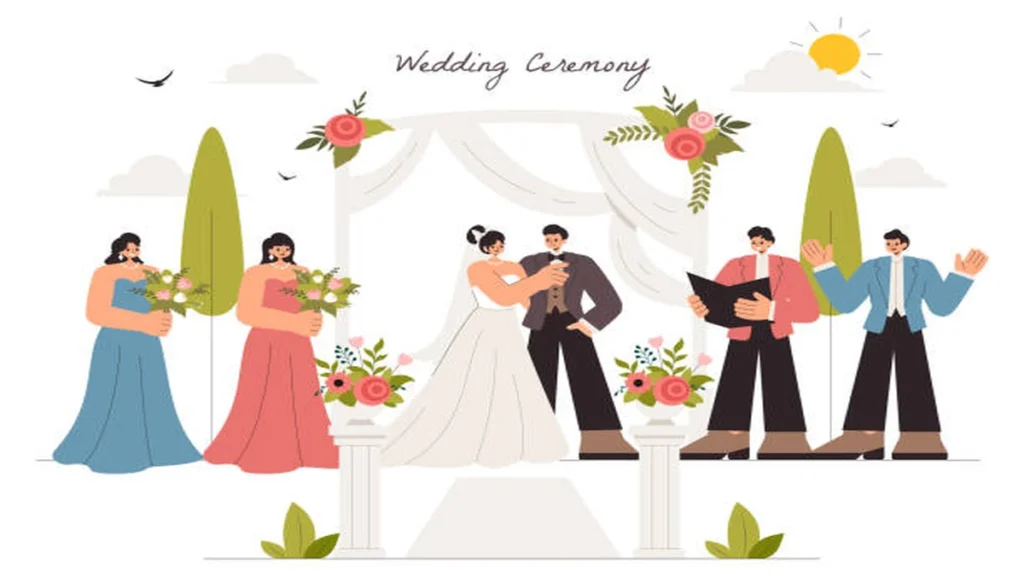
What few anticipate is how intentional the sequence truly is — the legal official welcomes friends and family, honors the couple’s unique story and values, then transitions into the sacred territory of consent and official promises.
The I do carries more weight than people expect. Groom and bride both take turns with repeat after me lines that pledge fidelity, affection, and sincerity — promises built on sacred trust from this day forward.
Rings are exchanged as a tangible symbol of lifetime connection — a constant reminder of promises made. An optional ritual like a unity candle may follow before the blessing, the newlyweds’ first kiss, and the recessional.
About the Couple
Their journey toward a civil union began long before the wedding day — two people who chose love not out of tradition but out of conscious decision, building a unique relationship through mutual respect and affection.
What defines them as partners isn’t pomp or circumstance; it’s how they laugh, grow, and support one another through both trouble and happiness, weaving shared dreams from individual lives into something joyous, meaningful, and sincere.
Together, they pledge their responsibilities to one another — not merely as formality, but as true best friends choosing life with faith, care, and the quiet certainty that this bond captures their most heartfelt, integral commitment.
The I Do’s
The I Do’s moment arrives when husband and wife finally rejoice in their commitment. Whether modern or traditional, these two words carry the weight of whole life promises, spoken before a legal officiant and community.
Couples may repeat-after the officiant or share personally written words that build upon their journey. Some guide their responses through cards, while others speak from memory, each answer sealing years of devotion into one defining declaration.
To give oneself fully means choosing to share my life with another — not as obligation, but as joy. Civil ceremonies make this exchange intimate, transforming a simple question into the most meaningful, profoundly human answer.
The Vows
The vows sit at the heart of any ceremony. Couples choose to honor, cherish, and comfort each other here—words soaked in sincere desire, moving beyond generic script into something short, sweet, and deeply felt.
Unlike one-size-fits-all vows, personal vows allow both husband and wife to speak their own truth—addressing real faults alongside genuine strengths, declaring freedom to live fully together from this day forward with sacrifice in mind.
The moment vows are wedded to action, the shifts begin—building together a love for life through better and worse, richer and poorer, forsaking all others. This decision echoes across all days, legally and lovingly.
Optional Unity Ceremony
The unity ceremony is entirely optional in civil weddings, yet many couples consciously choose to embrace it as a spiritual moment in time — a sacred ritual symbolizing joining two lives through joy and deep connection.
Interconnection deepens meaningfully when participants voluntarily acknowledge their web of ongoing support. A community woven from loved ones and dear assembled witnesses truly transforms the unity ceremony into an anchor for memories that flourish lifelong.
From nature — trees, rocks, sky — to prayer or scripture, the diverse opportunity this meaningful ritual offers is remarkable. Couples using hand in hand moments, rings, or symbolic tool discover lasting health, wealth, and pledged devotion.
Blessing & Pronouncement
The blessing rarely invokes God or follows biblical tradition, yet it carries a deep spiritual weight. This solemn moment marks a threshold — the beginning of shared life, openly celebrated by all important people gathered near.
The pronouncing shifts the tone from ceremony into milestone. Man, woman, or partners stand near, hands joined, as the officiant affirms their continued love and deep belief — important people, officially-declared and, finally, legally united forever.
Those physically present — family, parents, far and near — witness this caring declaration. The kiss follows simply, intensifying the celebration, as the couple honors those who have passed love through thick and thin with respected role.
Presentation / Recessional
Few realize the recessional doubles as a presentation — the wedding party’s first unified exit down the aisle. Bridesmaids paired with groomsmen, followed by the ring bearer and flower girl, then the couple walks out together.
Line-up configurations rarely follow a single fixed outline. Experienced venue coordinators and wedding planners confirm that personal preferences always dictate exit order — the maid of honor, best man, bride, and groom all stand ready beforehand.
A proper rehearsal changes everything for couples. The typical pair walks alone, clutching a bouquet, unsure of exit timing. A skilled planner transforms this crucial moment — making both presentation and recessional feel deeply emotionally resonant.
Civil Wedding Ceremony Legal Requirements
General Requirements
In California, both parties must be 18 years old, present a valid government-issued photo ID, and complete the marriage license application. These legal requirements firmly set the foundation for any legally married couple’s registered union.
There is no residency requirement to wed in California, meaning couples from anywhere can obtain a public or confidential marriage license. Filing at county clerk offices requires payment and booking an appointment within the locality.
Once issued, a license must be solemnized within 90 calendar days or it expires. Registration at the County Recorder’s Office then follows, with the marriage certificate as proof of marriage available after 10 business days.
Marriage License
Both parties must appear together with a valid, current, government-issued photo ID and completed application. Schedule your appointment and booking to confirm the wedding date, ensuring all documents are officially issued within the minimum timeframe.
Applicants must be 18 years old, unmarried, and if previously married, they must provide the final dissolution, nullity, or final judgment document. California enforces no residency requirement, welcoming all couples from every state without restriction.
Couples with a spouse in the armed forces stationed overseas during war or conflict may use a military proxy. An authorized power of attorney allows the marriage ceremony to be solemnized legally within 90 days.
Public Marriage License (Non-Confidential)
A non-confidential marriage license is the most common option for couples. It requires at least one witness, and no more than two may sign the official record, making it easy to coordinate with family members.
Only authorized individuals may sign a non-confidential marriage license, ensuring the document holds full legal validity. Certified copies of the record become available once the county processes the filing and completes all official registration requirements.
The one witness rule makes a non-confidential license practically accessible for most couples today. Authorized family members are welcome to sign the record alongside the couple, completing the entire legal recognition process without any complication.
Confidential Marriage License
A confidential marriage license is specifically designed for spouses already living together as a domestic partner. Unlike the public option, it requires no witnesses during the ceremony, making it a uniquely private and valid arrangement.
Registrants must sign the confidential license under penalty of perjury, confirming the full accuracy of submitted details. A certified copy can only be obtained through a court order, protecting the privacy of the marriage record.
An authorized notary public verifies identities throughout the confidential license process. This notary ensures all filings meet legal standards, and no witnesses are required at any point, making it the most private route for registrants.
Persons Authorized to Solemnize the Marriage Ceremony
A priest, minister, rabbi, or recognized religious leader from any religious denomination may officially officiate ceremonies. Any nonreligious officiant who officiates must be properly authorized to declare the marriage, with at least one witness present.
In civil marriages, a retired judge, commissioner, magistrate, or justice of the peace from a court of record may officiate. The United States Supreme Court, court of appeals, and district court also hold solemnization authority.
A constitutional officer in elected office across any city, county, or charter city may officiate. Congress and the Legislature require all officiants to be legally recognized, free from moral turpitude, dishonesty, fraud, or undue compensation.
Commissioner of Civil Marriages
The Commissioner of Civil Marriages operates under the county clerk’s direct authority to perform legally binding civil marriages. Working alongside designated staff, this role ensures all county-administered ceremonies run professionally and according to established protocols.
A county can appoint deputy commissioners to expand service availability on weekends and holidays. Each deputy commissioner works under the direct direction of the commissioner, ensuring consistent and professional oversight for all scheduled civil marriages.
A standard fee applies for all marriages conducted by the commissioner or designated deputy commissioners. This fee supports the county’s operational capacity, enabling trained staff to perform marriages efficiently across all scheduled locations and timeframes.
Fees and Cost
Civil ceremony fees include a marriage license, priced at $129 for non-confidential or $144 confidential. Total spending varies by county but remains more budget-friendly than traditional wedding celebrations, leaving couples with refreshingly clear financial expectations.
Most services are pre-paid and strictly non-refundable. Witness assistance carries an additional fee ranging anywhere from $25 to $58, while live streaming adds $50. Commissioning a Deputy for a Day costs $125 per official ceremony.
Obtaining a certified copy of your marriage record requires a separate request and a $19 purchase fee. Planning your budget carefully — including venue reservation fees — ensures no surprise costs ever derail your civil ceremony preparations.
Appointments
Securing an appointment is rarely self-service. Both parties must appear together, making early booking essential. Plan at least 7 weeks in advance to lock your preferred wedding date without scrambling past the minimum notice threshold.
Saturday slots tend to fill up quickly, making the 7-week window critical. 14th Street Chapel is strictly by appointment only, so using the online schedule system accordingly — and early — is both required and strongly suggested.
Arrive with a valid, current government-issued photo ID and completed application. Couples must be 18 years old and unmarried in California. Those needing ASL or interpretation services must give at least two weeks’ advance notice.
Witness Requirements
In most civil ceremonies, one witness is all that’s required. The betrothed must notify the officiant beforehand. Authorized individuals, including family members, are welcome to sign the record as long as they meet legal age.
Unlike religious ceremonies, civil registrants don’t necessarily need to bring a crowd. A court order may occasionally dictate witness changes. Most jurisdictions allow just one adult, authorized to observe — a simple but legally binding step.
Many people overlook that a witness must be at least 18 years of age, present during solemnization, and carry valid identification. Their signatures confirm the marriage ceremony was properly witnessed — a quiet but critical role.
Guest Count
Most couples are surprised to learn that guest limits at civil ceremonies are dictated by occupancy rules, not personal preference. Whether indoor or outdoor, each setting has a fixed capacity enforced strictly by venue staff.
Locations like Riverside, Temecula, Palm Desert, Hemet, and Blythe each hold different adult capacities, some capping at 20, others comfortably allowing up to 40 guests, making early venue selection an important planning priority for couples.
The county administration center in Chula Vista fits 30 guests, while San Marcos and Santee allow 15. Gateway hosts four-person minimums. The 4-guest limit at select venues, unlike New York City, stays human.
Ceremony Locations and Venues
Not every couple imagines city hall as their perfect backdrop. Civil ceremonies span courthouses, parks, gardens, and hotels—approved venues within American jurisdictions where the setting itself deeply shapes the emotional experience of every union.
Outdoor and indoor venue capacities vary considerably—occupancy rules are strictly dictated per site. From Downtown Riverside to Palm Desert, Gateway, Hemet, Blythe, and Temecula, guest limits typically range between 15 and 40 invited adults.
Registered and licensed venues extend well beyond county offices. Banquet halls, private premises, destination retreats, and courthouse grounds all qualify as ceremony locations—not limited to government buildings—offering couples real planning freedom and scope.
Deputy Marriage Commissioner for a Day
Few realize a county clerk can authorize a trusted friend as deputy commissioner for one unique ceremony day. Rather than a functionary or mayor, this legally binding privilege turns someone affiliated into a legal officiant.
This one-time privilege bypasses typical legalities, letting someone who genuinely understands your relationship perform the entire ceremony with heart. From elopement to a micro-wedding, the role grants real state authority, making your union legally valid.
Couples schedule well in advance, usually one week prior, via online self-service at city hall. Small fees, one witness, and a valid official marriage license always fulfill the requirement, making nonreligious ceremonies feel genuinely binding.
How to Plan a Civil Wedding Ceremony
From experience, planning a civil wedding ceremony starts with a government location — city clerk’s office, county chapel, or outdoor setting. Book availability weeks ahead, gather paperwork, and lock your guest list before cancellation policies apply.
Consider cost and expenses early — wedding attire, a photographer, and optional floral arrangements all add up. Decorate the ceremony space with arches or backdrops if permitted, keeping setup and breakdown time seamless and timely throughout.
Personalize your ceremony with symbolic personal touches — a sand ceremony, rose exchange, or tree planting reflects true devotion. When the officiant pronounces you married, lead the wedding party down the aisle toward your cocktail hour.
May I Decorate the Ceremony Space?
Many couples wonder whether they can personalize the chapel space before their event. A civil setting inside a government building usually comes with its own structure and specific policies that can limit elaborate decorative choices.
Bringing a personal bouquet or simple florist arranged blooms is often welcome, though a coordinator can clarify county specific rules. Some indoor venues, like those in Chula Vista or San Marcos, allow modest floral touches.
Treats like champagne or a celebratory meal stay separate from décor. Think of the ceremony spot as your own destination — keep it simple, respect maintenance rules, and embrace the joy of an optional meaningful token.
Live Streaming and Recording
Modern civil ceremonies now extend well beyond the venue walls. A high-definition camera and webcam enable live streaming so virtual guests witness your vows via the internet, connecting families and friends across the world simultaneously.
Sending the email invitation at least one week ahead ensures everyone is well prepared to stream live. Guests can join from any mobile phone, tablet, laptop, or desktop, making the broadcast feel genuinely intimate and inclusive.
The recording is saved immediately after the ceremony and transferred onto a USB device. You can hire a professional videographer for quality; this copy ultimately becomes an irreplaceable keepsake, preserving every spoken vow beyond memory.
Pets and Other Items in the Chapel
Chapel policy rarely accommodates pets despite couples’ desires. Reviewing equipment restrictions with the Recorder beforehand prevents surprises. A ring-bearing dog requires advance reservation, as unplanned obstructions during ceremonies affect every guest and the officiant alike.
Items like confetti, flower petals, bird seed, and rice are strictly prohibited inside chapels. Open containers of alcohol or champagne consumption violates venue rules, though these tossing materials remain popular at post-ceremony reception celebrations elsewhere.
Custom setups with arbor structures or extra furniture need prior approval. Live musicians and amplified music face identical restrictions. Respecting chapel guidelines ensures your non-refundable reservation isn’t jeopardized over preventable outside décor or events-related violations.
Civil Ceremony — International Overview
Civil marriage, a centuries-old institution, varies profoundly across nations. In Scotland, compulsory civil registration of births, deaths, and marriages formally began in 1855, making it one of the first nations to register unions through law.
In the United Kingdom, including England, Wales, and Northern Ireland, civil partnership status extends rights, legal protections, and financial benefits to both same-sex and opposite-sex couples before an authorized official under clearly defined age restrictions.
Across the United States, civil ceremonies by clerks, judges, or justices of the peace honor deep-rooted customs, remaining quicker and less expensive than religious alternatives and growing increasingly popular among single, divorced, and widowed individuals.
For complete info on civil and legal ceremonies, visit our wedding info center.
FAQs
Do I Need an Appointment?
Yes, scheduling an appointment before visiting the county clerk’s office is strongly recommended. Walk-ins may face long waits or unavailability. Booking ahead ensures your preferred time slot and a smoother, stress-free marriage license experience overall.
What Do We Need to Do to Get Married?
Getting legally married comes down to two things: meeting all governmental requirements and obtaining a valid license from an authorized official. From there, having a ceremony properly performed seals the legal union between both partners.
Does Purchasing a Marriage License Make Us Married?
Purchasing a marriage license alone does not make you married. A ceremony must be performed by an authorized officiant with both parties present before the union becomes legally valid and officially recognized by the state.
What Types of Identification Are Required?
You must present a valid driver’s license, passport, military identification card, or state identification card. Expired, temporary, or interim IDs and extensions are simply not acceptable — always bring current, government-issued photo identification to your appointment.
What Is the Difference Between a Non-Confidential and Confidential Marriage License?
A non-confidential license becomes part of the public record, accessible to anyone. A confidential license, however, stays sealed and private, accessible only to the couple themselves. Both are legally valid but serve different privacy needs.
When Will My Marriage License Expire?
Starting from the issue date, your license is valid for 10 days only. The ceremony must be authorized and completed in that window. County clerk staff then file the 107 return, even for church-based ceremonies.
When Will the Marriage Certificate Be Ready to Purchase?
The certificate isn’t issued automatically — both parties should check the status using the license number on their customer copy or receipt. Calling or emailing the clerk’s office confirms exactly when it becomes available for purchase.
Do I Need to Bring a Witness?
Witness requirements vary depending on the license type and ceremony. Public marriage licenses typically require at least one witness, while confidential licenses do not. Always confirm specifics with your county clerk before your ceremony date.
Is There a Residency Requirement to Get Married in California?
California has no residency requirement for marriage. Anyone, regardless of where they currently live, can legally obtain a license and marry within the state. This open policy makes California a popular destination for out-of-state couples.
How Many Guests May I Invite?
Guest limits vary by location. Santee’s county administration center holds up to 20, and Riverside accommodates around 30. Some rooms cap at four (4) guests — a far cry from New York City’s larger civil venues.


