
Introduction to Jewish Wedding Traditions
Jewish wedding traditions carry layers of sacred meaning refined across two thousand years of heritage. From the chuppah to the ketubah, every ritual anchors a couple within a living covenant of community, faith, and continuity.
Unlike a mere celebration, a Jewish ceremony is not ornamental — it is legally binding, biblical, and deeply charged. Orthodox, Reform, and Conservative each approach marriage uniquely, yet all honor the same ancient purpose and meaning.
Ashkenazi and Sephardic customs diverge beautifully across regional variations, shaped by culture, history, and rabbinic interpretation. What remains constant is the sacred commitment: two lives joined beneath a canopy, witnessed by community, guided by Torah.
Pre-Wedding Rituals in Jewish Wedding Traditions
Shiddukhin (Mutual Commitment)
Shiddukhin precedes formal engagement, functioning as a mutual declaration of intent between families. Rooted in the Talmud and Mishnah, it established conditions and obligations well before the modern marriage license — foundational to Judaism’s matrimonial law.
Unlike the public signing of a ketubah, Shiddukhin involved spoken agreement and witness, often including mothers too. Across Orthodox, Conservative, and reform movements, its roots echo beliefs in commitment as both cultural and religious truth.
What most people miss is that Shiddukhin wasn’t merely symbolic — it held real legal weight within subcultures across centuries. History shows this custom shaped identity and culture long before engagement rings, grounding individuals in obligation.
Breaking a Plate
Breaking a plate during shiddukhin is a preliminary act transforming a simple family alliance into binding commitment—the sudden noise of shards scattering signals that this selection of a son or daughter is irrevocably decided.
Unlike pre-betrothal notions of romantic love, this symbolic act confronts fragility directly—when mothers smash the plate, cheer and cries of Mazal Tov acknowledge that forever binding two families demands both joy and mutual survival.
Some trace this to ancient shadkhan arrangements, where a father like Abraham sealed agreements through irreversible acts. Today, laughter, singing, and drinking fill every gathering, with good cheer replacing superstition as families embrace joyful change.
Mikvah (Ritual Bath)
The mikvah transcends a simple pre-ceremony ritual—it is a deeply personal act of spiritual cleansing, with Ultra-Orthodox and more liberal Jewish brides each approaching immersion as a sacred custom embodying purity and new beginnings.
Traditionally performed the night before the wedding, stepping into water to purify the body initiates a deeply quiet, private moment of reflection, marking the transition from one life relationship to another with intentional, sacred cleansing.
What makes mikvah remarkable is how brides willingly approach it—not from obligation but genuine reverence, using the week before the wedding to honor spiritual readiness and celebrate a first, defining commitment to Jewish marriage.
Aufruf
The Aufruf draws the Jewish wedding celebration directly into the synagogue, where the groom receives a Shabbat Torah blessing. The crowd then enthusiastically showers him with sweet candy, symbolizing hopes for a prosperous future together.
Unlike annual seasonal rituals, the Aufruf happens once, yet mirrors the recurring joy of Shehekheyanu moments. Prayers, blessings, and Kiddush cups raised afterward make this synagogue gathering feel as genuinely celebratory as the wedding itself.
Historically for grooms only, the Aufruf now openly welcomes diverse LGBTQIA+ couples as communities boldly update its symbolism. Rooted in scripture and evolution, its origins preserve honour while allowing full participation where the heart adapts.
Fasting
Fasting on the wedding day mirrors a deeply personal Yom Kippur. The humility embedded in this ancient practice channels deep spiritual intent, preparing both souls for the chuppah with symbolic purification and genuine inner clarity.
Unlike mikvah immersion, which depends on natural water, fasting uniquely channels internal purification. Many traditions link this to life cycle rituals — spiritual cleansing before major holidays matters deeply, but the wedding day ranks most sacred.
Not every couple chooses to fast — intent matters more than strict compliance. The practice feels especially familiar for Yom Kippur observers, sustaining deeply meaningful future blessings while symbolically reaching toward a spiritually renewed marriage together.
Celebrating the Wedding Couple (Hachnasat Kallah / Groom’s Tisch)
The Groom’s Tisch is a celebratory men’s gathering where guests sing Hava Nagila and entertain the groom relentlessly. This unmistakably Yiddish event deliberately turns Torah study into joyful chaos, energizing the entire wedding party ahead.
Hachnasat Kallah honors the bride separately, as loved ones surround her with creativity and warmth. The emotionally charged atmosphere reflects the value of inner beauty, reminding all that welcoming a bride is a sacred mitzvah.
Both traditions prioritize fun and participation, but their deeper logic lies in honoring wholeness together. Guests arrive joyfully sharing in quality time that anchors partnership long before the seven benedictions, ring exchange, or chuppah begins.
The Jewish Wedding Ceremony
Signing of the Ketubah
The ketubah, a legal marriage contract, calls witnesses to confirm the binding agreement between bride and groom openly. This formal document carefully defines obligation, rights, and mutual commitment, a solemn declaration sealed before the rabbi.
Written in Aramaic, the original text outlines the groom’s duties toward his partner, historically specifying property rights. Egalitarian versions now honor two partners equally, with an English translation ensuring all families fully understand the contract.
Two qualified witnesses must bear witness by signing the full document — not merely few lines. This public act, completed at the beginning of the ceremony, forever transforms a sacred union into a legally binding covenant.
Badeken / Bedeken (Veiling)
The bedeken ritual quietly precedes the main ceremony, yet carries immense spiritual weight. The groom carefully lifts the veil over his bride’s face — a gesture rooted in ancient tradition, recalling Jacob’s mistaken identity with Leah.
Unlike any other Jewish wedding moment, bedeken draws family and friends into shared communal witness. Parents offer blessings, tears flow genuinely, and the kallah’s lace veil becomes a tender symbol of modesty and sanctified love.
Many modern couples personalize the bedeken beautifully. Interfaith and LGBTQ+ pairs adapt it — whether featuring white dress, head coverings, or tallit, this intimate act of veiling consecrates the chatan and kallah as holy and ready.
Chuppah (Wedding Canopy)
The Chuppah serves as a sacred symbol of new beginnings, representing the home newlyweds together will create. Its covering echoes Genesis, Abraham’s open tent — a Kabbalistic invitation for divine blessing and protection throughout married life.
At the ceremony’s center, the huppah creates a world unto itself. The rabbi officiates as husband and wife exchange vows of faithfulness, loving kindness, and compassion — what Hosea described as betrothed in righteousness and justice.
Many couples choose a prayer shawl as the huppah’s covering, lending mystical depth to the tradition. This links creation to unity, reflecting completeness from the Hebrew Bible — a sanctification witnessed by families gathered in joy.
Circling
Beneath the huppah, the bride walks seven deliberate steps in circle formation—each rooted in the creation story’s seven days. This symbolic, traditional act from biblical narrative builds invisible walls, forging a bond of security.
The circle also guards against the evil eye—number seven channels fortune within Jewish law. Each rotation builds warmth and shelter, offering the new couple both privacy and togetherness beneath their consecrated canopy of love.
Today, Reform and egalitarian couples circle one another as true equals—a lifecycle transition that honors renewal, rebirth, and consent. Few marriage rituals so naturally hold both the solemn and joyous, making celebration profoundly meaningful.
Erusin / Kiddushin (Betrothal Blessings)
Erusin betrothal begins with a blessing over wine recited in Hebrew by the officiant. Ordained within law of Moses, Israel, this sacred exchange formally sanctifies the union, witnessed by the Jewish community before God himself.
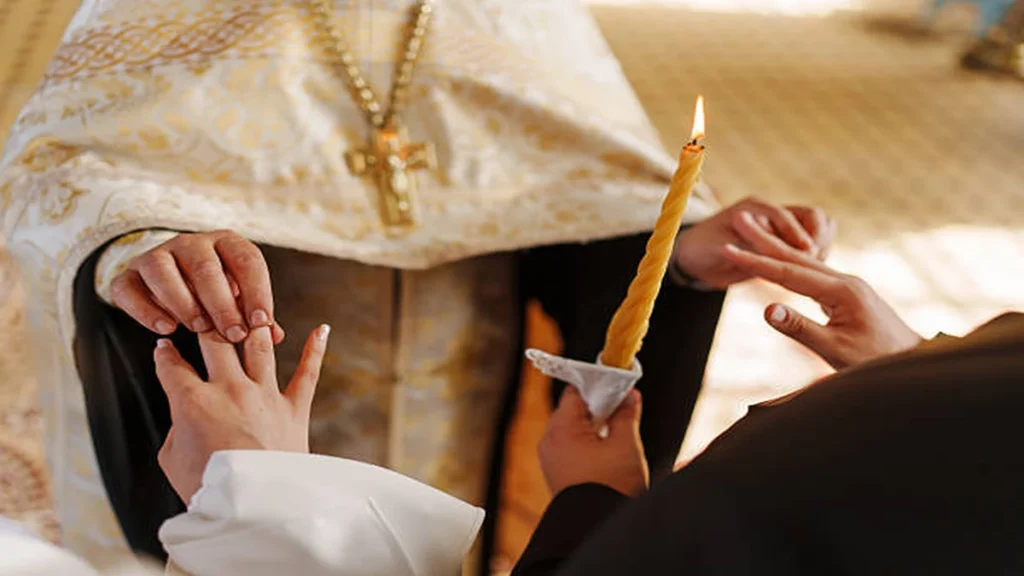
Kiddushin reaches its peak when the groom places a plain gold or silver ring on the bride’s right index finger, solemnly declaring Ani L’Dodi V’Dodi Li from Song of Songs, sealing an eternal beloved commitment.
Originally, erusin and nissuin stood separate months apart, but today they are combined in one joyful festive ceremony. The completion of Kiddushin marks a profound conclusion, carrying couples forward toward Sheva Brachot blessings and nuptials.
Giving of the Ring
The right index finger holds significance unlike any other during kiddushin — ring placement is no coincidence. Erusin law dictates this very gesture, turning a simple band into a sanctifying act that originally marked formal betrothal.
A blessing over wine is recited in Hebrew before the ring transfer — the first cup sanctifies intention. The second cup, shared after vows, echoes kiddush observed on Shabbat, weaving heartfelt meaning into timeless Jewish rhythm.
Today, many couples choose a double-ring ceremony, though kiddushin and nissuin were once separated by months. Now combined into one unified ritual, each ring confirms two distinct people, once apart, bound heart-deep in lifelong partnership.
Reading of the Ketubah
Few understand that the Aramaic scroll isn’t merely read aloud — it’s witnessed. Two officiants verify every obligations clause, ensuring commitments hold legal weight. This marriage contract moment carries generations of lineage, transforming vow into responsibilities.
Historically, ketubah signing preceded the reading — yet contemporary ceremonies often reverse this. Calligraphy on parchment becomes beautiful artwork, framed and displayed in the Jewish home. Text in English accompanies Aramaic, grounding values for each generation.
The document outlines protections, support, and property rights — not simply divorce terms. Witnesses, never blood-related, sign as designated contractual validators. Reading transforms legal text into shared commitment, anchoring male and female partners within their obligations.
The Seven Blessings (Sheva Brachot)
The seven blessings lie at the very heart of Nissuin, recited over wine beneath the wedding canopy. Each prayer voices profound thanksgiving, lifting the couple into a spiritually finalized bond, deeply rooted in Jewish tradition.
These seven benedictions are not merely ceremonial — they carry privileges and duties extending across a full week of celebration. Guests gather nightly, wine is poured, and the grace of repeated blessings faithfully sustains sincere joy.
What strikes me most is how the second cup transforms a final blessing into something alive. The booklets — called benchers — guide guests through grace after meals, weaving romance, fanfare, and the essential parts of Nissuin.
Nissuin (Nuptials)
Nissuin transforms betrothal into full marriage beneath the chuppah — a fabric canopy evoking nomadic desert hospitality. This sheltering structure, sometimes a prayer shawl or handmade quilt, stands on four poles, symbolizing welcoming, open Jewish life.
Beneath the canopy, the chazan chanted sheva brachot — seven blessings honoring humanity, the Divine image, and messianic future. Wine from a second cup is shared, each benediction weaving gratitude, praise, and perpetuation into the ceremony.
Few moments define Nissuin like the breaking of the glass — the groom’s swift stamp signals mourning for Jerusalem’s destroyed Temple, even amid joy. The couple then enters yichud, a private room, embracing calm, peaceful reflection.
Breaking of the Glass
Most couples don’t fully realize that breaking the glass carries mourning deep inside simcha. This historical act — a deliberate pause mid-celebration — reminds every community that Jerusalem’s destruction remains unresolved, even during the most special occasions.
The smash itself — foot coming down, glass shattering — signals something deeper than tradition. Ashkenazi and Sephardic practices differ, yet both honor the same two thousand years of observance, threading remembrance through every Jew-ish wedding’s joy.
What strikes me most, having witnessed these ceremonies, is how acceptance always follows the breaking. The wine cup raised after, guests cheering, completes an honest ritual — joy and mourning coexisting, faith and heritage bound inseparably.
Yichud / Yihud (Seclusion)
After the ceremony, the wedding couple retreats into a private room — their first sacred moment as married partners. This religious custom reflects holiness, allowing them to honor their new life together away from public celebration.
Rooted in Torah, Yichud carries significant weight across Orthodox and Conservative communities. Couples observing pre-wedding separation often break fast together here, sharing food and quiet preparation for the reception — an intimate, spiritual cleansing of transition.
Some view Yichud as carrying the emotional weight of vows into stillness. Witnesses confirm unity per ancient tradition. This ceremonial pause, unlike the dancing and music beyond, reshapes how individuals understand the occasion of marriage.
Traditional Jewish Wedding Attire
The kippah and yarmulke define traditional Jewish men’s wedding attire, while brides often choose white gowns symbolizing purity. Modesty guides every garment choice, reflecting both cultural identity and deep religious humility beneath the chuppah canopy.
The veil carries profound weight — during badeken, the groom covers the bride’s face, echoing Rebecca’s gesture before Isaac. Henna ceremonies, where intricate markings adorn the palm, predate weddings, enriching Sephardic attire with layered cultural symbolism.
Many grooms don a white kittel — simple, solid, and clean — representing spiritual equality before God. Some layer a tallit atop the garment, while personalized inscriptions or inherited heirlooms ensure the wedding attire carries multigenerational weight.
Jewish Wedding Reception Traditions
Seudat Mitzvah (The Wedding Feast)
The wedding meal transforms an ordinary table into a deeply sacred space. Hamotzi is recited over a braided challah loaf, marking the shift from ceremony to celebration. Happiness, peace, and plenty fill every cherished moment.
Few dance floor moments match the circular hora, where guests are lifted in sheer celebration. Mitzvah dances generate humor, contagious laugh, bold performance, as costumes and props transform chairs into truly spirited folk dance spectacles.
Birkat Hamazon concludes the wedding meal with one cup raised to bless the newlywed union. Generous gifts and tzedakah reflect chai’s enduring spirit, while continuation is honored through fruit of the vine and communal gratitude.
Blessing the Challah
The challah blessing carries weight beyond bread. Sabbath candlesticks glow nearby as the braided loaves — representing wholeness and abundance — are covered, then unveiled before the congregation recites the blessings over the table with reverence and communal warmth.
Unlike Shabbat’s quieter ritual, the wedding challah blessing absorbs the room’s joy, becoming a sacred thread connecting Torah study, gratitude, and sweetness. Hands reach across tables as the congregants share torn pieces, the act itself a silent mitzvah of unity and belonging.
The invited guests understand that this recite moment isn’t ceremonial filler — it’s the transition from ritual solemnity into the feast. Candy-like sweetness in the bread itself mirrors the prayers ascending, grounding everyone in the nourishment — spiritual and physical — a Jewish wedding demands.
Hora
The hora begins without announcement — someone grabs a hand, and a circle dance forms instantly. Before long, the couple is lifted high on chairs, swaying above the crowd, embodying both fertility blessings and communal entertainment.
Few realize the hora predates formal wedding feast logistics entirely. Invited guests need no cue — the rhythm calls them. Even kosher meal preparations pause as the table clears and everyone floods the dance floor together.
Rooted in Eastern European tradition, the hora carries a quiet commandment — to increase communal joy. Couples are commanded by culture, not text. Sometimes torn challah bread is passed at the feast before dancing fully begins.
Mitzvah Dances
Mitzvah dances exist at the intersection of obligation and joy. At the Seudat Mitzvah, entertaining the bride is sacred. Guests grab chicken leg props, scarves, even honey jars — anything to make the kallah genuinely smile.
Traditionally, these dances happened while meat and fish courses were still being served. The sutlach — a rice pudding made with coconut milk and almonds — would cool on tables as guests prioritized dancing over dairy desserts.
What surprises many is that mitzvah dances reinforce identity subtly — just as pork and shellfish remain unclean at the table, joy extends to movement. Some halal weddings mirror this tradition before the wedding night begins.
Mezinke
The Mezinke holds a layered significance few dances can rival — when the last child marries, parents are seated and crowned with a floral wreath, honored by family in a spirited, tender dance circle that acknowledges a lifetime of devotion.
Rooted in Israeli and Eastern European Jewish culture, this highlight of the reception transforms an ordinary moment into communal celebration. Guests encircle the parents, singing and clapping, recognizing a sacred milestone wrapped in joy, relief, and generational pride.
No grand announcement prepares you for witnessing the Hora energy shift into something deeply personal. Parents are lifted up — not physically, but emotionally — through movement, music, and the collective embrace of everyone who gathered to witness love flourish once more.
Birkat Hamazon
Birkat Hamazon, recited after the first meal together, carries a spiritual weight few wedding moments match. Couples who eat and rest during quiet time discover blessings feel less ceremonial and more genuinely devotional when shared.
Many couples break from tradition by personalizing this grace, making honored guests participants rather than observers. These moments after the ceremony invite collective gratitude, reminding everyone that nourishment — physical and spiritual — belongs at the heart of celebration.
The videographer rarely captures what unfolds during Birkat Hamazon — the quiet excitement, the reflective pauses. Recited while still seated, it transforms the reception table into a sanctuary, grounding the couple’s new life in gratitude before the dancing begins.
Traditional Jewish Wedding Gifts
Few pause to consider that the most meaningful Jewish wedding day gifts echo the symbolism woven throughout the ceremony itself. A mezuzah, lucite-framed keepsake, or handcrafted piece honoring remembrance speaks louder than any registry item ever could.
Couples increasingly favor gifts tied to home-building — a ritual bath contribution, Shabbat candlesticks, or artisan art pieces. These selections reflect a deeper understanding: Jewish marriage isn’t a single souvenir moment but an architecture of cherished, layered, lived experience.
Gifting Torah study sponsorships or Hachnasat Kallah fund donations reframes generosity entirely. Rather than objects, guests offer learning — something the couple carries forward. This approach, rooted in historical values, transforms the gift table into an act of communal, lasting hope.
A Brief History of Jewish Wedding Traditions
Shehekheyanu
The Shehekheyanu blessing carries a spiritual weight few wedding prayers can rival. Rooted in gratitude, it acknowledges arriving at a singular, sacred moment — one that creation itself seems to pause for, honoring the perfection of two lives converging.
Historically, this blessing has evolved across communities, yet its essence remains unbroken. Much like the wedding band — with no end and no breaks — Shehekheyanu loops time itself, connecting ancestral truths to present joy and forward hope.
Recited at threshold moments, Shehekheyanu transforms the ceremony into conscious witnessing. Couples are not merely married — they become lifted up, echoing the Nissuin spirit, stepping into covenant fully aware that this extraordinary milestone will never come again.
For more cultural ceremony content, check out our wedding traditions hub.


