Fall weddings create one of those deceptively difficult wardrobe situations. The invitation might promise a romantic outdoor ceremony, but that can mean warm afternoon sun, a chilly cocktail hour, damp grass, and a heated indoor reception—all within a few hours.
That is why choosing fall wedding guest dresses takes more thought than simply finding something in burgundy and calling it autumnal. Dress code, venue, temperature, fabric, length, footwear, and layering all matter.
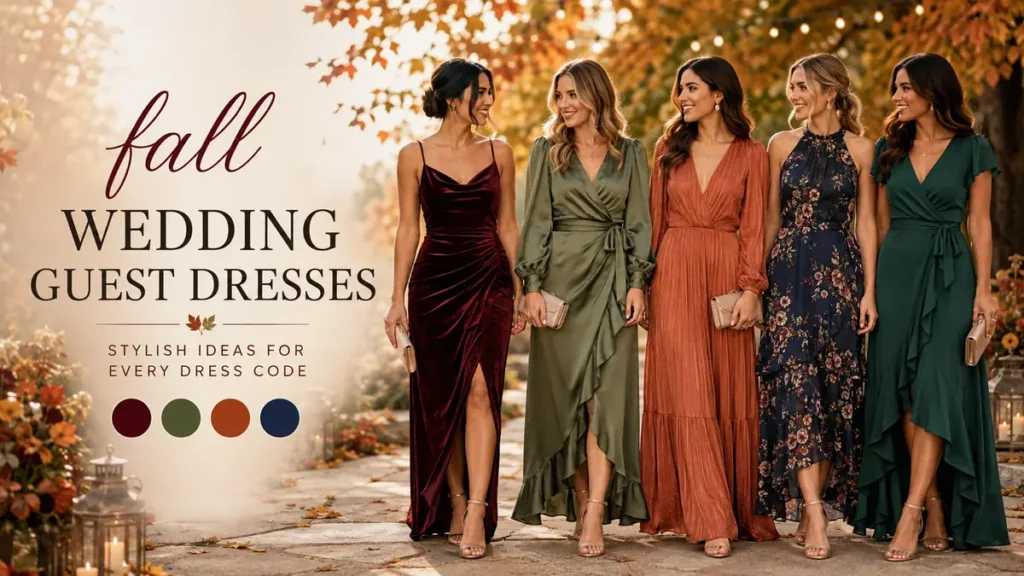
The best fall wedding guest dresses balance formality with seasonal practicality. Choose the silhouette according to the dress code, then consider richer colors, substantial fabrics, and adaptable layers. Midi and maxi dresses are especially versatile, while satin, crepe, velvet, lace, chiffon, and jersey can all work when matched to the weather and venue.
Current autumn-wedding guidance consistently emphasizes starting with the invitation and venue rather than choosing a dress solely because it looks seasonal. Rich colors and textured fabrics remain popular, but a September vineyard ceremony calls for a very different outfit from a November black-tie reception.
How to Choose Fall Wedding Guest Dresses
A good autumn wedding outfit solves four questions:
- What does the invitation say?
- Where is the wedding taking place?
- What will the weather probably be like?
- How much of the event will happen outdoors?
The dress code always comes first. A velvet mini dress may have the perfect autumn color and texture, but it still won’t replace a formal gown when the invitation specifies black tie.
After formality, think about temperature. September can still feel like summer in many locations, while a late-November evening may require serious outerwear.
Venue matters just as much. Grass, gravel, cobblestones, barns, vineyards, churches, hotels, and ballrooms create different practical requirements.
A Quick Fall Wedding Dress Guide
| Wedding style | Dress that usually works | Fabrics to consider | Useful colors |
|---|---|---|---|
| Casual | Midi, wrap or polished floral dress | Jersey, crepe, chiffon | Olive, rust, dusty blue |
| Semi-formal | Midi or sophisticated maxi | Crepe, satin, lace | Burgundy, navy, forest green |
| Cocktail | Structured or draped midi | Satin, velvet, crepe | Plum, chocolate, emerald |
| Formal | Elegant midi or full-length dress | Satin, velvet, lace | Navy, wine, deep green |
| Black tie | Floor-length evening gown | Velvet, silk, satin, crepe | Black, jewel tones, metallic accents |
| Outdoor | Stable hemline with practical shoes | Crepe, lined chiffon, jersey | Earth and jewel tones |
The goal isn’t to dress like the season. It is to dress appropriately for the wedding while allowing autumn to influence your palette, fabric, and styling.
Fall Wedding Guest Dresses for Every Dress Code
Current wedding-attire guides agree on one fundamental rule: the invitation’s dress code should determine the level of formality before seasonal trends enter the equation.
Casual Fall Wedding
“Casual” at a wedding does not usually mean everyday casual.
Think polished rather than formal: a wrap midi dress, floral long-sleeve dress, simple A-line silhouette, or softly structured maxi can work well.
Autumn florals are particularly useful here. Instead of bright tropical prints, consider botanical patterns on navy, chocolate, burgundy, olive, or black backgrounds.
A casual barn or backyard ceremony also gives you more freedom with footwear. Block heels, dressy flats, loafers, or polished ankle boots may make more sense than stilettos.
Semi-Formal Fall Wedding
Semi-formal sits between relaxed daytime clothing and traditional cocktail attire.
A midi dress is often the easiest solution. Look for details that make it feel intentional: draping, an asymmetric neckline, subtle pleating, long sleeves, a defined waist, or an elegant print.
Crepe and satin work especially well because they look refined without automatically pushing an outfit into evening-gown territory.
Cocktail Fall Wedding
Cocktail attire is where autumn fabrics become especially useful.
Consider:
- A burgundy satin midi
- An emerald draped dress
- A chocolate-brown asymmetric midi
- A plum lace dress
- A dark floral cocktail dress
- A velvet midi for cooler weather
Knee-length and midi dresses can both work, although the overall design matters more than the hemline alone.
For an evening cocktail reception, richer colors and fabrics usually feel more natural than lightweight daytime prints.
Formal Fall Wedding
Formal attire gives you some flexibility between an elegant midi and a floor-length gown, depending on the venue and invitation.
Longer silhouettes are particularly comfortable in cooler weather. Draped crepe, velvet, satin, and sophisticated lace all suit autumn without needing obvious seasonal motifs.
If the event takes place in a hotel, historic property, or upscale city venue, focus on elegant construction rather than rustic fall styling.
Black-Tie Fall Wedding
For black tie, think eveningwear.
A floor-length gown is the safest choice. Velvet becomes especially appealing during colder months, while satin and crepe provide fluid alternatives.
One-shoulder gowns, long-sleeve maxis, column dresses, draped silhouettes, and elegant full-length styles are prominent choices in current fall wedding coverage.
You don’t have to wear black. Deep emerald, midnight navy, wine, aubergine, chocolate, and other jewel tones can look equally formal.
Black-Tie Optional
Black-tie optional creates more room.
A floor-length gown works, but so can a particularly sophisticated midi or ankle-length dress. When deciding between two options, let the venue and start time guide you. A grand evening ballroom generally calls for the dressier choice.
Quick Takeaway: Start with formality, not color. A dress isn’t appropriate simply because its shade looks autumnal.
Best Colors for Fall Wedding Guest Dresses
Fall is associated with burgundy and burnt orange for good reason, but your options extend much further.
Current seasonal guides repeatedly feature burgundy, emerald or forest green, navy, plum, chocolate brown and other warm or jewel-toned shades.
Burgundy and Wine
Burgundy is one of the easiest autumn colors because it works across several dress codes.
A burgundy floral dress can suit an outdoor afternoon ceremony, while wine-colored satin or velvet immediately feels more formal.
Emerald and Forest Green
Dark greens provide the richness associated with fall without relying on the usual red-orange palette.
Emerald looks particularly effective in satin and velvet. Forest and olive greens can feel softer and more natural for daytime or rustic venues.
Navy and Midnight Blue
Navy is useful when you want something timeless rather than overtly seasonal.
It transitions easily from daytime to evening and pairs naturally with metallic, black, burgundy, tan, or jewel-toned accessories.
Chocolate and Espresso Brown
Brown has moved well beyond its reputation as a purely casual neutral. Chocolate and espresso shades can look striking in satin, jersey, crepe, or velvet, particularly at evening events.
Deep brown is also one of the notable color directions appearing in fall 2026 fashion coverage.
Plum and Aubergine
Purple tones work beautifully for autumn because they have the depth of a jewel tone without feeling predictable.
Plum satin suits cocktail attire, while dark aubergine velvet can look appropriately dramatic for formal evening celebrations.
Rust, Terracotta and Burnt Orange
These are classic fall colors, but use them thoughtfully.
Muted rust or terracotta can look elegant at outdoor, vineyard, barn, or daytime weddings. Extremely bright orange can become visually overwhelming, particularly if the wedding party is using a similar palette.
Gold and Metallic Tones
Metallic fabrics can work for evening and formal weddings when the design is sophisticated rather than costume-like.
Soft bronze, muted gold, or metallic accessories are generally easier to style than head-to-toe sparkle.
Can You Wear Pastels to a Fall Wedding?
Yes.
There is no rule requiring every autumn wedding guest to wear a dark color. Dusty blue, eucalyptus, mauve, muted pink, sage, and other subdued pastels can work beautifully.
The trick is making the entire outfit feel seasonally coherent. A dusty-blue dress with richer texture, closed-toe shoes, and an elegant wrap feels very different from a lightweight beach-style pastel sundress.
Can You Wear Black to a Fall Wedding?
Usually, yes.
Black is especially natural for formal and evening celebrations. Texture can prevent it from looking overly severe: velvet, lace, satin, pleating, draping, or an interesting neckline can add depth.
For a daytime wedding, accessories can soften the overall effect.
The Best Fabrics for Autumn Wedding Guest Dresses
Fabric determines much more than appearance.
It affects warmth, movement, wrinkles, breathability, and how comfortably a dress transitions between outdoor and indoor parts of the wedding.
Velvet
Velvet is practically made for cooler-weather celebrations.
It provides texture, depth, and warmth while looking naturally formal. Jewel tones such as emerald, burgundy, navy, plum, and chocolate become especially rich in velvet.
But velvet isn’t automatically the right answer.
At an early-September wedding in a warm climate, it can be uncomfortable. Save heavier velvet for cooler conditions or evening events.
Satin
Satin provides shine without needing sequins or elaborate embellishment.
It works particularly well for cocktail, formal, and black-tie settings. Burgundy, chocolate, emerald, navy, copper, and plum satin dresses all suit an autumn palette.
Keep in mind that some satin fabrics show wrinkles, moisture, and creasing easily. If you’ll be traveling to the wedding, check how the specific material behaves before packing it.
Crepe
Crepe is one of the most adaptable wedding-guest fabrics.
It tends to drape cleanly, works across several dress codes, and doesn’t depend on a specific season. A well-cut crepe midi can carry you through multiple weddings simply by changing shoes, jewelry, and outerwear.
Lace
Lace doesn’t belong exclusively to bridalwear.
Dark lace in navy, burgundy, green, plum, or black can be excellent for autumn cocktail and formal events.
The important distinction is color and styling. White, ivory, or very pale all-over lace can read as bridal and is best avoided unless the couple specifically requests it.
Chiffon
Chiffon remains useful in autumn, especially for warmer September weddings and daytime ceremonies.
Instead of treating chiffon as a summer-only fabric, look for darker florals, sleeves, layered construction, or richer colors.
For genuinely cold weather, however, unlined or very lightweight chiffon may require more layering than it’s worth.
Jersey and Knit Fabrics
A sophisticated jersey or fine knit dress can work at casual, semi-formal, and certain cocktail weddings.
The distinction between “cozy” and “wedding appropriate” comes down to cut and finish. A refined draped jersey maxi is very different from an everyday sweater dress.
Quick Takeaway: Fabric should match the actual temperature, not just the month printed on the invitation.
Midi, Maxi or Mini: Which Length Works Best?
There is no universal “fall length.”
The right hemline depends on formality, weather, venue, and the proportions of the dress itself.
Midi Dresses
For many guests, the midi is the most versatile option.
It works particularly well for:
- Cocktail weddings
- Semi-formal ceremonies
- Day-to-evening events
- Vineyard weddings
- City venues
- Mild autumn weather
Midi lengths also give you room to make shoes part of the outfit.
Maxi Dresses
Maxi dresses offer more coverage and can transition easily into formal territory.
Flowing maxis suit outdoor and romantic settings, while cleaner column or draped designs can work for sophisticated evening events.
For grass, stairs, or wet outdoor surfaces, check that the hem won’t drag.
Mini Dresses
A mini isn’t automatically inappropriate.
The key is balance. A shorter hem can feel wedding-ready when paired with refined fabric, sleeves, a sophisticated neckline, and polished accessories.
For conservative religious ceremonies or highly formal celebrations, a midi or maxi is generally easier to get right.
Fall Wedding Guest Dresses for September, October and November
One of the biggest mistakes guests make is treating “fall” as one weather condition.
It isn’t.
September Wedding Guest Dresses
September is often transitional.
An early-autumn ceremony can still be warm enough for sleeveless dresses, chiffon, lighter satin, and open-toe shoes.
Instead of adding heavy fabrics immediately, introduce fall through color. Olive, wine, navy, rust, chocolate, dark florals, and muted blue can make a lightweight dress feel seasonally appropriate.
Bring a lightweight wrap or blazer if the reception continues after sunset.
October Wedding Guest Dresses
October gives you the widest range.
Midi dresses, satin, lace, crepe, long sleeves, dark florals, and lighter velvet can all make sense depending on location.
October is also an especially significant wedding month. The Knot’s previous Real Weddings data identified October as the most popular wedding month in its 2025 study, illustrating why autumn guest attire receives so much attention.
This is the month when layering becomes genuinely useful rather than decorative.
November Wedding Guest Dresses
By November, warmth deserves more consideration.
Long sleeves, velvet, heavier crepe, lined lace, maxi lengths, and substantial outerwear become more practical in cooler climates.
Think beyond the dress itself. A beautiful sleeveless gown paired with inadequate outerwear can leave you uncomfortable during photos, transportation, or an outdoor cocktail hour.
What to Wear to an Outdoor Fall Wedding
Outdoor weddings expose the weaknesses in an outfit very quickly.
Beautiful shoes sink into wet grass. Long hems collect leaves. Sleeveless dresses feel perfect at 3 p.m. and painfully cold after sunset.
For an outdoor fall wedding, choose the outfit around the terrain and temperature rather than the photographs.
Vineyard Wedding
A vineyard often calls for romantic but practical styling.
A floral midi, satin wrap dress, long-sleeve maxi, or softly structured A-line silhouette works well. Block heels are usually safer than narrow stilettos on uneven ground.
Barn or Rustic Wedding
“Rustic” doesn’t mean costumes.
You don’t need cowboy boots, orange plaid, or a hat unless those choices genuinely suit the event.
A midi dress in olive, burgundy, rust, navy, or a dark floral print can capture the setting without becoming themed.
Garden Wedding
Florals remain entirely appropriate after summer.
The easiest way to make them feel autumnal is through the background color and scale of the print. Moody florals on black, navy, wine, chocolate, or deep green backgrounds work particularly well.
Mountain or Woodland Wedding
Temperature changes become a priority.
A long-sleeve midi or maxi with a substantial wrap, tailored coat, or dressy jacket gives you far more flexibility than relying on the dress alone.
Shoes should also handle gravel, soil, and uneven paths.
How to Layer a Fall Wedding Outfit Without Ruining It
The best layer looks like part of the outfit rather than emergency equipment.
Good options include:
- Silk or satin shawls
- Pashminas
- Tailored blazers
- Cropped dress jackets
- Structured long coats
- Elegant wraps
- Dressy capes
Vogue’s current wedding-guest guidance, for example, specifically suggests a silk shawl or pashmina for autumn looks when temperatures fall during cocktail hour.
Choose the Layer Before the Wedding Day
A common mistake is choosing the perfect dress and figuring out warmth later.
Instead, try the complete outfit together.
Check whether the blazer hides an important neckline, whether a coat is shorter than an awkward midi hem, and whether a shawl actually stays on your shoulders.
Don’t Rely on the Venue Being Warm
Ceremonies, transportation, photos, cocktail hours, and receptions may happen in different spaces.
You may spend much more time outside than expected.
A removable layer gives you control without forcing you to wear a heavy dress all evening.
Shoes for a Fall Wedding
Shoes need to satisfy both the dress code and the ground beneath you.
For Indoor Weddings
Classic pumps, slingbacks, heeled sandals, dressy flats, and elegant closed-toe shoes can all work.
For Grass and Outdoor Venues
Block heels or wider heel bases are safer.
If the forecast includes rain, delicate suede and floor-skimming hems deserve reconsideration.
Can You Wear Boots to a Fall Wedding?
Yes, in the right context.
Elegant ankle boots or refined knee-high boots can work with certain midi dresses at casual, rustic, or fashion-forward celebrations.
They become harder to pull off at traditional black-tie weddings, where evening shoes generally create a more coherent look.
Accessories That Work With Fall Wedding Guest Dresses
Autumn outfits already offer plenty of texture, so accessories don’t need to do everything.
Jewelry
Gold jewelry complements warm shades such as burgundy, rust, chocolate, olive, and plum.
Silver, white metals, and crystals can look particularly crisp with navy, black, blue, or cool green.
These are styling options, not rules. Your jewelry should ultimately suit the neckline and overall mood of the dress.
Bags
A compact clutch or small structured bag is usually enough.
Metallics are useful because they can connect several colors without requiring an exact match.
Tights
Tights can work with fall wedding attire, particularly with shorter dresses and closed-toe footwear.
Sheer black tights generally look more formal than thick opaque styles. For very formal events, consider whether the dress looks complete without visible hosiery before adding it solely for warmth.
Belts and Statement Details
A belt can help define a simple wrap or A-line dress, but highly embellished dresses rarely need one.
If your dress already has sequins, metallic fabric, dramatic sleeves, ruffles, or an asymmetric neckline, keep the remaining accessories quieter.
What Not to Wear to a Fall Wedding
Seasonal freedom doesn’t cancel normal wedding etiquette.
White, Ivory and Bridal-Looking Shades
Unless the couple has explicitly requested them, avoid outfits that could reasonably photograph as bridal.
That includes obvious white and ivory dresses as well as very pale designs dominated by bridal-looking lace or embellishment.
Anything That Ignores the Dress Code
The invitation outranks fashion trends.
A beautiful casual floral dress is still casual at a black-tie wedding. An elaborate floor-length evening gown can be excessive at a relaxed backyard ceremony.
Extremely Summery Fabrics Without Seasonal Styling
A lightweight dress isn’t automatically wrong in fall, especially in warm climates.
The problem occurs when the entire outfit looks designed for a beach vacation: very thin fabric, tropical prints, casual sandals, and no layer for a cold evening.
Uncomfortable Shoes
Wedding days involve more standing and walking than guests often expect.
If you can’t comfortably walk from the ceremony to cocktail hour or stay on your feet for part of the reception, the shoes are working against you.
A Dress You Have to Constantly Adjust
This problem is easy to miss in the fitting room.
Sit down. Raise your arms. Walk around. Bend slightly. Try the dress with the bra or shapewear you plan to use.
A neckline, slit, strap, or hem that requires constant attention will become frustrating over a long event.
How to Make One Fall Wedding Dress Work for Several Events
If you have multiple autumn invitations, versatility matters more than chasing a separate trend for each wedding.
Start with a relatively simple midi or maxi in navy, dark green, burgundy, plum, chocolate, or another color you genuinely enjoy wearing.
Then change the styling.
For a daytime wedding, you might use understated jewelry, block heels, and a lightweight wrap.
For an evening cocktail event, the same dress can take metallic shoes, statement earrings, and a structured clutch.
For colder weather, add a tailored coat and closed-toe footwear.
A restrained dress often gives you more styling possibilities than a heavily embellished one.
How to Choose a Flattering Fall Wedding Guest Dress
“Flattering” shouldn’t mean following rigid rules about what particular body types are supposedly allowed to wear.
Fit is more useful than body-shape formulas.
Look at Where the Waist Actually Sits
A defined waist can be comfortable and visually balanced, but only when it lands at the right point on your body.
Wrap dresses, fit-and-flare designs, and some A-line silhouettes offer more flexibility than highly structured waist seams.
Check the Length With Your Shoes
A midi can hit at an elegant point with heels but look entirely different with flats.
Likewise, a maxi should be checked with the exact heel height you’ll wear.
Consider Movement
You’ll sit through a ceremony, eat, walk, pose for photos, and possibly dance.
A dress that only looks good while standing perfectly still isn’t a particularly successful wedding-guest dress.
Petite Guests
Petite guests may find that proportion matters more than choosing a particular style.
Look at where sleeves end, where the waist sits, and whether a midi hem lands at a flattering point rather than assuming every garment needs to be short.
Plus-Size Guests
Wrap effects, V-necklines, defined waists, fluid A-line skirts, draping, chiffon movement, and structured fabrics are widely available in extended sizing, but comfort should remain the deciding factor. Current fall style guides also emphasize movement and secure, non-stiff fabrics rather than simply hiding the body.
Are Floral Dresses Appropriate for a Fall Wedding?
Absolutely.
Florals aren’t limited to spring and summer.
For autumn, consider a deeper base color, less tropical pattern, or richer fabric. A black floral midi, burgundy botanical maxi, or dark-green floral dress can feel perfectly at home among fall foliage.
Even black-based florals are increasingly treated as season-spanning choices rather than summer-only prints.
The venue should influence the print. Romantic florals feel particularly natural at gardens, vineyards, estates, and outdoor ceremonies, while sleek solids may fit a formal hotel reception more naturally.
Do Fall Wedding Guest Dresses Need Sleeves?
No.
Sleeves are useful, not mandatory.
A sleeveless satin midi can be completely appropriate in October if the weather and venue allow it. Likewise, long sleeves can be uncomfortable at an early-September wedding in a warm location.
Think of sleeves as one part of your temperature strategy.
If you love a sleeveless dress, add a removable wrap, blazer, cape, or coat. That often provides better temperature control than wearing a heavy long-sleeve garment from ceremony through dancing.
How to Dress for Unpredictable Fall Weather
The weather forecast deserves a final check 24 to 48 hours before the event.
You don’t necessarily need to replace your dress when conditions change. Adjust the supporting pieces instead.
If It Will Be Warmer Than Expected
Choose lighter outerwear, breathable undergarments, and avoid unnecessary heavy layers.
If Temperatures Will Drop
Add a substantial wrap or coat and consider closed-toe shoes.
If Rain Is Expected
Avoid fragile shoes, trailing hems, and fabrics that visibly mark when wet.
Bring an umbrella that won’t leave you wrestling with a giant piece of equipment at the entrance.
If It’s Windy
Very light skirts and loose wraps become annoying quickly.
A structured layer and secure hemline are far easier to manage.
Quick Takeaway: Autumn dressing works best as a system: dress + shoes + layer + weather plan. Don’t make the dress solve every problem alone.
Fall Wedding Guest Style Trends for 2026
Seasonal trends can provide inspiration, but they should never override dress code or personal comfort.
Current 2026 fashion coverage points toward earthy browns, clay-influenced reds, sage green, soft texture, relaxed tailoring, and deeper espresso tones, while fall wedding coverage continues to feature velvet, satin, chocolate shades, light blue, earth tones, long sleeves, and elegant draping.
Rich Brown
Chocolate and espresso are strong alternatives to black, particularly for satin, jersey, and velvet dresses.
Draping and Asymmetry
One-shoulder necklines, gathered waists, asymmetric hems, and fluid draping create interest without requiring heavy embellishment.
Textured Fabrics
Velvet, lace, subtle sequins, and tactile surfaces make solid colors feel more dimensional.
Long-Sleeve Maxis
These solve both an aesthetic and practical problem, giving autumn guests more coverage while retaining the formality of a long silhouette.
Moody Florals
Deep-background floral prints offer a natural bridge between traditional wedding romance and autumn color.
Trends are most useful as small adjustments. A timeless dress in a current color will generally have a longer life than a highly distinctive design built around several trends at once.
A Simple Formula for Choosing the Right Dress
When you’re stuck between several fall wedding guest dresses, use this order:
- Read the invitation carefully. Identify the exact dress code.
- Research the venue. Indoor or outdoor? Ballroom, vineyard, barn, garden, church, or private home?
- Check typical weather. Don’t assume all autumn days are cool.
- Choose the level of formality. Decide whether you need casual, cocktail, formal, or black-tie attire.
- Pick a practical silhouette. Midi and maxi lengths offer the greatest versatility, but they aren’t mandatory.
- Choose fabric according to temperature. Think chiffon and lighter crepe for warmth; satin, lined lace, heavier crepe, and velvet as temperatures fall.
- Add seasonal color if you want it. Burgundy, forest green, navy, chocolate, plum, rust, and jewel tones are reliable choices.
- Plan your layer before leaving home. Don’t wait until the temperature drops.
- Match footwear to the venue. Grass and stilettos rarely make good partners.
- Test the complete outfit. Sit, walk, raise your arms, and wear it with your intended shoes and undergarments.
Final Thoughts on Fall Wedding Guest Dresses
The most successful fall wedding guest dresses aren’t necessarily the darkest, warmest, or most obviously autumnal options. They’re the dresses that respect the invitation while keeping you comfortable through the actual conditions of the day.
Start with the dress code. Then account for the venue, weather, and time of day. After those decisions are settled, use autumn’s richer colors and textures to give the outfit personality.
Burgundy, emerald, navy, chocolate, plum, rust, velvet, satin, crepe, lace, and dark florals all offer plenty of room to experiment—but none is mandatory.
If you’re still deciding between two dresses, choose the one that lets you move comfortably, works with a practical layer, and makes sense for the venue. You’ll spend far more time enjoying the wedding when you aren’t thinking about your outfit every five minutes.