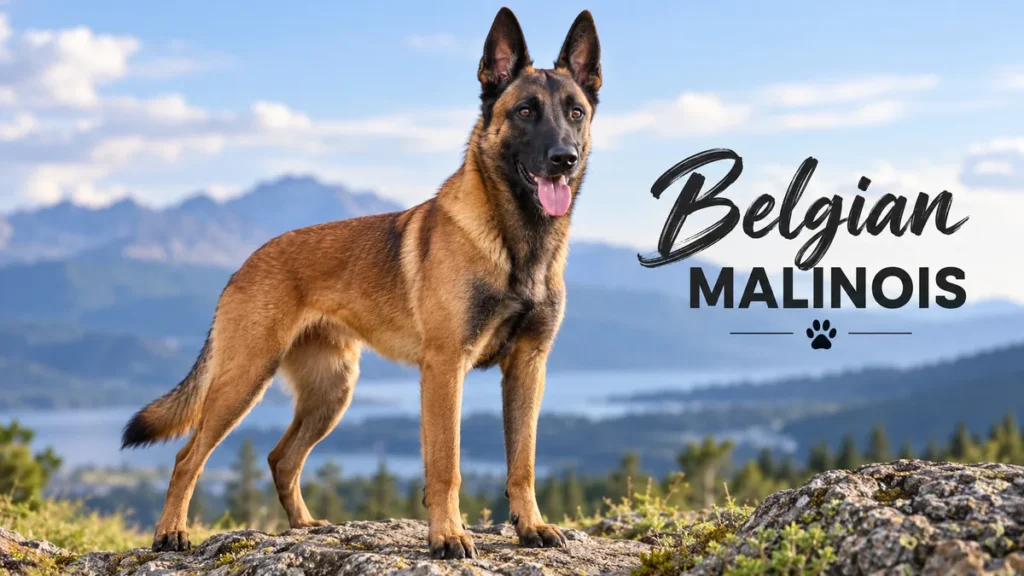
Few dogs combine speed, intelligence, loyalty, athleticism, and working drive quite like the belgian malinois. Their striking appearance often attracts attention, but appearance is only a small part of understanding this breed.
A Belgian Malinois is not simply an energetic pet that needs a longer daily walk. This is a purpose-bred herding and working dog that thrives on training, structured activity, close interaction with its handler, and regular mental challenges. For the right person, that intensity creates an extraordinary partnership. For an unprepared household, it can become difficult to manage.
The Belgian Malinois is a medium-sized Belgian herding breed known for intelligence, confidence, loyalty, athleticism, and an exceptionally strong desire to work. Originally developed for livestock herding, Malinois now excel in police and military work, detection, search and rescue, obedience, tracking, agility, protection sports, and active companion homes.
This guide explains what living with the breed actually involves, from temperament and exercise requirements to training, health, grooming, family compatibility, and the differences between a Malinois and a German Shepherd.
Belgian Malinois at a Glance
| Trait | Belgian Malinois |
|---|---|
| Breed group | Herding |
| Origin | Belgium |
| Original purpose | Livestock herding |
| Male height | About 24–26 inches |
| Female height | About 22–24 inches |
| Male weight | About 60–80 pounds |
| Female weight | About 40–60 pounds |
| Coat | Short, weather-resistant double coat |
| Common colors | Fawn to mahogany |
| Typical marking | Black mask |
| Energy level | Very high |
| Trainability | Very high |
| Grooming needs | Low to moderate |
| Shedding | Moderate, heavier seasonally |
| Typical lifespan | About 10–14 years |
| Best suited to | Experienced, highly active owners |
Adult males are generally larger than females. PetMD lists males at roughly 24–26 inches and 60–80 pounds, while females are commonly 22–24 inches and 40–60 pounds.
Those numbers, however, tell very little about what makes the breed unusual. The defining characteristic of a Malinois is its combination of physical energy and mental intensity.
What Is a Belgian Malinois?
The Belgian Malinois is one of the Belgian herding dogs developed to work closely with people while controlling livestock.
The breed takes its name from Malines, the French name associated with the Belgian city of Mechelen, where the Malinois developed during the late 19th century. Belgian farmers selected local shepherd dogs for practical working ability rather than exaggerated appearance.
That working heritage remains obvious today.
A Malinois tends to watch its environment carefully, respond quickly to movement, learn patterns rapidly, and stay highly aware of its handler. These characteristics helped the breed move far beyond traditional farm work.
Modern Malinois can be found performing:
- Livestock herding
- Police K-9 work
- Military service
- Search and rescue
- Drug and explosive detection
- Tracking
- Protection work
- Competitive obedience
- Agility
- AKC Rally
- Scent-based activities
- Other demanding dog sports
The American Kennel Club officially recognized the Belgian Malinois as a distinct breed in 1959, and the breed is now part of the AKC Herding Group.
The Four Belgian Herding Dogs
The Malinois is closely related to three other Belgian herding types:
| Belgian herding dog | Distinguishing coat |
|---|---|
| Belgian Malinois | Short coat |
| Belgian Tervuren | Long coat |
| Belgian Sheepdog/Groenendael | Long, typically black coat |
| Belgian Laekenois | Rough, tousled coat |
Breed classification varies internationally. Some kennel organizations treat these dogs as varieties of one Belgian Shepherd breed, while the American Kennel Club recognizes them separately.
Belgian Malinois Temperament and Personality
The typical belgian malinois temperament can be summarized with five words: alert, intelligent, confident, energetic, and responsive.
The official American Belgian Malinois Club standard describes the ideal dog as confident without being fearful or unnecessarily aggressive. A correct Malinois should be vigilant, highly responsive to its owner, loyal to its people, and potentially indifferent or reserved toward strangers.
That distinction matters.
A properly bred and socialized Malinois should not automatically be aggressive. Protective instincts and aggression are not the same thing.
Extremely People-Oriented
Malinois often form powerful attachments to their handlers.
They generally prefer participating in whatever their person is doing rather than entertaining themselves for hours. That trait helps explain their effectiveness as working dogs: cooperation with a human handler is deeply connected to the breed’s purpose.
It also means a Malinois usually isn’t a good choice for someone who wants an independent backyard dog.
Long periods of boredom and isolation can lead to undesirable behaviors.
Naturally Alert and Watchful
These dogs notice things.
A visitor approaching the house, an unfamiliar sound, another animal moving outside, or a change in their environment may immediately capture their attention.
That natural vigilance can make them excellent watchdogs. But without socialization and clear boundaries, alertness can become excessive barking, territorial behavior, or inappropriate reactions toward unfamiliar people.
High Prey and Chase Drive
Movement can be highly stimulating for a Malinois.
Some individuals may attempt to chase:
- Running children
- Bicycles
- Cars
- Cats
- Wildlife
- Joggers
- Other moving animals
The AKC specifically notes that their prey drive can encourage chasing children, vehicles, or other animals, making early training particularly important.
Owners should teach impulse control, recall, leash manners, and appropriate responses to moving objects rather than expecting the behavior to disappear naturally with age.
Sensitive Despite Their Tough Reputation
Police and military footage can make the Malinois appear almost indestructible.
At home, however, these dogs can be remarkably sensitive to their handlers.
Harsh, unpredictable training can create conflict or anxiety. Clear expectations and consistent reinforcement generally produce a more reliable working relationship than unnecessary physical corrections.
Quick Takeaway: A healthy Malinois temperament combines confidence and vigilance with responsiveness. Fearfulness, uncontrolled aggression, and inability to settle should not be considered desirable simply because the breed is associated with protection work.
Why Belgian Malinois Are Used as Police and Military Dogs
Few images have shaped public perception of the breed as strongly as the police or military Malinois.
Their popularity in demanding working roles isn’t accidental.
Malinois combine several useful characteristics:
- Strong motivation to work
- High trainability
- Athletic movement
- Speed and agility
- Excellent scenting ability
- Confidence
- Endurance
- Handler focus
- Compact, relatively lightweight build
- Ability to perform under demanding conditions
Their jobs can include suspect apprehension, tracking, narcotics detection, explosive detection, patrol work, and search operations.
Malinois have also served historically in military roles. Modern dogs continue to work with military and law-enforcement organizations around the world.
Their success as working dogs, however, creates one of the biggest misconceptions surrounding the breed.
A dog being excellent for a professional handler does not automatically make it easy to own as a household pet.
The same drive that allows a trained Malinois to work for hours can produce destructive behavior when an inexperienced owner provides no appropriate outlet for it.
Belgian Malinois Exercise Needs
A casual walk around the block is rarely sufficient exercise for a healthy adult Malinois.
The breed was developed for sustained physical work. Modern Malinois retain that capacity, and the AKC emphasizes that they need substantial daily physical and mental activity rather than simply a walk or occasional backyard play.
The exact amount should be adapted to the individual dog’s age, health, conditioning, temperament, and working background.
More exercise is not automatically better.
The real goal is structured fulfillment.
Good Physical Activities
Depending on the dog’s age and physical condition, useful activities may include:
- Brisk walking
- Hiking
- Running with a conditioned adult dog
- Fetch with rules and impulse control
- Swimming
- Herding
- Agility
- Tracking
- Obedience exercises
- Scent work
- Dog sports
Young puppies should not be pushed into repetitive high-impact exercise designed for physically mature dogs.
Likewise, an adult that has spent months relatively inactive should be conditioned gradually rather than suddenly taken on a long-distance run.
Mental Exercise Is Just as Important
Trying to exhaust a Malinois solely through running can backfire.
You may simply build a fitter dog that requires even more running.
Mental work teaches the dog to think, communicate with its handler, regulate excitement, and perform controlled behaviors.
Useful mental activities include obedience drills, scent searches, food puzzles, tracking, place training, retrieving exercises, discrimination games, and learning new behaviors.
Even ordinary walks can become more productive when the dog occasionally practices heel, recall, waiting, environmental neutrality, and permission-based exploration.
Teach an Off-Switch
One of the most valuable skills for a Malinois is doing nothing.
A working dog that can sprint, track, retrieve, and perform obedience but cannot relax inside the house is difficult to live with.
Teach calm behavior deliberately.
After activity, give the dog opportunities to settle on a bed, mat, or designated resting area. Reward relaxation instead of constantly creating another high-arousal game.
Quick Takeaway: Don’t build your Malinois routine around exhaustion. Combine aerobic activity, skill training, problem-solving, controlled play, sniffing, and intentional rest.
How to Train a Belgian Malinois
A Malinois can learn astonishingly quickly.
Unfortunately, that includes behaviors you never intended to teach.
Consistency therefore matters from the first day.
1. Begin Socialization Early
Puppy socialization isn’t about forcing a puppy to interact with everyone.
The goal is to create calm, positive exposure to normal life.
Introduce the puppy appropriately to different:
- People
- Surfaces
- Sounds
- Environments
- Vehicles
- Household situations
- Calm dogs
- Grooming procedures
A future adult Malinois should learn that noticing something unfamiliar does not automatically require a reaction.
2. Establish Basic Obedience
Useful foundation behaviors include:
- Name response
- Recall
- Sit
- Down
- Stay
- Leave it
- Drop it
- Loose-leash walking
- Place or mat command
- Crate training
- Calm handling
Reliable obedience becomes especially important once a powerful, athletic puppy becomes an adult.
3. Use Positive Reinforcement
Food, toys, play, praise, and access to desired activities can all reinforce behavior.
The Malinois’ motivation often makes reward-based training highly effective.
Training should still have structure. Positive reinforcement does not mean allowing the dog to do whatever it wants. Clear rules and consistent consequences—such as temporarily losing access to a desired activity—help the dog understand expectations.
4. Keep Sessions Purposeful
Long repetitive sessions can create frustration.
Short, focused training periods spread throughout the day often work better.
A five-minute session before breakfast, leash practice during a walk, impulse-control exercises before fetch, and a short evening scent game can provide meaningful daily mental work.
5. Control Arousal
This is where many inexperienced owners struggle.
High-speed tug, ball chasing, bite sports, and exciting physical games can produce intense arousal. The dog should also learn to stop, release, wait, disengage, and return to calm behavior.
Control should accompany drive.
6. Continue Training for Life
Training a Malinois isn’t something completed during puppyhood.
The AKC and veterinary guidance both emphasize early and continuing socialization and training because the breed’s intelligence and working instincts require ongoing engagement.
For owners unfamiliar with high-drive working dogs, an experienced professional trainer can be extremely valuable.
Are Belgian Malinois Good Family Dogs?
Yes, a belgian malinois can be a family dog, but that answer needs context.
A well-bred, properly trained Malinois can be deeply affectionate and loyal to its family. The difficulty is matching the dog’s needs with the household.
The breed tends to fit best with families that have experience managing active dogs and enough time for daily training and structured exercise.
Belgian Malinois and Children
Malinois can live successfully with children, particularly when appropriately socialized and supervised.
But several breed characteristics require attention.
Their herding and chase instincts may cause some dogs to chase or attempt to control fast-moving children. Their speed and physical intensity also mean an excited dog can accidentally knock over a small child.
The AKC suggests that homes with older, responsible children may often be the easier fit and emphasizes supervision.
Children should also learn appropriate dog interaction:
Don’t climb on the dog, disturb it while eating or sleeping, take toys away as a game, or encourage rough behavior.
No breed should be left unsupervised with very young children.
Belgian Malinois and Other Dogs
Compatibility varies substantially between individuals.
Early socialization helps, but genetics, sex, past experiences, training, and individual temperament also matter.
Dog parks aren’t necessarily the best solution. Controlled introductions and carefully chosen canine companions can be more useful than expecting a Malinois to enjoy unrestricted interaction with unfamiliar dogs.
Belgian Malinois and Cats
Some Malinois live peacefully with cats, especially when raised around them.
Others have a strong chase or prey drive that makes the combination challenging.
Never assume that obedience completely eliminates prey drive. Introductions should be gradual, controlled, and supervised.
Is a Belgian Malinois Good for First-Time Owners?
For most first-time dog owners, the answer is no.
This isn’t because the Malinois is a “bad” breed. It is because the margin for owner error can be relatively small.
An inexperienced person may underestimate:
- Exercise requirements
- Mental stimulation needs
- Prey drive
- Strength
- Speed
- Protective tendencies
- Training commitment
- Sensitivity
- Need for impulse control
- Difficulty managing boredom
The AKC similarly describes the breed as generally unsuitable for inexperienced owners because of its energy and prey drive.
Previous dog ownership alone isn’t necessarily enough either.
Someone experienced with easygoing companion breeds may still find a working-line Malinois dramatically different.
The ideal owner enjoys training itself—not merely having a trained dog.
Belgian Malinois Size and Appearance
A Belgian Malinois should look athletic rather than bulky.
The body is balanced, muscular, agile, and built for efficient movement.
Males generally stand around 24–26 inches at the shoulder, while females are typically around 22–24 inches. Healthy adults commonly fall within approximately 40–80 pounds depending largely on sex and individual build.
Head and Expression
The head is clean and proportionate, accompanied by alert, triangular erect ears.
Dark eyes and an attentive expression contribute to the characteristic Malinois look.
One of the breed’s most recognizable features is its black facial mask.
Coat and Colors
The coat is relatively short and weather-resistant.
AKC materials commonly describe Malinois coats in shades ranging from fawn to mahogany, typically accompanied by darker facial features.
Their double coat provides protection without the extensive grooming demands associated with long-coated breeds.
Athletic Build
A Malinois should not resemble an oversized, heavy German Shepherd.
Its lighter construction contributes to rapid acceleration, jumping ability, maneuverability, and endurance.
That athleticism is one reason the breed performs successfully in agility, herding, detection, police work, and other physically demanding disciplines.
Belgian Malinois vs German Shepherd
The Belgian Malinois vs German Shepherd comparison is common because the two breeds can look similar and frequently perform similar jobs.
They are nevertheless distinct breeds.
| Feature | Belgian Malinois | German Shepherd |
|---|---|---|
| Origin | Belgium | Germany |
| Traditional role | Herding | Herding |
| Build | Lighter, square and athletic | Generally larger and heavier |
| Coat | Short | Typically medium-length double coat |
| Energy | Extremely high | High |
| Working drive | Often extremely intense | Strong |
| Common modern roles | Police, military, detection, sport | Police, service, military, sport, companion |
| Typical owner fit | Experienced, highly active | Active, committed owners |
The Malinois generally has a lighter frame and shorter coat, while German Shepherd Dogs tend to be larger and more substantial.
Both need considerable physical exercise, mental stimulation, socialization, and training. The AKC notes that daily walks and backyard time alone are not enough for the typical Malinois.
Choosing between them should therefore be based on temperament, lifestyle compatibility, breeder quality, individual dog characteristics, and your ability to provide appropriate work—not appearance alone.
Belgian Malinois Grooming and Shedding
Compared with their exercise and training requirements, grooming a Malinois is straightforward.
Their short double coat usually needs periodic brushing to remove loose hair and distribute natural oils.
Do Belgian Malinois Shed?
Yes.
The short coat can make people assume they barely shed, but Malinois do shed throughout the year and can shed considerably more during seasonal coat changes.
The AKC notes heavier shedding periods roughly twice annually, when more frequent or even daily brushing can help control loose hair.
Basic Grooming Routine
A practical routine includes:
- Brush regularly and more frequently during shedding seasons.
- Bathe when necessary rather than excessively.
- Trim nails before they become overgrown.
- Check ears for dirt, irritation, odor, or discharge.
- Maintain regular dental care.
- Inspect paws and skin after demanding outdoor activities.
Working and sporting dogs should also be checked after exercise for cuts, damaged nails, thorns, abrasions, or other minor injuries.
Belgian Malinois Health and Lifespan
The typical Belgian Malinois lifespan is approximately 10–14 years, although individual longevity depends on genetics, preventive veterinary care, body condition, lifestyle, accidents, and disease.
The breed can be relatively healthy, but no dog breed is free from inherited or acquired medical problems.
Hip Dysplasia
Hip dysplasia involves abnormal development of the hip joint and can contribute to pain, reduced mobility, and arthritis.
Responsible breeding programs use hip evaluations to reduce the likelihood of passing significant orthopedic problems to future generations.
Elbow Dysplasia
Elbow dysplasia is another orthopedic condition worth screening for.
The American Belgian Malinois Club’s health guidance includes evaluations for both hips and elbows.
Eye Conditions
Inherited eye disorders can occur.
The breed club recommends examination by a qualified veterinary ophthalmologist as part of health screening for breeding dogs.
Epilepsy and Other Health History
The American Belgian Malinois Club also advises prospective owners to discuss epilepsy, cancer such as hemangiosarcoma, thyroid and cardiac history, and temperament with breeders.
That doesn’t mean every Malinois is likely to develop these problems. It means responsible selection should look beyond whether the parents appear healthy.
Injury Risk in Highly Active Dogs
Athletic dogs can injure themselves even without hereditary disease.
Hard turns, repetitive jumping, poor surfaces, uncontrolled high-impact exercise, or excessive activity before physical maturity may contribute to injuries.
Conditioning matters.
Warm-ups, gradual increases in workload, maintaining a healthy body condition, adequate recovery, and veterinary evaluation of persistent limping or pain are sensible parts of caring for an athletic dog.
Quick Takeaway: When evaluating a breeder, don’t settle for “the parents are healthy.” Ask for documented hip, elbow, and eye screening and discuss health and temperament across the dog’s family line.
Feeding a Belgian Malinois
A Malinois needs a nutritionally complete diet appropriate for its life stage, body condition, and activity level.
There is no universal amount of food that suits every Malinois.
A sedentary adult companion and a dog performing several hours of demanding work each day may have very different energy requirements.
Monitor Body Condition, Not Just the Food Scoop
Feeding charts provide a starting point.
Regularly assess:
- Body weight
- Waist definition
- Rib coverage
- Muscle condition
- Activity level
- Stool quality
- Changes in appetite
A veterinarian can help determine an appropriate body condition and feeding strategy.
PetMD recommends keeping treats to no more than roughly 10% of total daily calories so treats don’t displace a nutritionally balanced diet.
Training rewards can also come from part of the dog’s normal daily food allowance.
Puppies Need Appropriate Growth Nutrition
A Malinois puppy needs food formulated for growth.
More calories do not automatically create a healthier or stronger puppy. Controlled growth and balanced nutrition are more useful than trying to make a young dog grow as rapidly as possible.
What Happens When a Belgian Malinois Gets Bored?
This question deserves more attention than it usually receives because boredom is behind many unsuccessful Malinois placements.
An under-stimulated dog doesn’t stop having working instincts.
It finds another outlet.
PetMD notes that insufficient physical activity or mental stimulation can contribute to destructive behaviors such as chewing household objects, digging, damaging furnishings, and even working at doors or windows.
Owners may interpret this as stubbornness.
Often, it reflects a mismatch between the dog’s needs and daily routine.
A better routine provides predictable opportunities to work and equally predictable opportunities to rest.
For example:
Morning: structured walk plus obedience.
Midday: short scent or problem-solving activity.
Evening: physical exercise followed by calm place training.
The exact schedule matters less than providing purposeful engagement consistently.
Can Belgian Malinois Live in Apartments?
Potentially—but apartment size isn’t the main issue.
A committed owner living in an apartment who trains and exercises the dog properly may provide a better life than someone with a huge yard who leaves the dog outside alone.
A yard is space, not stimulation.
Apartment living does create additional challenges, including:
- Limited private exercise space
- Close proximity to strangers
- Hallway and elevator encounters
- Noise sensitivity
- Barking concerns
- Frequent leash management
- Limited opportunities for spontaneous outdoor activity
For the average household, a Malinois is easier to manage when there is convenient access to safe exercise and training areas.
Regardless of housing type, the dog’s physical and mental needs remain the same.
How Much Attention Does a Belgian Malinois Need?
A lot.
Malinois were selected to cooperate closely with humans. They tend to thrive when their daily activities involve their handler.
That doesn’t mean the dog should become incapable of being alone.
Independence should be taught too.
Crate training, calm separation, appropriate chew items, predictable routines, and gradually increasing periods alone can help prevent unhealthy dependence.
What usually fails is expecting a highly social working dog to spend most of every day isolated and then behave perfectly during a short evening interaction.
Choosing a Belgian Malinois Puppy Responsibly
A cute puppy tells you very little about what that dog may become at two years old.
Research the breeder and bloodline carefully.
Ask About Health Testing
At minimum, prospective owners should investigate documented screening for:
- Hips
- Elbows
- Eyes
These correspond with core health-testing recommendations from the American Belgian Malinois Club.
Ask about epilepsy, cancer, cardiac issues, thyroid problems, longevity, and temperament in relatives as well.
Ask What the Parents Actually Do
Malinois lines can differ substantially.
Some breeders prioritize conformation. Others breed dogs for police work, protection sports, detection, herding, or other demanding working roles.
A puppy from extremely intense working stock may be far more dog than an ordinary active household expects.
Ask why the litter was produced and what characteristics the breeder expects from the puppies.
Meet Adult Malinois Before Getting One
This may be the single most useful reality check.
Don’t judge the breed from carefully edited social-media clips.
Spend time around mature dogs. Watch training sessions. Speak with experienced owners, handlers, trainers, and breed-club members.
Seeing a trained Malinois work is impressive.
Seeing what happens during the remaining hours of its day is more useful when deciding whether you can live with one.
Adopting an Adult Belgian Malinois
A puppy isn’t the only route.
Breed rescues and shelters sometimes have Malinois or Malinois-type dogs needing experienced homes.
Adult adoption can have advantages because some characteristics are already visible, including:
- Adult size
- General energy level
- Social behavior
- Prey drive
- Handling tolerance
- Response to other dogs
- Basic training
- Ability to settle
Background information may be incomplete, however, particularly for shelter dogs.
An evaluation from someone experienced with working breeds can help prospective adopters understand what they’re taking on.
Avoid selecting a dog solely because it appears calm during a brief shelter visit. Stress can suppress normal behavior, and the dog’s personality may change as it becomes comfortable in a new environment.
Common Belgian Malinois Ownership Mistakes
Understanding common mistakes can prevent problems before they become habits.
Choosing the Breed for Its Appearance
The black mask, upright ears, athletic body, and serious expression are appealing.
They are poor reasons to choose a working breed.
Lifestyle compatibility matters more than appearance.
Assuming a Big Yard Is Enough
Malinois generally want interaction and purposeful activity.
Leaving one alone in a yard doesn’t reproduce herding, tracking, obedience, or handler-based work.
It can instead create opportunities for digging, fence running, barking, escape attempts, and repetitive behavior.
Creating an Exercise Machine
Owners sometimes respond to high energy by constantly increasing physical exercise.
The dog becomes fitter, but not necessarily calmer.
Combine physical conditioning with obedience, scent work, impulse control, problem-solving, and rest.
Ignoring Calmness Training
Constantly stimulating a puppy can accidentally teach it that life should always be exciting.
Reward quiet behavior from the beginning.
Encouraging Protection Behavior Without Expertise
A naturally vigilant dog doesn’t need amateur “guard dog” exercises.
Poorly handled protection training can create serious behavioral and safety problems. Anyone interested in specialized working disciplines should learn under qualified, experienced professionals.
Skipping Socialization Because the Dog Is Supposed to Be Protective
A stable protection or working dog needs confidence around ordinary life.
Socialization helps the dog distinguish normal situations from genuinely unusual ones.
Expecting Maturity to Fix Training Problems
A poorly managed puppy doesn’t automatically become a well-behaved adult.
Behaviors practiced repeatedly tend to become stronger.
Start early.
What Kind of Home Is Best for a Belgian Malinois?
The best home isn’t defined by acreage.
It is defined by commitment.
A strong match is typically someone who:
- Has experience with active or working dogs
- Enjoys daily training
- Wants a dog involved in everyday activities
- Can provide substantial physical exercise
- Provides regular mental work
- Understands prey and herding drive
- Values controlled socialization
- Can enforce consistent household rules
- Has time for a highly people-oriented dog
- Is willing to seek professional guidance when needed
A poor match is typically someone looking for a low-maintenance dog that can stay home alone most of the day and be satisfied by short walks.
Is the Belgian Malinois Dangerous?
Breed labels alone don’t determine whether an individual dog is dangerous.
Malinois are powerful, fast, highly driven animals capable of serious physical behavior, which is precisely why responsible breeding, socialization, management, and training matter.
The official breed standard does not describe uncontrolled aggression as desirable. It calls for a confident dog that shows neither fear nor aggression in new situations while remaining vigilant, protective, and responsive to its handler.
That is a useful distinction.
A stable Malinois should have control, not simply intensity.
Owners also have a responsibility to use secure equipment, prevent uncontrolled chasing, supervise interactions where appropriate, and recognize situations their dog isn’t prepared to handle.
Is the Belgian Malinois the Right Dog for You?
Ask yourself what you want your ordinary Tuesday to look like—not what you imagine doing with your dog once a month.
Can you consistently provide training before or after work?
Do you enjoy teaching behaviors?
Can you manage a fast, intelligent dog that notices your inconsistencies?
Are you prepared for seasonal shedding, veterinary care, socialization, ongoing training, exercise, and years of mental engagement?
Will someone continue that routine when you’re busy, tired, traveling, or dealing with bad weather?
Most importantly, do you want the lifestyle required by the breed?
If the answer is yes, the Malinois can offer a remarkable level of partnership.
If what you really want is a visually impressive dog that mostly relaxes around the house, another breed will probably provide a happier experience for both you and the dog.
Final Thoughts on the Belgian Malinois
The belgian malinois earned its reputation through ability rather than appearance. Developed from Belgian herding dogs, it combines intelligence, athleticism, confidence, vigilance, trainability, and extraordinary working drive in a relatively compact body.
Those characteristics have made the breed successful in herding, tracking, detection, search and rescue, dog sports, police work, and military service. They also explain why Malinois ownership demands more commitment than many people expect.
A well-bred and properly trained Malinois can be affectionate with family, responsive to its handler, physically capable, and deeply rewarding to live with. But exercise alone isn’t enough. These dogs need mental work, socialization, boundaries, purposeful training, companionship, and the ability to settle.
Before bringing one home, spend time with adult Malinois, learn how high-drive working dogs behave outside polished training videos, investigate health-tested dogs or reputable rescue organizations, and realistically compare the breed’s daily needs with your lifestyle.
The right question isn’t simply, “Do I like the Belgian Malinois?”
It’s “Can I provide the life a Belgian Malinois was built for?”