A black tie wedding sounds straightforward until you actually have to get dressed for one. Does every man need a tuxedo? Does every woman need a floor-length gown? Can you wear black? What about a jumpsuit, dark suit, or colorful evening dress?
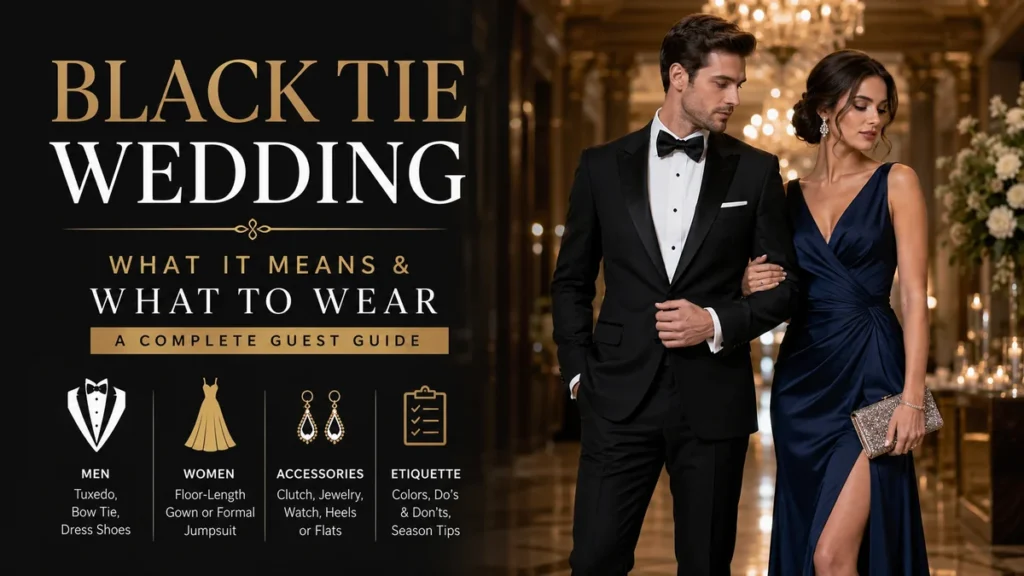
Black tie is a formal evening dress code centered on polished eveningwear. Traditionally, tuxedos are expected for guests wearing suits, while floor-length gowns or comparably formal evening outfits are the safest choice for other guests. The goal is not necessarily to wear black, but to match the elegance and formality the couple has requested.
What Does a Black Tie Wedding Mean?
A black tie wedding is a highly formal celebration where the hosts expect guests to wear traditional evening attire. It sits below white tie, the most formal Western dress code, but above black tie optional, formal, cocktail, semi-formal, and casual wedding attire.
Traditionally, black tie is associated with evening events. Modern weddings sometimes adapt the rules for destination venues, warm climates, creative themes, or earlier ceremonies, but the invitation’s stated dress code should still guide your outfit.
For suit-wearing guests, a tuxedo remains the traditional standard. For dress-wearing guests, a floor-length evening gown is the clearest interpretation. A sophisticated women’s tuxedo, exceptionally formal jumpsuit, or similarly polished alternative may also fit a modern black tie celebration when the fabric, tailoring, and accessories support the required level of formality.
The simplest way to think about it is this:
| Dress Code | Typical Level | Common Attire |
|---|---|---|
| White tie | Most formal | Tailcoat and white bow tie; full formal evening gown |
| Black tie | Very formal | Tuxedo; floor-length gown or equivalent formal eveningwear |
| Black tie optional | Formal with flexibility | Tuxedo or dark formal suit; gown or polished formal dress |
| Cocktail | Dressy | Suit and tie; cocktail or midi dress |
| Semi-formal | Moderately formal | Suit or dressy separates; refined dress or jumpsuit |
A useful rule is to dress for an elegant evening celebration rather than an ordinary wedding reception.
What to Wear to a Black Tie Wedding for Men
Traditional black tie menswear is unusually specific, which actually makes getting dressed easier.
A classic outfit includes a tuxedo jacket and matching trousers, white dress shirt, black bow tie, polished formal shoes, and restrained accessories. Current wedding-style guidance continues to identify the tuxedo as the standard rather than an ordinary business suit when an invitation specifically says black tie.
Choose a Tuxedo Rather Than a Regular Suit
A tuxedo differs from a normal suit through formal details such as satin or grosgrain lapels, a satin trouser stripe, formal buttons, and eveningwear styling.
Black is the safest color, although midnight navy has long been accepted in formal eveningwear. Some modern weddings permit tasteful burgundy, bottle green, ivory dinner jackets, or other variations, but these work best when the venue and invitation suggest a less rigid interpretation.
If you own only a dark navy or charcoal suit, check whether the invitation actually says black tie optional. That wording changes the rules substantially.
For strict black tie, a standard office suit is usually one level too casual.
Wear the Right Shirt
A crisp white formal shirt keeps the outfit traditional and lets the tuxedo provide most of the visual interest.
A pleated-front or piqué bib shirt can look particularly formal, although a clean white dress shirt designed for tuxedo wear also works. French cuffs and understated cufflinks are appropriate but not mandatory for every contemporary wedding.
Avoid patterned business shirts, bright colors, casual button-down collars, and shirts that look as though they came directly from the office.
Bow Tie or Long Tie?
For traditional black tie, wear a black bow tie.
The term “black tie” refers to this convention, not to an instruction that every piece of clothing must be black.
A long necktie may be acceptable at some modern formal weddings, but it moves the outfit away from classic black tie. If the invitation gives no additional guidance, the bow tie is the safest answer.
Formal Shoes Matter
Black patent leather Oxfords are traditional, while highly polished black leather Oxfords are a versatile alternative. Vogue’s current dress-code guidance also recognizes options such as formal loafers, opera pumps, and velvet slippers within appropriate eveningwear contexts.
Skip sneakers, casual loafers, hiking-style boots, chunky everyday footwear, and brown business shoes.
Keep Accessories Controlled
A pocket square, cufflinks, dress watch, studs, or simple boutonnière can add personality without making the outfit feel theatrical.
Black tie generally looks better when the details work together quietly.
A huge watch, novelty bow tie, brightly patterned socks, oversized belt buckle, or flashy jewelry can quickly undermine the elegance of an otherwise strong tuxedo.
What to Wear to a Black Tie Wedding for Women
For traditional black tie, a floor-length evening gown is the most dependable choice.
Current guidance from The Knot and Vogue continues to favor full-length dresses for black-tie weddings, with luxurious fabrics and polished evening accessories completing the look.
That does not mean every guest must look identical. Color, neckline, sleeves, silhouette, fabric, jewelry, and accessories provide plenty of room for personal style.
Floor-Length Gowns Are the Safest Choice
A black tie wedding is one of the occasions where a true evening gown feels completely appropriate.
Successful silhouettes include:
- A-line gowns, column dresses, bias-cut gowns, elegant sheath dresses, ball-gown-inspired silhouettes, draped designs, and sophisticated full-length wrap styles.
The garment does not need enormous volume or heavy embellishment. A simple floor-length silk gown with beautiful tailoring can look more appropriate than an overly decorated cocktail dress.
Choose Fabrics That Look Formal
Fabric can change the formality of an outfit almost as much as length.
Strong options include silk, satin, chiffon, velvet, crepe, lace, brocade, jacquard, taffeta, organza, and sophisticated beaded fabrics. These materials repeatedly appear in current formal-wedding guidance because their texture and drape suit evening dressing.
By contrast, casual cotton jersey, daytime linen, denim, basic ribbed knits, and sundress fabrics generally look too relaxed.
Can You Wear a Jumpsuit?
Yes, provided it looks genuinely formal.
A black tie jumpsuit should usually have full-length trousers, refined construction, high-quality fabric, and deliberate tailoring. Structured crepe, satin, velvet, or similar evening materials work better than casual jersey or loose daytime fabrics.
Women’s tuxedos can also be excellent choices. The Knot specifically recognizes both formal jumpsuits and women’s tuxedos as appropriate alternatives when executed at the required level of formality.
The principle matters more than gendered clothing rules: your outfit should look as sophisticated as the tuxedos and evening gowns around you.
Can You Wear a Short Dress to a Black Tie Wedding?
A floor-length gown remains the least ambiguous choice.
Some contemporary interpretations allow an exceptionally sophisticated midi or tea-length dress, especially where the couple, venue, climate, or invitation suggests modern flexibility. Vogue notes some room for shorter formal dresses when their materials and styling clearly match the occasion.
Still, strict interpretations are more conservative. The Knot’s current guidance recommends floor-length gowns and considers mini, midi, and tea-length dresses inappropriate for a straightforward black tie invitation.
So what actually works?
If the invitation says simply “Black Tie,” choose floor length unless you have a strong contextual reason not to. If it says “Black Tie Optional,” a formal midi or sophisticated cocktail dress becomes much easier to justify.
This distinction prevents one of the most common wedding-guest mistakes: treating black tie as another name for cocktail attire.
What Colors Can You Wear to a Black Tie Wedding?
Black is completely appropriate.
Despite the name, however, women are not required to wear black. Deep navy, burgundy, emerald, aubergine, rich blue, jewel tones, metallic shades, and many seasonal colors can all work beautifully.
Current black tie guidance frequently recommends dark or rich colors while still allowing significant variation based on season and wedding setting.
Can You Wear Black to a Wedding?
Yes.
The old idea that black automatically communicates mourning has largely disappeared from mainstream Western wedding guest etiquette. At an evening black tie event, black is one of the easiest colors to style appropriately.
What About White?
Unless the couple specifically requests it, guests should generally avoid outfits that could read as bridal.
That includes obvious white, bridal ivory, and some pale cream gowns. A tiny amount of white within a print is different from arriving in a floor-length ivory evening dress.
When you look at an outfit and immediately think, “Could this photograph like a wedding dress?” choose something else.
Are Bright Colors Acceptable?
They can be.
Black tie describes formality, not a mandatory dark color palette.
A beautifully tailored cobalt, ruby, emerald, plum, or sophisticated pink gown can fit perfectly. What matters is that the fabric, silhouette, and styling still communicate evening elegance.
Very casual tropical prints, neon clubwear, or highly attention-seeking designs may be less suitable unless the hosts have encouraged that aesthetic.
Black Tie Wedding Accessories, Shoes and Styling
A polished black tie outfit is rarely about the clothing alone. Shoes, bag, jewelry, grooming, and outerwear determine whether the complete look feels coherent.
For dress wearers, heels are traditional but not compulsory. Elegant flats can work just as well, especially when comfort or accessibility matters. The Knot explicitly includes both heels and dressy flats within contemporary black tie guidance.
Choose an evening bag or structured clutch rather than a large everyday tote.
Jewelry can be simple or more glamorous. Earrings, a bracelet, necklace, brooch, or cocktail ring can provide enough sparkle without competing with the couple.
Hair and makeup do not have to be elaborate. Neat, intentional styling is more important than following a particular beauty trend.
For colder weather, consider a formal wool coat, velvet jacket, dressy wrap, faux-fur stole, cape, or elegant shawl instead of throwing a casual puffer over an evening gown.
Black Tie Wedding Attire by Season
Season affects fabric, color, layering, and practicality, but it does not cancel the dress code.
Summer Black Tie Wedding
Warm-weather black tie calls for lighter construction rather than casual clothing.
Silk, chiffon, lightweight satin, organza, and fine crepe can help a formal outfit feel less heavy. Softer colors may work beautifully for summer, provided the silhouette still feels appropriate for an evening event.
Suit-wearing guests should resist replacing a tuxedo with lightweight business attire simply because it is hot. Instead, look for breathable formal shirts and appropriately constructed tuxedos.
Fall Black Tie Wedding
Autumn suits deep colors and richer textures particularly well.
Burgundy, forest green, navy, plum, chocolate, and jewel tones work naturally with velvet, satin, crepe, and brocade.
A formal wrap or tailored coat can also become part of the outfit rather than an afterthought.
Winter Black Tie Wedding
Winter is arguably the easiest season for traditional black tie.
Velvet jackets, full-length gowns, heavier satin, metallic details, structured outerwear, and rich evening colors all feel at home.
Just remember that practical winter footwear used outdoors does not need to be your reception footwear. Changing into formal shoes at the venue is often the better solution.
Spring Black Tie Wedding
Spring allows lighter colors, romantic prints, airy fabrics, and softer tailoring while retaining the required sophistication.
A floor-length floral gown can work, for example, when its scale, fabric, and construction feel evening-ready rather than like a daytime garden dress.
Black Tie Wedding vs. Black Tie Optional
These two dress codes sound almost identical but should not be treated the same.
Black tie means the hosts are actually asking for black tie attire.
Black tie optional means black tie is encouraged, but guests have another formal option if they do not own or wish to rent the traditional clothing.
For men, that generally means a tuxedo or an exceptionally polished dark suit with a tie. For women, it creates greater flexibility for formal gowns, sophisticated cocktail or midi dresses, jumpsuits, and dressy separates.
The word “optional” modifies the black tie requirement. It does not mean that dressing formally is optional.
Black Tie vs. White Tie
White tie is more formal than black tie and is relatively rare at modern weddings.
Traditional white tie menswear includes an evening tailcoat, white waistcoat, white bow tie, and highly formal accessories. Full formal evening gowns are expected for gown-wearing guests.
A normal black tuxedo therefore does not represent the highest possible level of formal dress. It represents the black tie tier immediately below white tie.
This is also why guests should not assume that “black tie” simply means “dress nicely.” It refers to a recognizable formalwear tradition with specific conventions.
Does a Black Tie Wedding Have to Be at Night?
Traditionally, black tie is evening dress.
The convention is often associated with events beginning around or after 6 p.m., and current wedding guidance continues to describe black tie primarily as an evening format.
Modern wedding schedules do not always follow historical etiquette perfectly, though. A ceremony might begin in the late afternoon and flow directly into a formal evening reception.
When the invitation explicitly says black tie, follow the requested dress code even if the ceremony begins somewhat earlier than traditional evening etiquette would suggest.
The couple’s stated expectation matters more than trying to correct their timetable.
How Venue and Wedding Style Affect Black Tie Attire
Dress codes do not exist in isolation.
A grand hotel ballroom, historic estate, formal city venue, museum, private club, destination resort, or luxury tented reception can all host black tie weddings, but the practical choices may differ.
For an outdoor ceremony, for example, thin stilettos can sink into grass. Dressy block heels or elegant flats may be much easier.
For a destination wedding in a hot climate, breathable formal fabrics become especially valuable.
At a conservative religious venue, consider bringing a wrap or jacket if your evening gown has a low neckline, open back, or bare shoulders.
Use the dress code to determine formality and the venue to determine practicality.
Common Black Tie Wedding Mistakes
Most guests do not go wrong because they lack expensive clothing. They go wrong because the outfit sits at the wrong level of formality.
A standard business suit, casual maxi dress, sundress, polo shirt, khakis, mini dress, sneakers, daytime linen outfit, clubwear, or office-ready cocktail dress can look noticeably underdressed in a room of tuxedos and gowns.
Another mistake is assuming that “formal” means “flashy.”
You do not need enormous sequins, excessive jewelry, an extravagant designer label, or an outfit that attracts more attention than the wedding party. Good tailoring, suitable fabric, appropriate length, clean footwear, and thoughtful grooming do far more.
Comfort matters too. A beautifully formal outfit that you cannot sit, walk, eat, or dance in may become a problem several hours into the celebration.
The strongest black tie outfits balance elegance with wearability.
What If You Don’t Own Black Tie Clothing?
You do not necessarily need to buy something you will wear once.
Tuxedo rental is a normal part of formalwear culture, and evening gowns can also be rented, borrowed, altered, or reworn.
When borrowing a tuxedo, prioritize fit. Sleeves and trouser hems that are dramatically too long or short can make expensive formalwear look less polished than a modestly priced outfit that has been properly altered.
The same applies to gowns.
Tailoring the hem to your shoes, checking the neckline, testing undergarments, sitting down, walking up stairs, and moving around before the wedding are practical steps that prevent last-minute problems.
What Should Couples Consider When Planning a Black Tie Wedding?
Although guests often search for the term because they need clothing advice, the dress code also makes a promise about the event itself.
If couples request black tie, guests will reasonably expect a celebration that feels intentionally formal. Venue, invitations, food service, table settings, lighting, entertainment, and the wedding party’s attire do not need to be extravagantly expensive, but they should support the elevated atmosphere.
The clearest way to communicate the requirement is simply to state “Black Tie” on the invitation or wedding website.
If tuxedos are preferred but not required, use “Black Tie Optional.”
Avoid inventing vague phrases that force guests to decode what you mean. Clear language is kinder than clever language when people are making decisions about rentals, tailoring, footwear, travel, and formal gowns.
A Simple Black Tie Wedding Outfit Check
Before leaving for the wedding, ask yourself whether your complete outfit looks appropriate beside a classic tuxedo or full-length evening gown.
For traditional menswear, that usually means a tuxedo, white formal shirt, bow tie, and polished black footwear.
For traditional womenswear, it usually means a floor-length formal gown with refined shoes and accessories. A carefully tailored women’s tuxedo or genuinely formal jumpsuit can also meet the standard.
Then consider three final details: does the outfit respect the couple, does it make sense for the venue and season, and can you comfortably wear it throughout the ceremony and reception?
If all three answers are yes, you are probably on the right track.
The Bottom Line on a Black Tie Wedding
A black tie wedding is an invitation to dress at one of the highest levels of modern wedding formality. A tuxedo is the traditional standard for suit-wearing guests, while a floor-length evening gown remains the safest standard for dress-wearing guests. Modern alternatives can work when their tailoring, fabric, footwear, and overall presentation are equally refined.
You do not have to wear black, and you do not have to abandon your personal style. You simply need to interpret that style through formal eveningwear.
When in doubt, lean slightly more formal rather than slightly more casual. At a black tie wedding, looking intentionally dressed for the occasion is far more comfortable than arriving and realizing everyone else followed the dress code more closely.