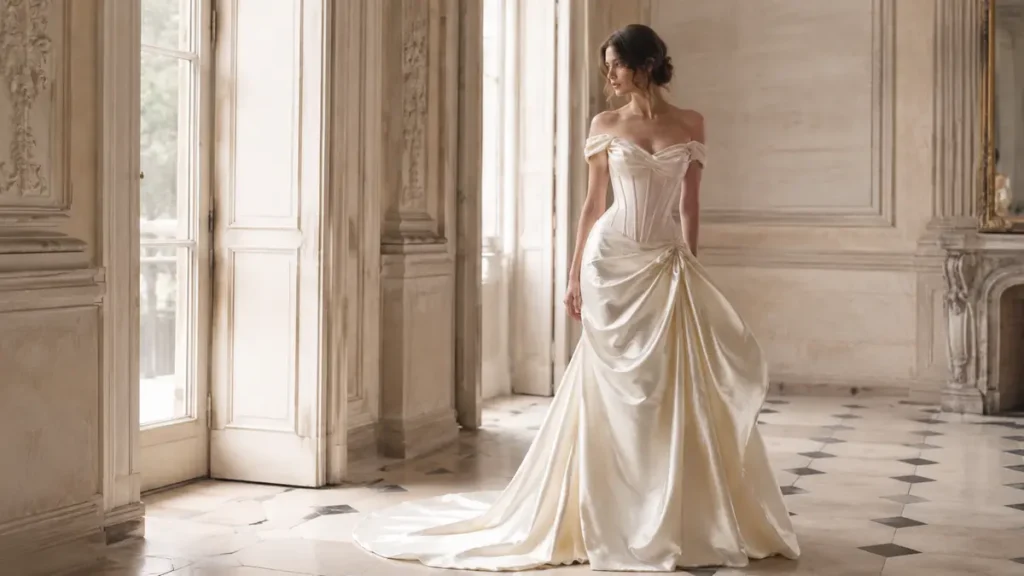
A Vivienne Westwood bridal gown is rarely quiet or conventional. Sculpted corsetry, asymmetric draping and historically inspired silhouettes give these dresses a theatrical presence while still celebrating the natural shape of the wearer.
A vivienne westwood wedding dress combines traditional British tailoring with experimental pattern cutting, structured corsetry and artful draping. Brides can explore made-to-order gowns, individually developed couture pieces, short dresses and separates. Recognizable designs include the Cocotte, Cora, Camille, Grace and Princess silhouettes.
What Makes a Vivienne Westwood Wedding Dress Distinctive?
Vivienne Westwood’s bridal identity rests on contrast. The gowns can feel romantic and rebellious, historical and modern, dramatic and unexpectedly relaxed at the same time.
Rather than disguising the body beneath layers of decoration, Westwood designs typically use construction to reshape fabric around it. Boned bodices support the torso, folded necklines frame the décolletage and precisely positioned draping creates volume without relying solely on a large skirt.
The most recognizable design features include:
- Structured corsets and bustier-style bodices
- Cinched or dropped waistlines
- Draped and gathered satin
- Folded, peaked or off-the-shoulder necklines
- Asymmetric skirts and trains
- References to historical dress
- Exaggerated hips or sculpted silhouettes
- Detachable sleeves, trains and styling pieces
- Ivory, white, blush and occasionally unconventional colors
- A deliberate tension between elegance and punk irreverence
The construction often looks effortless from a distance. Up close, however, the effect depends on careful tailoring, internal support and experimental pattern cutting.
Why Is Corsetry So Important?
Corsetry is central to the house’s approach because it establishes the architecture of the gown. A well-fitted corset lifts the bust, defines the waist and provides a stable foundation for a heavy or dramatically draped skirt.
This does not mean every Westwood bride must accept an extremely tight waist. The correct fit should provide support without preventing comfortable breathing or movement. Internal boning, stretch panels and the shape of the neckline vary between designs, so two corseted gowns can feel noticeably different.
Historical Fashion Without Looking Like a Costume
Westwood repeatedly drew from European fashion history, including eighteenth-century corsets, Victorian proportions and classical drapery. These references are distorted, simplified or combined with modern fabrics rather than reproduced literally.
The result may suggest a court gown or vintage corset, but an asymmetric neckline, exposed construction detail or sharply folded skirt keeps it contemporary. This balance is one reason the dresses photograph so memorably.
The Most Recognizable Vivienne Westwood Bridal Styles
Bridal collections change, and individual names or configurations may differ by season and market. Several recurring silhouettes nevertheless explain the house’s visual language.
| Style or silhouette | Recognizable qualities | Often suits brides seeking |
|---|---|---|
| Cocotte | Swooping neckline, corseted waist and soft draping | A sensual, unmistakably Westwood shape |
| Cora or Nova Cora | Sculpted corset with dramatic draped skirt options | Strong structure and modern romance |
| Camille or Nova Camille | Elegant satin draping with a relatively fluid line | Understated drama and graceful movement |
| Grace | Clean, statuesque proportions and refined construction | A timeless gown with distinctive tailoring |
| Princess | Regal volume, decorative finishes and formal impact | A grand ceremony or statement entrance |
| Rhea | Corsetry combined with airy tulle or layered volume | A lighter, more ethereal interpretation |
| Freyja | Directional draping, often with an asymmetric emphasis | A fashion-led, unconventional silhouette |
| Mabel | Off-the-shoulder or bustier construction with soft folds | Romantic styling with sculptural definition |
| Minidress | Corseted short shape, sometimes based on house classics | Civil ceremonies, receptions or second looks |
These are best treated as starting points rather than rigid categories. Fabric, neckline, train length, embroidery and accessories can significantly alter the personality of a familiar silhouette.
The Cocotte Silhouette
The Cocotte is one of the clearest examples of Westwood’s approach to femininity. Its curved neckline frames the bust while the corset draws attention to the waist. Draping introduces softness so the design does not feel hard or overly restrictive.
Versions of the shape have appeared as full-length gowns and minidresses. Its renewed visibility through celebrity weddings—including Charli XCX’s corseted short bridal look—shows how easily the basic design moves between traditional and alternative settings.
The Cora and Nova Cora
The Cora family typically pairs a strongly sculpted bodice with artfully arranged fabric below the waist. Depending on the version, the skirt may be slim, full-length, draped or shortened.
It is often a useful reference for brides who want recognizable Westwood corsetry without the enormous volume associated with Carrie Bradshaw’s cinematic gown.
Full-Length Gown or Bridal Minidress?
A long gown creates ceremony, movement and a strong aisle photograph. A minidress feels playful and works particularly well for a registry-office wedding, city celebration or reception change.
The decision should account for more than venue formality. Consider how much time will be spent walking, sitting, dancing and moving between locations. A beautifully fitted short corset dress can make more sense than a heavy train for an intimate urban wedding.
The Carrie Bradshaw Vivienne Westwood Wedding Dress
The best-known Vivienne Westwood bridal gown remains the dress worn by Sarah Jessica Parker as Carrie Bradshaw in Sex and the City: The Movie.
The gown originated in the Vivienne Westwood Gold Label Autumn/Winter 2007 collection, titled Wake Up Cave Girl. Its construction was reportedly influenced by diamond-cutting techniques. The design combined a sharply structured strapless bodice with a vast, tiered skirt made from ivory silk duchess satin and Radzimir taffeta.
Costume designer Patricia Field amplified its impact with unconventional accessories: a champagne-toned veil, crystal brooch, blue-green feathered bird headpiece and bold shoes. The styling was deliberately excessive, matching Carrie’s fashion-first character and the scale of the planned New York Public Library wedding.
The wedding in the film does not proceed as intended, yet the dress became one of modern popular culture’s most recognizable bridal images. Carrie later revisited it in And Just Like That…, styling it differently for a Met Gala storyline.
Can You Buy Carrie Bradshaw’s Exact Dress?
The original runway gown should not be confused with a regularly stocked ready-to-wear dress. Versions and related silhouettes have appeared over the years, but availability, construction and pricing change.
A bride seeking the same effect should focus on its defining elements:
- Pointed strapless corsetry
- A tightly defined waist
- A highly voluminous skirt
- Crisp, substantial fabric
- Sculptural rather than delicate decoration
- Statement headwear or a dramatic veil
Archived resale listings and imitations require careful scrutiny. A similar shape or copied image does not establish authenticity, and alterations can substantially change an original gown’s proportions.
Made-to-Order Versus Couture Bridal
Vivienne Westwood offers distinct bridal routes. Understanding them prevents confusion about customization, fitting and cost.
Made-to-Order Bridal
The made-to-order collection presents established house designs produced for an individual order. It can include full-length gowns, minidresses and coordinating pieces such as veils, gloves, boleros and detachable trains.
These dresses still involve specialist construction and fitting, but the process begins with a defined seasonal design. Choices may include approved fabrics, colors or styling details, depending on the gown and boutique.
The collection is designed, sampled and handcrafted locally in England, using traditional tailoring alongside the house’s experimental cuts.
Made-to-Measure Couture
Couture is a more individualized service. The process begins with a chosen silhouette or design direction, followed by personalized sketches. A toile—a test version generally made from inexpensive fabric—is created and adjusted to the bride’s body before the final material is cut.
Couture possibilities may include:
- Custom proportions and design development
- Luxury fabric selection
- Handcrafted embroidery
- Beading and appliqué
- Bespoke surface finishes
- Personalized trains, sleeves or veils
- Multiple toile and final-garment fittings
The finished gown is handcrafted by specialist couturiers in the London atelier. Because the service involves design development as well as construction, it requires more time and a larger budget than choosing a fixed collection style.
| Consideration | Made-to-order | Couture made-to-measure |
|---|---|---|
| Starting point | Existing collection design | Individually developed interpretation |
| Customization | Defined options vary by gown | Extensive personalization |
| Fit process | Ordered size with specialist alterations or fittings | Toile developed around the bride |
| Decorative work | Based mainly on selected design | Bespoke embroidery, beading and finishes possible |
| Timeline | Long lead time recommended | Typically requires the most planning |
| Cost | Luxury designer pricing | Higher, individually quoted investment |
How Much Does a Vivienne Westwood Wedding Dress Cost?
There is no single fixed price. Cost varies by collection, fabric, construction, retailer, country, taxes, alterations and customization.
Recent luxury-retailer listings have placed many full-length Westwood bridal gowns in the approximate US$6,500 to US$14,000 range. Some simpler ready-to-wear or short styles may cost less, while elaborate gowns can exceed that range. Highly detailed couture pieces are individually quoted and may cost considerably more.
Published prices should be treated as snapshots, not universal quotations. Currency movements, seasonal collections and boutique policies can change the total.
A realistic bridal budget should include:
- The dress or separate pieces
- Boutique fittings and alterations
- Veil, gloves, bolero or detachable train
- Undergarments and shoes
- Taxes, duties or delivery where applicable
- Professional pressing before the ceremony
- Specialist cleaning and preservation afterward
Alterations are particularly important with structured gowns. Adjusting a corset, complex draping or internal foundation demands a professional who understands couture-level bridal construction.
Finding and Fitting the Right Silhouette
Westwood gowns should be judged on the body, not only in editorial photographs. Sculptural folds react to height, torso length, bust shape and posture, while a neckline that looks severe on a hanger may become soft and balanced when fitted.
Start With Shape, Not a Famous Dress Name
It is tempting to enter an appointment determined to wear the Carrie gown, Cocotte or Nova Cora. A more productive approach is to identify the effect you want:
- A strongly defined waist
- A full or narrow skirt
- A high or open neckline
- Symmetry or deliberate asymmetry
- Firm corset support or softer draping
- A long train or easy movement
- A formal gown or short second look
This allows the bridal consultant to suggest related silhouettes that may suit your proportions more naturally.
Test Real Wedding-Day Movement
During a fitting, do more than stand still in front of the mirror. Try to:
- Sit without the corset digging into the ribs
- Raise both arms comfortably
- Walk at your normal pace
- Turn without stepping on the skirt
- Climb a few steps if the boutique permits
- Practise holding or bustling the train
- Wear shoes with the planned heel height
- Check the neckline from the front, side and back
A dress that looks magnificent for thirty seconds may feel very different after a seated dinner. Support should feel secure, but numbness, restricted breathing or sharp pressure are signs that the fit needs adjustment.
Choose Underwear After the Dress
Many corseted gowns contain substantial internal support, making a separate bra unnecessary or visually disruptive. Ask the fitter before buying shapewear. Seams, waistbands and padded cups can interfere with the smooth line of a fitted bodice.
Bring neutral, seamless underwear to the first appointment, then follow the boutique’s advice once the final construction is clear.
Book Early
Made-to-order and couture bridalwear require production time, international logistics and several fittings. Begin the process well ahead of the wedding—often nine to twelve months is sensible—while confirming the actual lead time directly with the authorized boutique.
A shorter schedule may sometimes be possible, but it can reduce design options and leave less room for complex alterations.
Quick takeaway: The most flattering Westwood dress is not necessarily the most famous one. Prioritize secure corsetry, balanced proportions, comfortable movement and enough fitting time for the draping to sit correctly.
Fabrics, Draping and Transformative Pieces
Fabric determines whether sculptural construction appears crisp, fluid or airy. Silk duchess satin can hold substantial folds, while lighter satin creates softer movement. Taffeta supports dramatic volume, and tulle adds transparency without making the entire dress visually heavy.
Collections may use materials such as:
- Silk satin
- Duchess satin
- Silk cady
- Crêpe satin
- Radzimir taffeta
- Tulle
- Lace
- Embroidered textiles
- Viscose or other selected alternatives to conventional silk
Past collections have also included environmentally conscious options such as recycled tulle and viscose presented as a vegan alternative to silk or satin. Availability depends on the current design and should be confirmed with the bridal team.
Why Detachable Elements Matter
A detachable train, bolero, glove, overskirt or sleeve can transform one foundation dress across the day. A bride might wear a dramatic train for the ceremony, remove it for dinner and add gloves or a different accessory for portraits.
This approach preserves the design language while reducing the need for a completely separate reception dress. It can also make a grand silhouette more practical for dancing.
Styling a Vivienne Westwood Wedding Dress
The dress already contains strong visual information, so styling works best when each accessory has a clear purpose.
Veils and Headpieces
A cathedral veil complements a grand skirt or long train, while a short veil emphasizes a minidress. Embroidered veils, pearl details and sculptural headpieces can reinforce the house’s theatrical character.
For an elaborate gown, a plain veil may create balance. For a clean satin dress, lace, roses or unusual headwear can add personality without competing with heavy embellishment.
Jewelry
A corseted or off-the-shoulder neckline creates space for a necklace, but one is not mandatory. Statement earrings may be enough when the bodice features strong folds.
Pearls suit the historical references, while silver hardware, crystals or unconventional vintage pieces can bring out the punk side of Westwood’s aesthetic.
Shoes
Choose footwear according to the skirt length and venue surface. Full gowns may conceal most of the shoe, but heel height still affects hemming and posture. A short dress makes footwear a central part of the look.
Platform heels, pointed pumps, slingbacks and even ankle boots can work, provided they support comfortable walking.
Hair and Makeup
Sculpted updos echo the gown’s structure, whereas loose, imperfect hair creates contrast. Makeup can remain polished and romantic or introduce a bolder detail, such as a strong lip.
The guiding principle is character. A Westwood gown should not force the bride into a conventional “bridal” identity that feels unlike her.
New, Pre-Owned and Vintage Vivienne Westwood Bridal
Buying pre-owned can provide access to discontinued silhouettes, samples and earlier collections. It may also reduce cost and extend the useful life of a well-made garment. The trade-off is uncertainty around authenticity, condition and alterations.
Before purchasing, request:
- Original receipts or boutique documentation
- Clear photographs of labels and internal construction
- Exact current measurements, not only the tagged size
- Details of every previous alteration
- Close-ups of the hem, corset, fastenings and underarms
- Information about stains, fabric pulls or broken boning
- The gown’s cleaning and storage history
- A written return policy where available
Corseted dresses are less forgiving of inaccurate measurements than loosely fitted gowns. A bodice altered significantly for a previous wearer may be difficult—or uneconomical—to restore.
Vintage Westwood fashion should also be distinguished from current Westwood bridal. An older white runway dress may make an extraordinary wedding outfit without being part of an official bridal collection.
Care, Alterations and Preservation
Structured bridalwear needs specialist handling before and after the wedding. Do not entrust complex draping, boning or luxury satin to a general alterations service without relevant experience.
The alteration plan may include:
- Refining the corset around the bust and waist
- Adjusting straps or an off-the-shoulder neckline
- Correcting skirt balance after changing heel height
- Shortening multiple draped layers
- Adding a discreet bustle or wrist loop
- Securing detachable pieces
- Steaming folds without flattening intentional structure
Transport the gown in breathable protective packaging and follow the boutique’s instructions for hanging. Heavy dresses may have internal hanger loops designed to carry the weight without stretching the neckline.
After the celebration, arrange professional cleaning promptly. Tell the cleaner about invisible spills, outdoor contact and any fragile embellishment. For long-term storage, use acid-free materials and avoid plastic packaging that can trap moisture.
Is a Vivienne Westwood Wedding Dress Right for You?
A Westwood gown makes sense for someone who appreciates visible construction, a defined silhouette and fashion history interpreted with wit. It can suit a cathedral, town hall, country estate or unconventional city celebration because the brand’s bridal vocabulary ranges from enormous couture gowns to corseted minidresses.
It may be less suitable for a bride who wants an extremely lightweight, unstructured slip or dislikes firm support around the torso. Even then, softer draped designs may provide the Westwood character without the most dramatic corsetry.
The best way to choose a vivienne westwood wedding dress is to look beyond its celebrity associations and study how it functions on your own body. Compare made-to-order and couture routes, establish the complete budget, test movement during fittings and choose accessories that support rather than overwhelm the silhouette. The final look should feel unmistakably Westwood—but still unmistakably yours.