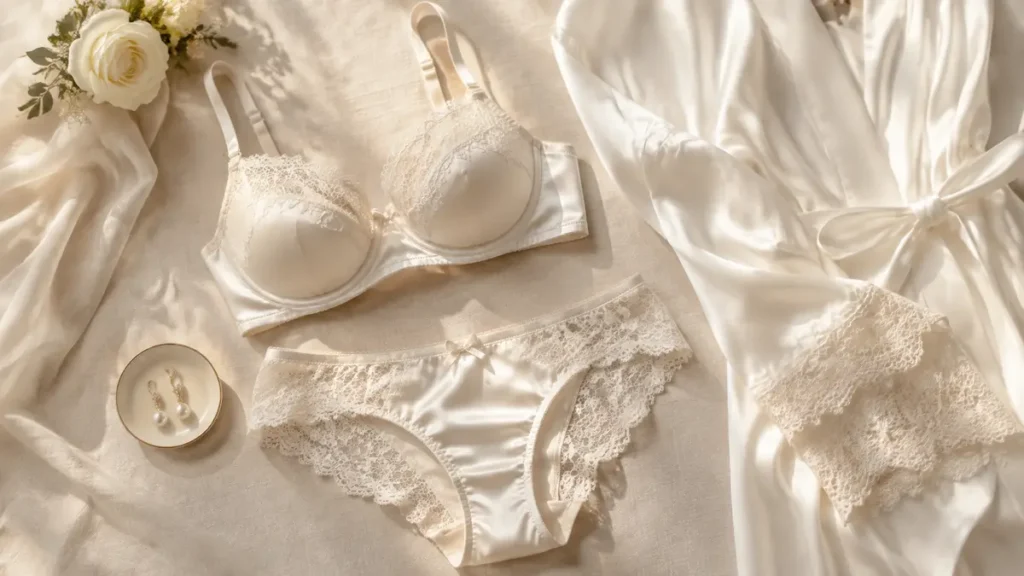
The prettiest bridal lingerie is not always the best lingerie to wear beneath a wedding dress. Lace, boning, seams, and decorative details can affect how a gown fits—and may become uncomfortable after several hours.
Bridal lingerie includes bras, briefs, bodysuits, corsets, shapewear, slips, robes, garters, and sleepwear chosen for wedding-related occasions. Under a wedding dress, the right pieces should support the body, remain discreet beneath the fabric, and feel comfortable while sitting, walking, eating, and dancing.
That distinction matters because wedding-day undergarments and wedding-night lingerie perform different jobs. One needs to work almost invisibly beneath a carefully fitted gown. The other can be selected primarily for personal style, confidence, and enjoyment.
What Is Bridal Lingerie?
Bridal lingerie is a broad category of intimate apparel associated with the wedding day, wedding night, honeymoon, and bridal preparations. Although traditionally presented in white or ivory, it can be any color that suits the wearer’s skin tone, outfit, and preferences.
Common types include:
- Seamless briefs and thongs
- Strapless and plunge bras
- Longline bras and bustiers
- Adhesive cups and breast tape
- Bodysuits
- High-waisted shaping briefs
- Mid-thigh shaping shorts
- Slips and petticoats
- Corsets
- Camisoles and chemises
- Matching bra-and-brief sets
- Robes and pajamas
- Stockings, suspenders, and garters
Some pieces are functional, some decorative, and others combine both qualities. A supportive bodysuit, for example, may smooth the torso while still featuring bridal lace. A silk robe may be worn while getting ready but never appear beneath the gown.
Wedding-day underwear versus wedding-night lingerie
Trying to make one set serve both purposes often creates avoidable problems.
| Type | Main purpose | Best qualities |
|---|---|---|
| Under-dress lingerie | Support and discretion | Smooth, secure, breathable, compatible with the gown |
| Getting-ready pieces | Comfort and photography | Easy to remove without disturbing hair or makeup |
| Wedding-night lingerie | Personal expression | Attractive, enjoyable, comfortable, confidence-building |
| Honeymoon lingerie | Versatility | Packable, reusable, suitable for the destination |
A practical approach is to wear simple undergarments beneath the dress and change into a more decorative set later. This prevents lace, bows, garter straps, or corset fastenings from showing through the gown.
How to Choose Bridal Lingerie for Your Wedding Dress
The gown should determine the undergarments—not the other way around. Neckline, back depth, fabric weight, lining, boning, and silhouette all affect what can be worn underneath.
Many wedding dresses already contain structured cups, internal corsetry, boning, or a waist stay. In those cases, an additional bra may distort the bodice rather than improve it. A bridal seamstress can assess whether the gown provides enough support or needs cups, straps, or other alterations.
Match the bra to the neckline and back
| Dress design | Suitable support options | What to watch for |
|---|---|---|
| Strapless | Strapless bra, longline bra, bustier, built-in cups | Bra edge appearing above the neckline |
| Sweetheart | Balconette, strapless bra, sewn-in cups | Cup shape conflicting with the bodice |
| Plunging V-neck | Plunge bra, breast tape, adhesive cups | Center gore or tape showing |
| Backless | Adhesive cups, tape, low-back converter, sewn-in support | Visible band or adhesive at the sides |
| Halter | Convertible or halter bra, built-in cups | Straps near the neckline |
| One-shoulder | Convertible strapless bra | Uneven tension and exposed straps |
| High-neck | Regular supportive bra if the back permits | Seams visible through fitted fabric |
| Corseted bodice | Often no separate bra is needed | Excess bulk inside the structured bodice |
A regular strapless bra is not automatically suitable for every strapless gown. The band must sit below the dress neckline, while the cup shape must match the bodice. If the gown is fitted correctly at the waist and bust, its internal structure may provide more reliable support than a separate bra.
For larger cup sizes, a longline bra or professionally altered bodice may provide better weight distribution. Adhesive cups can offer coverage and shaping, but they do not provide the same lift as a properly fitted band.
Choose underwear for the gown’s silhouette
Ball gowns and many A-line dresses have enough volume to conceal ordinary briefs. Sheath, column, mermaid, and fit-and-flare gowns are less forgiving because the fabric sits close to the hips and thighs.
For a fitted silhouette, consider:
- Laser-cut or bonded-edge briefs
- Seamless thongs
- Smooth boy shorts
- High-waisted briefs without thick elastic
- Mid-thigh shorts with flat hems
- An unlined bodysuit with bonded seams
Test underwear under the actual gown in natural light and with flash photography. A style that looks invisible in a dim fitting room may create lines or shadows in daylight.
Does Bridal Lingerie Need to Be White?
No. White underwear can remain surprisingly visible beneath white, ivory, blush, champagne, or lightly lined fabric. A shade close to the wearer’s natural skin tone is usually less noticeable.
“Skin tone” does not mean one generic beige. Nude lingerie should be selected from a realistic range of undertones and depths, including rosy, golden, olive, caramel, brown, and deep espresso shades.
Use the following order when choosing a color:
- Match the underwear closely to your skin.
- Check it beneath the gown’s lining and outer fabric.
- View the dress in daylight.
- Take photographs with and without flash.
- Confirm that edges, cups, and panels do not create visible contrast.
White, ivory, blue, or blush pieces can still work under thick, fully lined dresses. With sheer panels or lightweight fabrics, however, a genuine skin-tone match is usually safer. Current bridal guidance from Brides similarly recommends choosing undergarments close to the wearer’s natural complexion.
Do You Need Shapewear Under a Wedding Dress?
Shapewear is optional. It can create a smoother line or reduce friction between the thighs, but it is not a wedding requirement and should never prevent comfortable breathing, eating, sitting, or movement.
The best choice depends on the gown and the result you want.
Common bridal shapewear styles
| Shapewear style | Area covered | Works well beneath |
|---|---|---|
| High-waisted brief | Abdomen and waist | A-line and moderately fitted gowns |
| Mid-thigh short | Waist, hips, thighs | Sheath, mermaid, and column dresses |
| Open-bust bodysuit | Torso and hips | Dresses requiring a separate bra |
| Low-back bodysuit | Torso with lowered back | Some low-back gowns |
| Shaping slip | Waist, hips, and thighs | Smooth column or slip dresses |
| Waist cincher | Midsection | Structured gowns with sufficient hip room |
| Anti-chafing short | Inner thighs | Full skirts and warm-weather weddings |
Choose light or medium compression unless you have comfortably worn firm shapewear for long periods before. Strong compression can roll, pinch, trap heat, restrict movement, and make bathroom visits difficult.
The goal is not to buy the smallest possible size. Shapewear that is too small can create new ridges above and below the garment. It may also shift during the day. Buy according to your current measurements and the manufacturer’s size chart.
Before making a final decision, wear the shapewear for several hours. Walk upstairs, sit through a meal, bend, dance, and use the bathroom. Brides’ shapewear guidance also recommends testing for rolling, riding up, discomfort, and difficult closures before the wedding.
Quick takeaway: If the gown already fits smoothly and you feel comfortable without shapewear, you do not need to add it.
Selecting Bridal Lingerie by Fabric
The gown’s material is just as influential as its silhouette. Thin fabric reveals more texture, while structured fabric conceals it.
Satin and silk
Silk and glossy satin reflect light, making ridges and seams more noticeable. Choose bonded edges, laser-cut briefs, and smooth cups. Avoid raised lace and bulky hooks wherever the fabric touches the body.
A bias-cut silk dress can follow every contour. A lightweight slip may help the fabric skim the body, but it must be tested because an extra layer can also bunch or alter the gown’s drape.
Crepe
Crepe varies in weight, but many bridal crepes reveal underwear lines. Smooth, raw-cut styles usually work best. If wearing shaping shorts, check that the leg openings do not create a visible horizontal line.
Lace and embroidered gowns
Textured outer fabric is more forgiving, particularly when fully lined. Lace underwear may work beneath these gowns, but test any bows, appliqués, or raised seams against the lining.
Tulle and organza
Full skirts often conceal briefs and thigh-length garments easily. The bodice may still be sheer, however, so cups and bra bands require careful placement.
Sheer and illusion panels
Illusion necklines, cutouts, and transparent backs require undergarments that stay within the opaque areas of the dress. Sewn-in cups, discreet breast tape, or alterations are often more effective than a conventional bra.
Bra Fit, Bust Support, and Built-In Cups
Correct bra sizing matters more than a “bridal” label. A bra should sit level around the torso, contain the breast tissue without spilling or gaping, and remain secure when the arms move.
Signs of poor fit include:
- A band that rides up at the back
- Straps doing most of the supporting
- Cups that wrinkle or gape
- Breast tissue spilling at the top or sides
- A center gore that floats away from the chest
- Underwires resting on breast tissue
- Painful pressure, rubbing, or restricted breathing
Book a professional bra fitting if your size has changed or you are unsure about support. Even then, the final test must happen beneath the gown. Different bra shapes can produce very different results in the same nominal size. Bravissimo’s bridal guide also advises checking bra size before dress shopping so that good support is easier to recognize.
When sewn-in cups are better
Sewn-in cups can be useful for:
- Deep-plunge necklines
- Backless gowns
- Structured strapless bodices
- Illusion panels
- Dresses with narrow or unusual armholes
- Gowns that distort when worn over a separate bra
Cups alone mainly provide shape and coverage. They may not deliver enough lift for every bust. A seamstress can add boning, supportive lining, a waist stay, or other internal structure when greater support is required.
Bring the exact bra, cups, or tape you intend to use to every important fitting. Changing undergarments later can alter the bust position, waistline, hem length, and overall silhouette.
Breast Tape and Adhesive Cups: What to Know
Breast tape can work beneath backless, strapless, asymmetric, and deeply cut gowns. It allows customized placement, but successful application requires practice.
How to test breast tape safely
- Perform a small patch test at least 24 hours before wider use.
- Apply tape to clean, completely dry skin.
- Do not apply it over broken, sunburned, irritated, or freshly treated skin.
- Use nipple covers before adding supportive tape.
- Arrange the tape so it remains inside the gown’s opaque sections.
- Wear the complete setup for several hours before the wedding.
- Remove it slowly using warm water or an appropriate skin-safe oil.
Sweat, humidity, body lotion, and movement can reduce adhesion. Pack extra tape, but do not rely on a rushed first-time application on the wedding morning.
Adhesive cups are simpler but usually provide less lift. They are primarily useful for coverage, spacing, and shaping. Check their edges under the dress, especially near low armholes.
When to Buy Your Wedding Undergarments
Do not finalize bridal lingerie before choosing the gown. Once you know the neckline, back, fabric, and internal construction, you can make a much more accurate decision.
A practical timeline is:
- Initial dress shopping: Wear simple, neutral, seamless underwear and a supportive strapless bra if desired.
- After choosing the gown: Ask the bridal consultant what support is already built into it.
- Before alterations: Select likely bras, cups, shapewear, and underwear.
- At the first major fitting: Test the complete undergarment combination.
- At the final fitting: Wear every piece exactly as planned for the wedding.
- Before the wedding: Complete a full comfort and movement test.
The Brides undergarment guide recommends choosing pieces with the gown and its fit in mind, rather than treating lingerie as an isolated purchase.
If your body changes during the alteration period, reassess the fit. Do not assume that heavily compressive shapewear will compensate for a dress that needs professional adjustment.
Comfort Tests That Prevent Wedding-Day Problems
A fitting-room mirror tells only part of the story. Bridal lingerie must remain functional for many hours and through different movements.
Wear the gown and undergarments together while you:
- Sit upright and lean forward
- Walk at a normal pace
- Climb a few steps
- Raise both arms
- Bend to put on shoes
- Hug someone
- Practice a few dance movements
- Eat and drink
- Use the bathroom
- Spend time in a warm room
Check for rolling waistbands, slipping cups, visible seams, thigh friction, trapped heat, and painful pressure points. If a piece requires constant adjustment during a 20-minute fitting, it will not improve during a long reception.
Bathroom access deserves particular attention. Bodysuits, corsets, garter belts, and high-compression shorts can be awkward beneath a gown with multiple layers. Practice the process and make sure a trusted attendant understands any hooks, lacing, or bustle fastenings.
Quick takeaway: The best wedding underwear is the set you can forget about once the dress is on.
Bridal Lingerie for Different Body Needs
There is no single garment that works for every body. Good bridal styling begins with the desired support and comfort—not with correcting supposedly imperfect features.
Fuller busts
Look for a firm, level band, appropriately sized cups, supportive side panels, and a design compatible with the neckline. A longline bra can distribute support across a wider area, but it must not show above a low back or conflict with the gown’s boning.
Smaller busts
Light padding, removable inserts, push-up cups, or strategic dress alterations can add shape if desired. Avoid oversized cups, which may gape beneath a structured neckline.
Plus-size bodies
Prioritize inclusive sizing, stable bands, flexible boning, breathable panels, and leg openings that do not dig in. Firm compression is not automatically more supportive. A correctly sized medium-compression bodysuit may sit more smoothly than an undersized high-compression garment.
Pregnancy
Allow room for changing measurements and increased sensitivity. Soft, wireless support and breathable briefs are often more comfortable. Schedule final fittings as close to the wedding as the alteration team reasonably allows.
Sensitive skin and limited mobility
Remove scratchy labels, avoid stiff lace against sensitive areas, and minimize complicated fastenings. Cotton-lined gussets and breathable microfiber can improve comfort. Anyone with reduced hand movement should test hooks, snaps, and bathroom openings independently or arrange assistance.
Getting-Ready Lingerie and Robes
Getting-ready clothing should be easy to remove without pulling it over styled hair or finished makeup. Button-front pajamas, wrap robes, loose chemises, and zip-front garments are practical options.
Photography can influence the choice, but comfort still matters. Check how a robe sits when seated and whether it becomes transparent in bright window light. If several people are getting ready together, coordinated colors can create a cohesive look without requiring everyone to wear identical cuts.
Choose robes and sleepwear based on individual comfort, climate, and coverage preferences. A silk or satin robe photographs beautifully but may slip open. Cotton and modal are often cooler and easier to manage during a busy morning.
Wedding-Night Lingerie Styles
Wedding-night bridal lingerie does not have to fit beneath the gown, so it allows more freedom in fabric, color, and structure.
Popular styles include:
- Matching bra-and-brief sets
- Bodysuits and teddies
- Babydolls
- Chemises and slips
- Bustiers and corsets
- Camisole sets
- Robes and peignoirs
- Stockings and garter belts
- Soft bralettes
- Silk pajamas
Select a style that feels authentic rather than obligatory. Romantic does not have to mean white lace, and revealing does not automatically mean confident. Black, jewel tones, pastels, embroidery, minimalist silk, or comfortable sleepwear can all suit the occasion.
If wearing a corset, check that you can sit and breathe comfortably. For garter belts and stockings, practice attaching the suspender clips before the wedding. If you want something reusable, choose a color and silhouette that can become part of your regular wardrobe.
Are Wedding Garters Necessary?
No. A garter is an optional accessory, not a required component of bridal lingerie.
Historically, garters helped hold stockings in place. Modern versions are often decorative or connected with the garter-toss tradition. Some couples enjoy the custom, while others find it uncomfortable or outdated and leave it out.
If you wear one beneath the dress:
- Check that it does not show through the fabric.
- Make sure it stays in place without restricting circulation.
- Avoid bulky embellishments beneath a fitted skirt.
- Wear it briefly before the wedding to test for irritation.
- Consider a separate toss garter if you want to keep the main one.
The choice should reflect your comfort and preferences, not pressure from tradition.
Common Bridal Lingerie Mistakes
Buying by dress color alone
White lingerie is not automatically invisible under a white gown. Skin-tone matching is usually more reliable beneath pale or sheer fabric.
Wearing the wrong size in shapewear
Sizing down can cause rolling, discomfort, and visible bulges. Use current measurements and follow the brand’s chart.
Introducing new lingerie after alterations
A different bra or shaping garment can change the body’s position inside the gown. That may affect the neckline, waist, and hem.
Prioritizing appearance over function
Decorative lace and boning can become irritating over a long day. Save elaborate pieces for later if they interfere with the gown.
Skipping the movement test
Standing still does not reveal slipping, rolling, chafing, or bathroom difficulties. Test the full outfit under realistic conditions.
Assuming every bride needs a bra
Many structured wedding dresses are designed to provide support without one. An unnecessary bra can add visible lines or change the intended fit.
Wearing too many layers
A bra, corset, shapewear, slip, and lined gown may create heat and bulk. Use only the layers that serve a clear purpose.
A Final Bridal Lingerie Checklist
Before the last dress fitting, confirm that your chosen pieces:
- Match the gown’s neckline and back
- Remain invisible beneath its fabric
- Provide the support you actually need
- Fit without pinching, gaping, or rolling
- Allow normal breathing and movement
- Stay comfortable while seated
- Work in warm conditions
- Allow manageable bathroom access
- Have been tested in daylight and flash photography
- Do not interfere with the dress lining or boning
- Are the exact pieces worn during final alterations
Also pack any essentials in a small emergency kit: spare tape, nipple covers, fashion tape, anti-chafing balm, and a backup pair of seamless underwear. Avoid experimenting with unfamiliar adhesive products or restrictive garments on the wedding day itself.
Choosing Bridal Lingerie With Confidence
The right bridal lingerie supports the dress and the person wearing it. Under the gown, prioritize fit, comfort, smoothness, and compatibility with the neckline, fabric, and internal structure. For the wedding night or honeymoon, choose whatever feels enjoyable and genuinely personal.
Start with the gown, test every layer during alterations, and wear the full combination long enough to uncover practical problems. When bridal lingerie fits correctly, it does its job quietly—leaving you free to move, celebrate, and enjoy the day.