A haircut can look clean around the ears without removing most of the hair from the sides. That balance is what makes the mid taper a versatile choice for different hair lengths, textures, and personal styles.
The mid taper works with everything from short textured crops to curly tops, middle parts, and longer hairstyles. Understanding where the taper begins, how the hair is blended, and what to request from your barber makes it easier to get a consistent result.
A mid taper is a haircut that gradually shortens the hair around the middle of the temples, sideburns, and neckline while preserving more length through the upper sides. It creates a noticeable but controlled transition between longer and shorter hair, offering a balanced alternative to both low tapers and full mid fades.
What Is a mid taper Haircut?
A mid taper is a graduated haircut in which the hair becomes progressively shorter toward the edges of the head.
The word mid describes the approximate height of the taper, typically around the temple area. The word taper refers to the gradual reduction in hair length.
Unlike a full fade, which commonly removes hair across a broader section of the sides and back, a traditional mid taper concentrates the shortest areas around the sideburns and nape.
Its main characteristics include:
- A gradual transition from longer hair to shorter hair.
- A blend that reaches approximately the middle of the temple.
- More hair retained above and behind the ears than with a full mid fade.
- A neat neckline with either a natural or sharply defined finish.
- Compatibility with short, medium-length, and longer hairstyles.
A mid taper does not require shaving the hair down to bare skin. The shortest section may finish at a clipper guard length, near zero, or at skin level, depending on the desired appearance.
Barbers sometimes use the terms mid taper and mid taper fade interchangeably. Because terminology varies, explaining the exact area you want shortened is more reliable than relying on the haircut name alone. barber.style+2
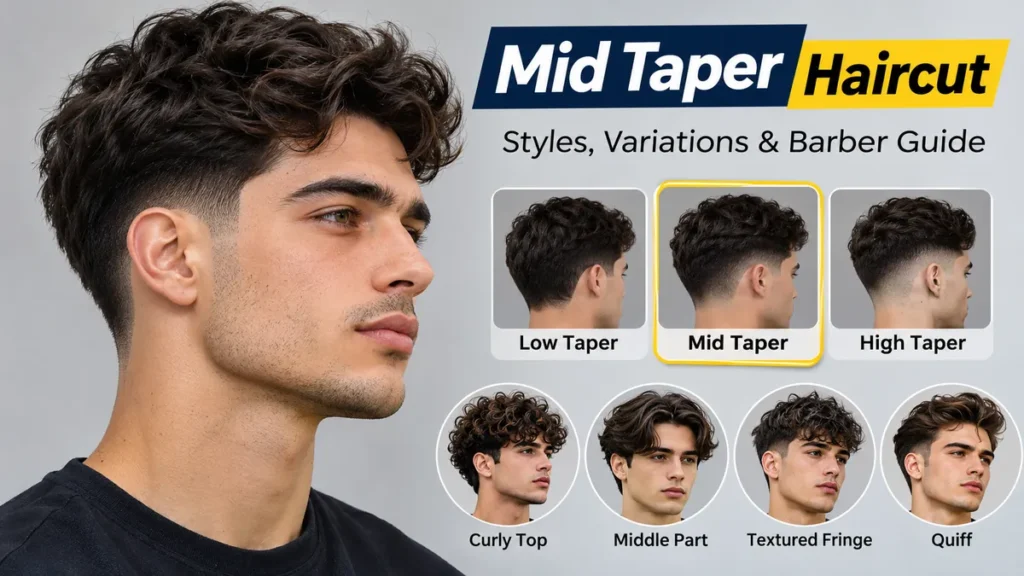
mid taper vs. Low Taper vs. High Taper
The primary difference between low, mid, and high tapers is how far upward the graduated section extends.
| Feature | Low taper | Mid taper | High taper |
|---|---|---|---|
| Starting area | Near the ears and lower hairline | Around the temples | Upper temple area |
| Contrast | Subtle | Moderate | More noticeable |
| Side volume | Most preserved | Balanced | Less preserved |
| Appearance | Understated | Clean and defined | Bold |
| Typical upkeep | 3–5 weeks | 2–4 weeks | 2–3 weeks |
These are general distinctions rather than fixed measurements. The final appearance also depends on the shortest guard length, the width of the blended area, and the hair left above it.
Low Taper vs. mid taper
A low taper keeps the graduated section close to the natural hairline around the ears and neck.
It is useful when someone wants a subtle cleanup without significantly changing the appearance of the sides.
A mid taper moves the blend higher toward the temples. This creates a clearer contrast and can reduce visible bulk around the sideburns.
Someone with thick hair that expands outward near the ears may prefer a mid taper because it creates a more defined outline.
However, a low taper is often the better starting point when maintaining maximum side coverage is the priority.
High Taper vs. mid taper
A high taper extends the graduated section farther upward, closer to the upper sides of the head.
This creates a stronger contrast between the top and the shorter hair below.
The mid taper leaves more weight through the sides, making the transition less dramatic.
For someone experimenting with tapered haircuts for the first time, a mid taper can provide a useful middle ground without committing to a particularly high blend.
Popular mid taper Haircut Styles
The taper itself controls the outline of the haircut. The hairstyle on top determines much of its overall character.
Several variations work particularly well with a mid-height taper.
1. mid taper Fade
The mid taper fade combines a gradual blend around the temples and neckline with a short finish near the hairline.
Some versions leave a small amount of hair at the bottom, while others use a skin-level finish.
It works well with short textured tops, waves, curls, and neatly styled hair.
For a softer appearance, ask for a guarded finish rather than a skin taper.
2. mid taper With Textured Fringe
A textured fringe combines a forward-styled top with clean, tapered sides.
The fringe may be straight, slightly messy, or broken into individual textured sections.
This variation works especially well for straight or wavy hair because the longer front provides movement while the taper keeps the perimeter controlled.
A small amount of matte styling clay or texture powder can help define the fringe without making it appear stiff.
3. mid taper With Curly Hair
Curly hair naturally creates volume, making a mid taper an effective way to define the hairstyle without removing its texture.
The barber shortens the hair around the temples and neckline while maintaining the curls above.
This creates a visible contrast between the fuller top and the cleaner edges.
For tighter curls or coily hair, preserving enough length near the upper sides helps prevent an abrupt change in shape.
A curl cream or lightweight leave-in conditioner can help maintain definition.
4. mid taper With Middle Part
The middle-part variation features longer hair divided near the center of the head.
The top falls toward either side, while the taper creates a clean transition around the temples and neck.
This style is particularly suitable for medium-length straight or wavy hair.
The front must be long enough to separate naturally into two sections. Hair that is too short may stand upward instead of forming the intended curtain shape.
For styling, begin with slightly damp hair, establish the part, and use a blow dryer to direct the roots. Taper Trends
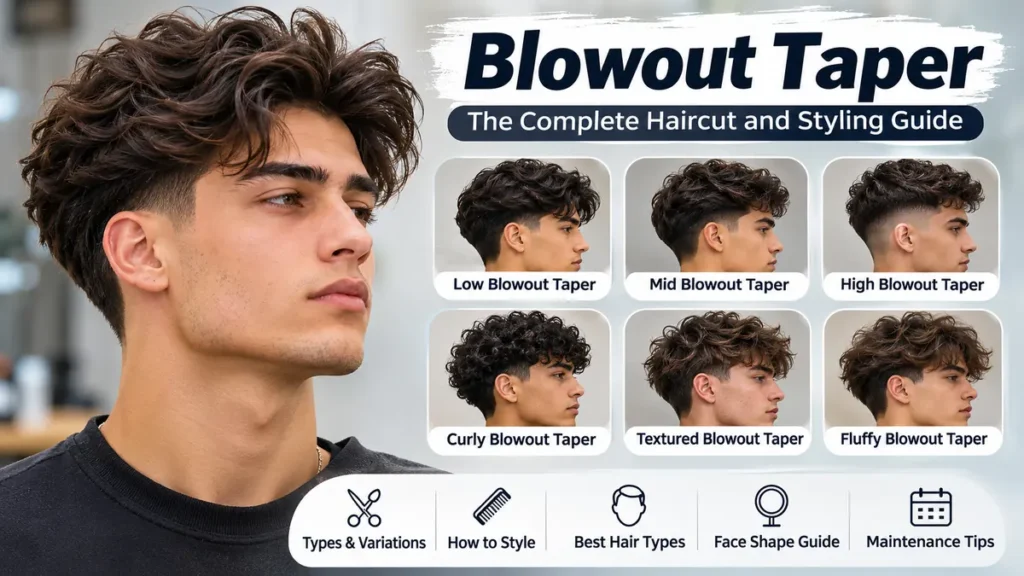
5. mid taper Blowout
A blowout combines noticeable volume on top with a tapered perimeter.
The hair is styled upward or backward to create height and movement.
This look works with straight, wavy, curly, and thick hair, although the styling technique differs by texture.
A blow dryer and lightweight volumizing product can help create the desired shape.
The barber should avoid removing too much weight from the upper sides because that can make the top appear disconnected.
6. mid taper With Buzz Cut
A buzz cut paired with a mid taper offers a short hairstyle with additional definition around the edges.
Most of the hair remains uniformly short, while the temples and neckline are blended into a shorter length.
The result is simple to style and requires little daily product.
However, the taper may become less noticeable as the hair grows, particularly when the shortest sections are cut very close to the scalp.
7. mid taper With Quiff
A quiff keeps extra length toward the front of the head.
The front hair is lifted upward and slightly backward, creating volume above the forehead.
A mid taper complements this shape by keeping the perimeter tidy without removing all the fullness from the sides.
The hairstyle can be worn with a natural matte finish or a more polished appearance.
8. mid taper With Side Part
A classic side part and mid taper create a structured hairstyle suitable for both casual and formal settings.
The hair is divided along a natural or deliberately defined parting.
One side is combed across or backward, while the taper maintains a clean outline around the ears and neck.
This combination is particularly useful for people who prefer a traditional haircut with a modern finish.
9. mid taper Mullet
A mid taper mullet preserves additional length at the back while keeping the temples and sideburns shorter.
The contrast creates a distinctive silhouette without necessarily requiring a full fade.
The transition should be planned carefully so the shorter sides connect visually with the longer rear section.
This style is especially adaptable to wavy and curly hair.
Does a mid taper Work With Different Hair Types?
Hair texture affects how a taper looks, how smoothly it blends, and how much daily styling it requires.
| Hair type | Recommended approach | Styling consideration |
|---|---|---|
| Straight | Soft mid taper with textured top | Add movement with matte product |
| Wavy | Mid taper with natural length | Enhance the existing wave pattern |
| Curly | Mid taper with fuller curls | Preserve curl definition |
| Coily | Controlled temple and nape taper | Maintain enough weight for shape |
| Thick | Mid taper with selective bulk removal | Avoid excessive thinning |
| Fine | Soft taper with moderate contrast | Avoid exposing too much scalp |
Straight Hair
Straight hair makes the graduated transition easy to see.
This can produce a precise, polished result, but uneven blending may also become more noticeable.
A barber may use clipper-over-comb techniques or intermediate guard lengths to soften visible lines.
Wavy Hair
Wavy hair adds natural movement to a mid taper.
A textured crop, fringe, or middle part can work well because the wave pattern creates visual interest above the cleaner sides.
Lightweight styling products usually help preserve movement better than heavy waxes.
Curly and Coily Hair
Curly and coily textures often create strong contrast between the fuller top and tapered edges.
The barber should account for curl shrinkage and the way the hair sits when dry.
Removing too much hair near the temples may change the overall shape more than expected.
Thick Hair
Thick hair can benefit from carefully reducing bulk around the sideburns and neckline.
However, a taper alone does not necessarily remove significant volume from the entire side panel.
If the hair feels excessively heavy above the ears, ask the barber to assess whether additional scissor work is needed.
Fine or Thin Hair
A softer mid taper may work better for fine hair than an aggressive skin finish.
Keeping slightly more length through the sides can reduce visible scalp contrast.
The ideal approach depends on hair density, growth direction, and the hairstyle on top.
Which Face Shapes Suit a mid taper?
A mid taper can complement many face shapes because the barber can adjust the height of the blend and the amount of hair retained through the sides.
The most flattering version is usually determined by the complete haircut rather than the taper alone.
Round Face
A round face may benefit from moderate height on top.
A textured quiff or slightly elevated crop can create a longer-looking silhouette.
Keeping the sides neat without making the upper section excessively wide helps maintain balance.
Oval Face
Oval faces generally accommodate a wide range of tapered hairstyles.
A mid taper can be paired with a fringe, side part, curly top, or buzz cut.
Hair texture and personal styling preferences are often more useful deciding factors than face shape alone.
Square Face
A square face typically has a defined jawline and relatively angular proportions.
A mid taper can complement these features without requiring an extremely short side profile.
Both textured and neatly combed top styles may work well.
Oblong or Long Face
For a longer face, retaining some fullness through the sides can help maintain visual balance.
An excessively tall quiff combined with very short sides may exaggerate facial length.
A mid taper with a moderate-length top or soft fringe is another option.
Heart-Shaped Face
A heart-shaped face often has a wider forehead and narrower lower face.
A mid taper with natural texture and controlled volume can help balance these proportions.
Avoiding an overly aggressive blend may be helpful when additional side fullness is desired.
Face-shape recommendations are styling guidelines, not strict rules. Individual head shape, hairline, density, and personal preference also matter. Treatwell
How to Ask Your Barber for a mid taper
A clear description is the easiest way to avoid confusion between a mid taper and a full mid fade.
Instead of requesting only the haircut name, explain the placement, shortest length, and hairstyle on top.
Step 1: Specify the Taper Height
Ask for the taper to begin around the middle of the temples.
Point to the approximate starting position if necessary.
This helps establish how high the graduated section should extend.
Step 2: Explain How Much Side Hair to Keep
Tell the barber whether you want the blend concentrated around the sideburns and neckline or extended across the sides.
For a traditional mid taper, request that the upper side panels remain relatively full.
This distinction matters because some barbers interpret the term as a broader fade.
Step 3: Choose the Shortest Length
Clipper guards determine how much hair remains after cutting.
Common guard lengths include:
| Guard | Approximate hair length |
|---|---|
| #0 | Varies by clipper; very close |
| #0.5 | 1.5 mm |
| #1 | 3 mm |
| #1.5 | 4.5 mm |
| #2 | 6 mm |
| #3 | 10 mm |
| #4 | 13 mm |
Guard measurements are approximate and may vary slightly by clipper manufacturer and blade system.
A #1 or #2 finish generally produces a softer appearance than a skin-level taper.
Step 4: Describe the Top
Specify whether the top should be shortened, textured, layered, or left at its current length.
You can also describe the intended style, such as a middle part, textured fringe, curly top, or quiff.
Step 5: Confirm the Neckline
The neckline may be naturally tapered, rounded, or squared.
A natural tapered neckline usually grows out more softly than a sharply outlined edge.
Example Barber Instructions
“I’d like a mid taper around the temples, sideburns, and neckline. Keep the upper sides fairly full, blend down to a number one guard, and leave enough length on top for a textured style. I don’t want a full mid fade around the head.”
Bringing photographs showing the side and back of the desired haircut can make the instructions even clearer. Jonny the Barber Williamsville+1
mid taper vs. Mid Fade: What Is the Difference?
Although these haircut names sound similar, they do not always describe the same result.
A mid taper generally keeps the shortening concentrated around the perimeter of the haircut.
A mid fade typically creates a broader transition across the middle portion of the sides and back.
| Characteristic | Mid taper | Mid fade |
|---|---|---|
| Main blending area | Temples, sideburns, nape | Wider sides and back |
| Side coverage | More preserved | More removed |
| Contrast | Usually moderate | Often stronger |
| Skin exposure | Optional | Optional |
| Overall effect | Controlled perimeter cleanup | More extensive graduated sides |
| Grow-out | Often softer | Contrast may become noticeable sooner |
One common misconception is that a taper must retain hair at the bottom while a fade must always reach bare skin.
In practice, barbers use these terms differently. A mid taper can finish at skin level, and a mid fade can finish above skin.
The most reliable distinction is therefore a combination of the blend’s location, its coverage, and its shortest length. barber.style+1
How to Maintain a mid taper Haircut
A mid taper requires relatively simple daily care, but the cleanest part of the haircut will gradually lose definition as the hair grows.
How Often Should You Get a Trim?
Many people refresh a mid taper approximately every two to four weeks.
The appropriate interval depends on hair growth, texture, and the desired level of sharpness.
Someone who prefers a very defined hairline may choose a shorter interval. Someone comfortable with a softer appearance may wait longer.
The top and perimeter do not necessarily need trimming at the same frequency.
For example, a longer middle-part hairstyle may retain its shape while the neckline and sideburns need attention.
Wash According to Your Hair and Scalp
Use shampoo according to scalp oiliness, product buildup, and hair texture.
There is no universal requirement to shampoo every day.
Conditioner can help maintain softness, particularly for longer, curly, or chemically treated hair.
Use the Right Styling Product
Different products create different finishes.
- Matte clay: Adds structure and texture to short or medium-length hair.
- Texture powder: Provides lightweight volume, especially for straight hair.
- Curl cream: Helps define curls and reduce frizz.
- Lightweight pomade: Creates a smoother, more controlled appearance.
- Sea salt spray: Adds texture but may feel drying on some hair types.
- Leave-in conditioner: Helps maintain moisture and manageability.
Begin with a small amount of product and add more only if needed.
Excessive product can make hair appear heavy or greasy.
Avoid Common Maintenance Mistakes
One frequent mistake is trying to recreate the taper at home without understanding the original blend.
Using a short clipper guard too high can create a visible line that is difficult to correct.
Other mistakes include cutting the neckline too far upward, overusing heavy styling products, and allowing the top to lose its intended shape.
For a precise refresh, professional blending is generally more reliable than attempting to reshape the entire taper yourself.
Advantages and Disadvantages of a mid taper
A mid taper offers several practical benefits, but it is not necessarily the ideal choice for every hairstyle.
Advantages
Versatility: It works with short crops, longer tops, curls, waves, and traditional side parts.
Balanced appearance: The haircut creates visible definition without necessarily removing large sections of side hair.
Adaptability: The barber can adjust the shortest guard, blend height, and neckline shape.
Manageable styling: Many short-top variations require only a few minutes of daily preparation.
Flexible grow-out: A softer taper can retain a presentable shape as it grows.
Disadvantages
Regular maintenance: Sharp edges and short gradients gradually become less defined.
Terminology differences: Barbers may interpret the same haircut name differently.
Blending sensitivity: Uneven transitions can be noticeable, especially on straight or fine hair.
Potential scalp exposure: Very short finishes may reveal more scalp than expected.
Top styling requirements: Longer quiffs, blowouts, and middle parts can require daily attention even when the taper itself is low maintenance.
Understanding these trade-offs makes it easier to choose the right variation.
Common mid taper Haircut Mistakes
Small communication and styling errors can significantly affect the finished haircut.
Asking for a Mid Fade Instead of a Mid Taper
The two cuts may remove different amounts of hair from the sides.
If you want to preserve upper-side coverage, make that preference explicit.
Choosing a Skin Finish Without Considering Contrast
A skin-level taper creates a sharper contrast than a #1 or #2 finish.
If you are unsure, begin with a longer guard. The barber can cut the hair shorter during the same appointment.
Ignoring the Back of the Haircut
A taper is visible from multiple angles.
The nape should complement the sideburns and the hairstyle on top.
A side-view reference photograph alone may not communicate the desired back shape.
Removing Too Much Bulk
Excessive thinning or cutting around the upper sides can disrupt the connection between the top and the taper.
This is particularly noticeable with longer curtains, curly tops, and blowouts.
Copying a Hairstyle Without Considering Hair Texture
A hairstyle photographed on thick, wavy hair may behave differently on fine, straight hair.
The barber may need to adjust the length, layering, or styling method to create a similar overall shape.
Is a mid taper a Good Haircut for Beginners?
A mid taper can be a practical introduction to modern tapered haircuts because it offers flexibility in both length and contrast.
Someone accustomed to traditional scissor cuts can begin with a conservative version that leaves more hair through the sides.
A person who prefers a sharper appearance can choose a shorter guard or a more pronounced blend.
For a first appointment, a useful approach is to request a mid-height taper with a #1 or #2 finish and preserve enough length above the ears.
This creates room for adjustments without immediately committing to a skin fade.
The haircut is also suitable for different age groups. The most important considerations are hair texture, preferred top style, maintenance expectations, and how much contrast feels comfortable.
Final Thoughts on the mid taper
The mid taper is a flexible haircut that combines a clean perimeter with a gradual transition between longer and shorter hair.
It sits between the subtle appearance of a low taper and the stronger contrast associated with higher tapers or broader fades.
Its versatility comes from the ability to combine the same basic taper with a textured crop, curly top, middle part, quiff, buzz cut, or classic side part.
For the best result, communicate three details clearly: where the taper should begin, how short it should finish, and how much hair should remain through the sides and top.
A clear description and suitable reference photographs will help your barber create a mid taper that complements your hair texture, head shape, and preferred style.