
Don Julio
Introduction
Don Julio stands as a globally renowned, premium expression of 100% blue agave tequila, a brand deeply rooted in Jalisco, Mexico, where the volcanic highlands deliver unmatched agave character since 1942.
Don Julio González built something rare: a meticulous production process that transcended regional tradition. Today, Diageo, the British-based multinational alcoholic beverage company, owned this legacy, honoring its founding philosophy across every expression.
Distilled, manufactured, and bottled by Tequila Don Julio, S.A. de C.V., the corporate facility in Colonia El Chichimeco, district of Atotonilco El Alto, remains central, though class-action litigation over agave authenticity has tested brand credibility.
History
Don Julio González-Frausto Estrada began his tequila journey at age 17 in 1942, founding distillery La Primavera — meaning Springtime — where disciplined agave cultivation and bottling became his lifelong pursuit, setting the foundation for vertical integration.
Under Tres Magueyes, he spent forty years perfecting his craft alongside friends and colleagues, including Marco Cedano, who joined as engineer and Master Distiller in 1983, then rose to Distillery Manager by 1985, elevating quality alongside the Gonzalez-Frausto family.
The 1999 venture with Seagram Company Ltd., involving agave plantations shared with the Funtanet family, Andrade Rivera Torres family, and Cuaik family, evolved into a global effort. Casa Cuervo acquired a 50 per cent stake for 78 million in 2003, before Diageo gained full control in November 2014 for 408 million, trading Old Bushmills Distillery while expanding licensing, patent holder rights, and worldwide popularity across Guadalajara, neighboring cities, and the United States.
Founder
Don Julio Gonzalez-Frausto Estrada, born 7 January 1925 in Atotonilco, Jalisco, shouldered early responsibility under his uncle José, who operated a tequila distillery, shaping the young man’s instinct for precision and tradition before he turned age 23.
He married Dorothea Garcia, and together they raised 9 children — a household as full of life as his agave fields. In 1942, he launched La Primavera, later expanding into Tres Magueyes in 1951, where Blanco, Reposado, and Añejo expressions first took form.
By the age of 70, the portfolio had grown to include Real and other variants that defined ultra-premium tequila. The founder passed from natural causes on 20 March 2012, leaving a legacy measured not in years but in every perfectly aged bottle.
Core Product Line
Blanco enters the glass unaged — crisp, clear, with fresh agave notes that make it the instinctive base for margaritas and cocktails, delivering purity that more aged expressions deliberately trade away for complexity.
Reposado, rested for eight months inside American white oak barrels, achieves a balance few manage: smooth agave presence layered with whispers of vanilla and dark chocolate, never overshadowing the core character that defines the house style.
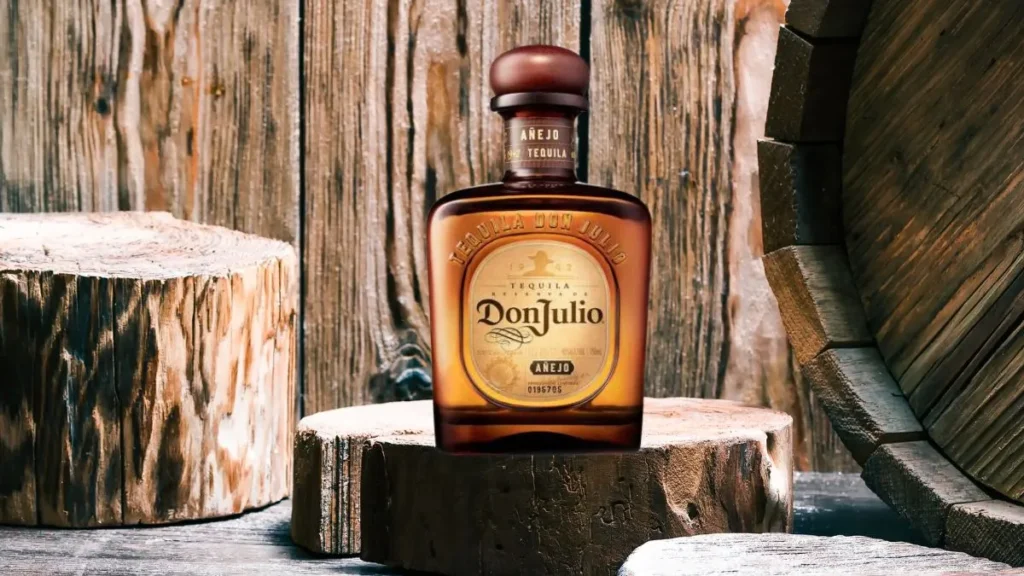
Añejo matures for 18 months in ex-bourbon barrels, building a rich, complex flavor profile that rewards patience. Don Julio 70, a Cristalino, takes filtered Añejo and restores the visual clarity of Blanco while preserving the barrel-aged smoothness of a full blend of aged tequila.
Ultra-Premium & Special Expressions
Don Julio 1942 occupies a distinct position in luxury tequila culture — an Añejo aged for 2½ years, delivering warm, sweet, oaky finish notes that have made it synonymous with high-end nightlife and milestone celebrations worldwide.
Primavera arrives as a limited release Reposado finished in European wine casks with macerated orange peel, producing a light, citrus-forward taste that challenges drinkers who assume aged tequila must lean dark and heavily structured.
Don Julio Real Extra Añejo has earned its standing through performance at international spirit ratings competitions, taking double gold medals in 2008 and 2011 at the San Francisco World Spirits Competition, plus a silver medal in 2012 — a record that separates reputation from real achievement.
Process
On the family estate in Atotonilco’s highland terrain, agave plants spend seven years reaching maturity before being harvested by hand — workers removing roots and spearlike leaves to reveal the dense piña, the core raw material of every bottle of tequila.
At the distillery, piñas are cut into equal sized pieces, loaded into brick ovens, and baked for several days before being crushed with water to extract agave juice. This liquid — essentially a sweet agave syrup — receives yeast to ferment through fermentation into an alcoholic agave beer.
Copper stills then distilled that beer into spirit, which moves into stainless steel tanks before ex-bourbon casks begin the aging process. The entire cycle — from cultivation through truck delivery to bottling — reflects the discipline of agave farming embedded into every stage.
FIFA World Cup
As official supporter of the FIFA World Cup, Don Julio launched a striking limited-edition line featuring gold-colored 1942 bottles sealed with distinctive malachite closures, blending athletic prestige with tequila’s luxury positioning in an unmistakable collector’s statement.
The collaboration signaled Don Julio’s deliberate expansion beyond the bar into cultural moments, using the World Cup’s global audience to reintroduce the 1942 expression to markets where premium tequila remained an emerging conversation.
Packaging alone rarely defines a brand, but the malachite-topped bottles became shelf centerpieces in key markets — proof that limited-edition design, when executed with restraint, can amplify a story that the liquid inside has already spent decades building.
Controversy
Casamigos and Don Julio have both faced class-action lawsuits in California, with plaintiffs citing RICO violations and demanding laboratory testing of agave content — an ongoing challenge that cuts directly at each brand’s claim to agave authenticity.
These legal battles reveal an uncomfortable industry truth: premium tequila pricing often outpaces regulatory scrutiny, and when consumers fund laboratory analysis independently, the results occasionally conflict with what producers have long printed on their labels without consequence.
For Don Julio, a brand whose entire identity rests on quality and transparent sourcing, authenticity litigation carries reputational weight that no marketing campaign fully neutralizes — making independent testing not just a legal matter but a long-term trust issue.



