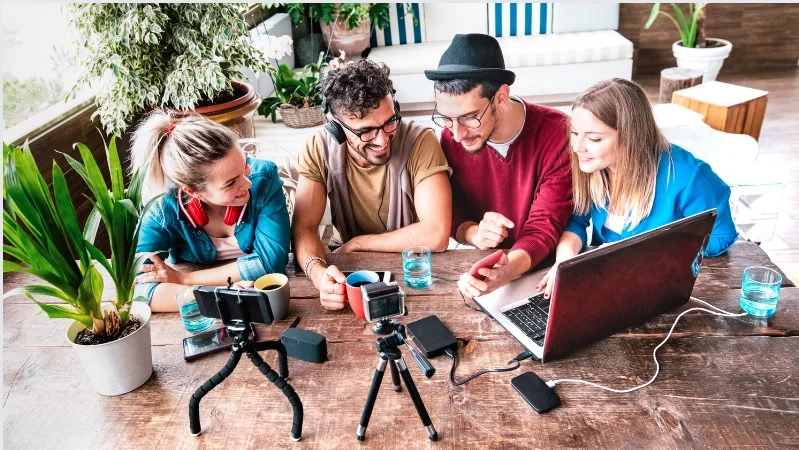
Studiossa represents a new model for how creative work happens — a purpose-built environment where artists, designers, and innovators share not just physical space but intellectual energy, collaborative opportunity, and the productive friction that comes from placing talented people with different disciplines in proximity. Operating as a dynamic space rather than a static facility, Studiossa functions simultaneously as a creative studio workspace, an artist collaboration hub, and a maker space art production environment. Understanding Studiossa requires examining the philosophy behind shared creative space, the specific community dynamics that make such environments productive, and the ways in which the right physical and social infrastructure amplifies individual creative output. Explore how digital art platforms for creative communities like this one reshape what’s possible for independent artists.
What Is Studiossa? Defining the Creative Studio Concept
Studiossa is more than a shared workspace — it is a carefully designed ecosystem for creative production and community. The concept draws from several established models: the traditional artist studio (individual focused production space), the co-working office (shared infrastructure with independent workers), the artists collective (community with shared artistic identity), and the design studio (collaborative project production). Studiossa synthesizes these models into something that serves the specific needs of visual artists, designers, and creative innovators rather than the knowledge workers for whom standard co-working spaces are typically optimized.
The physical environment of a space like Studiossa reflects its function: natural light in abundance, floor plans that allow both focused individual work and easy reconfiguration for collaborative projects, storage infrastructure for the physical materials that creative work requires, and shared equipment that individuals could not justify purchasing independently but that the collective can invest in and maintain.
The Philosophy of Creative Co-Working: Why Artists Thrive in Community
The case for creative co-working spaces like Studiossa rests on well-established observations about how creativity actually functions. Solo studio practice produces depth and focus. Community practice produces breadth, stimulation, and the specific creative benefits that only come from sustained exposure to other talented people working on different problems with different methods.
Research on creative clusters — the geographic concentrations of creative professionals that have characterized cities like Florence during the Renaissance, Paris in the early 20th century, and New York and London in various periods since — consistently shows that proximity and regular informal interaction between practitioners produce creative output that isolated work does not. The water-cooler conversations, the shoulder-surfing of a colleague’s screen, the off-hand comment about a material or technique — these informal exchanges generate ideas that scheduled meetings cannot manufacture.
Productive Friction in Creative Environments
One of the most valuable qualities of a well-functioning creative community space is productive friction — the creative discomfort produced when artists working in different media, with different aesthetic sensibilities and problem-solving approaches, encounter each other’s work regularly. A printmaker who sees a graphic designer’s color approach takes something back to their own practice. A sculptor whose spatial reasoning influences a textile artist’s dimensional thinking about fabric. These cross-pollinations happen spontaneously in good creative co-working environments and almost never happen in isolated studio practice.
Studiossa’s Role as an Artist Residency Model
The artist residency dimension of Studiossa’s model distinguishes it from purely commercial co-working. Traditional artist residencies provide time, space, and often financial support for artists to focus on creative production removed from the financial pressures of their ordinary life. Studiossa adapts this model to the contemporary urban context: providing community and shared infrastructure rather than requiring geographic relocation, making the benefits of residency-style focused creative work accessible to practicing artists who cannot or do not wish to leave their home base.
The residency model creates commitment and intentionality that casual co-working membership does not. Members who identify as Studiossa residents rather than merely studio renters bring a different quality of engagement — they invest in the community’s success, contribute to shared resources, and take responsibility for the culture of the space in ways that transient members do not. This self-selection toward commitment is one of the most important design features of the Studiossa model.
Tools, Equipment, and Shared Resources at Studiossa
The shared equipment model is one of the most practically compelling aspects of creative co-working spaces like Studiossa. Tools and equipment that would be financially inaccessible or impractical for an individual studio become viable when their cost is distributed across a community of users. Depending on the specific focus of a Studiossa space, shared resources might include:
- Large-format printing equipment for visual artists, photographers, and graphic designers
- Laser cutters and CNC routing equipment for makers working in wood, acrylic, and similar materials
- Professional photography equipment including studio lighting, backdrop systems, and product photography setups
- Kiln access for ceramicists and glass artists
- Professional-grade audio recording equipment for multimedia and sound artists
- High-specification computing hardware and software licenses for digital artists and designers
Building Your Creative Practice at Studiossa: Getting Started
New members joining Studiossa-type creative communities benefit from a deliberate approach to community integration rather than simply occupying space and hoping for productive connection. Active participation — attending community events, sharing work in progress with fellow members, offering skills and knowledge generously — accelerates the relationship building that generates the creative benefits community makes possible.
Practically, establishing a Studiossa creative practice involves: setting a regular schedule for studio attendance that creates predictable presence (visibility in the community is prerequisite to community connection); identifying fellow members whose work or interests overlap enough to generate productive conversation; and participating in shared critique or review formats that expose your work to external perspective on a regular basis. For creative inspiration that works independently, creative inspiration through personal notebooks remains an essential complement to community engagement.
Studiossa and the Broader Creative Economy
Creative co-working spaces like Studiossa play an increasingly recognized role in urban creative economies. Cities that support clusters of creative space — through favorable zoning, cultural grants, and infrastructure investment — develop stronger creative industry sectors than those that do not. Studiossa-type spaces function as incubators for creative businesses, as social infrastructure for creative communities that might otherwise disperse, and as visible demonstration of the creative vibrancy that attracts further talent to a place.
The economic value generated by creative clusters extends beyond the direct revenue of the businesses housed within them. Adjacent food and hospitality businesses benefit from the foot traffic creative communities generate. Property values in creative districts typically appreciate. The cultural vibrancy that creative communities produce attracts tourism and talent that benefits the broader local economy. Comparing Studiossa with platforms like ArtofZio contemporary creative fusion shows how different models serve overlapping creative community needs.
Conclusion: Why Studiossa Matters for Creative Practice
Studiossa matters because the conditions under which creative work flourishes — stimulating community, adequate space and tools, freedom from isolation, and proximity to high standards — are not the conditions that market economics naturally provides for most independent artists and designers. Creative co-working spaces like Studiossa deliberately engineer those conditions, making sustainable, productive creative practice accessible to practitioners who would otherwise face the choice between inadequate solo studio space and isolated home-based work. The community they create is not a byproduct but the primary product.