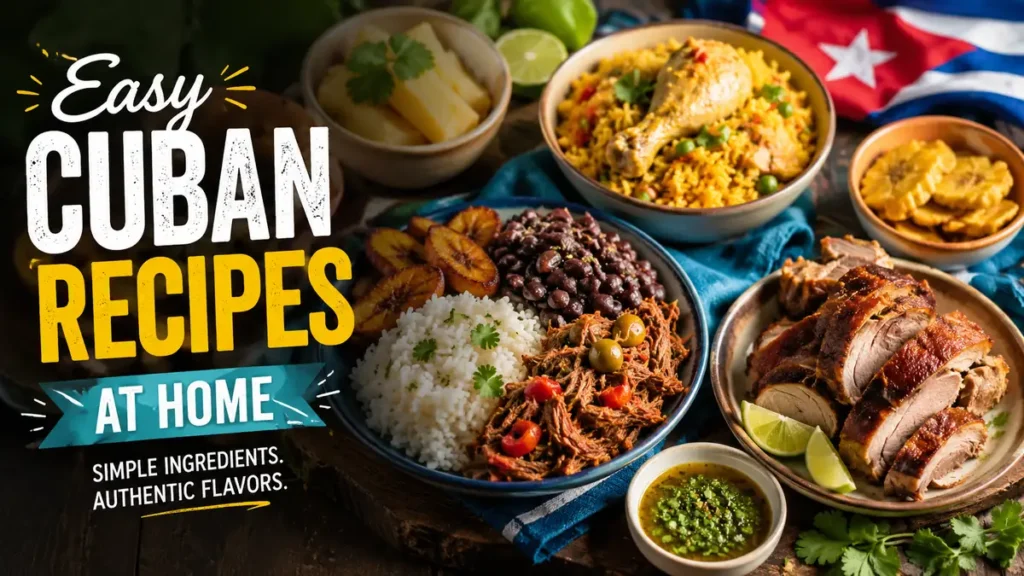
Cuban food has a way of making simple ingredients taste like they have been cooking all day. Garlic hits the pan, onions begin to soften, citrus brightens a marinade, and suddenly rice, beans, meat, and plantains become a meal worth gathering around.
The good news is that easy cuban recipes at home do not require a restaurant kitchen or a pantry packed with specialty ingredients. Many traditional favorites rely on affordable staples such as rice, black beans, onions, bell peppers, garlic, cumin, oregano, citrus, pork, chicken, and plantains.
Quick answer: The easiest Cuban dishes to make at home include picadillo, arroz con pollo, Cuban black beans, tostones, maduros, yuca con mojo, ropa vieja, and mojo chicken. Most depend on two important flavor foundations—sofrito and mojo—and can be served with white rice, beans, or plantains for a complete Cuban-style meal.
What Makes Cuban Home Cooking So Flavorful?
Cuban cuisine developed through several culinary traditions, including Spanish, African, Caribbean, and Indigenous influences. The result is food that tends to favor savory aromatics, citrus, slow-cooked meats, rice, beans, and plantains rather than overwhelming heat.
A typical Cuban kitchen uses familiar ingredients in smart combinations.
Garlic and onions provide the aromatic backbone. Green bell pepper commonly joins them in sofrito, while cumin and oregano add earthy warmth. Citrus brings acidity to marinades, especially for pork and chicken.
You will also see plenty of:
- Long-grain white rice
- Black beans
- Green and ripe plantains
- Yuca, also called cassava
- Tomatoes and tomato sauce
- Bay leaves
- Olives
- Pork and beef
- Chicken
- Orange and lime juice
Two preparations are especially useful when learning Cuban cooking: sofrito and mojo.
Sofrito: The Savory Starting Point
Sofrito is an aromatic mixture cooked before other ingredients are added. Cuban versions commonly revolve around onion, bell pepper, garlic, and seasonings, although family recipes naturally vary.
Think of it as the first layer of flavor rather than a finished sauce.
When making beans, stews, picadillo, or rice dishes, taking a few extra minutes to soften these aromatics can make a noticeable difference.
Mojo: Garlic and Citrus Working Together
Mojo provides a completely different type of flavor.
Traditional Cuban-style mojo is associated with sour or bitter orange, garlic, oil, and seasonings. When sour oranges are unavailable, orange and lime juice can provide a practical substitute.
Mojo works particularly well with pork, chicken, seafood, and yuca.
Once you understand sofrito and mojo, many Cuban recipes start feeling much less complicated.
1. Cuban Picadillo: The Best Place to Start
If you are completely new to Cuban cooking, start with picadillo.
It is fast, forgiving, and built around ingredients available in most supermarkets. Cuban picadillo is essentially seasoned ground beef cooked with aromatics and other savory additions. Traditional versions can vary considerably from one household to another.
A practical home version uses:
- 1 pound ground beef
- 1 small onion, diced
- 1 green bell pepper, diced
- 3 garlic cloves, minced
- 1/2 cup tomato sauce
- 1 teaspoon ground cumin
- 1 teaspoon dried oregano
- 1 bay leaf
- 1/3 cup green olives
- Salt and black pepper
- A small amount of olive oil
How to Make It
Heat a skillet over medium heat and brown the ground beef.
Remove excessive rendered fat if necessary, then add the onion and bell pepper. Cook until they begin to soften. Stir in the garlic and cook briefly without allowing it to burn.
Add tomato sauce, cumin, oregano, bay leaf, and olives.
Lower the heat and simmer for roughly 15 minutes, allowing the flavors to combine.
Serve with white rice and black beans.
Picadillo is particularly useful for busy cooks because it can be ready surprisingly quickly. SAVEUR’s Cuban picadillo recipe, for example, lists a total time of about 30 minutes.
Quick Takeaway: Make extra picadillo. Leftovers can become a filling for empanadas, stuffed peppers, or other meals the next day.
2. Easy Cuban Black Beans
A bowl of well-seasoned frijoles negros can turn plain rice into comfort food.
Cuban-style black beans commonly combine beans with onion, green pepper, garlic, cumin, oregano, and bay leaf. Some preparations use dried beans cooked slowly, while convenient weeknight versions start with canned beans.
Bon Appétit’s Cuban black-bean preparations demonstrate both the importance of aromatics and how canned beans can shorten cooking time considerably.
For an easy version, gather:
- 2 cans black beans
- 1 small onion
- 1/2 green bell pepper
- 3 garlic cloves
- 1 teaspoon cumin
- 1/2 teaspoon oregano
- 1 bay leaf
- 1 tablespoon olive oil
- Salt and black pepper
- A splash of vinegar, if desired
Sauté the onion and pepper until softened. Add garlic and seasonings, followed by the beans and some of their liquid.
Simmer uncovered for 20–30 minutes.
Mash a small spoonful of beans against the side of the pot and stir them back in if you want a thicker texture.
Can You Use Canned Black Beans?
Absolutely.
Dried beans offer more control over texture and seasoning, but canned beans are a sensible shortcut when the goal is an easy weeknight dinner.
Rinse them if your recipe calls for fresh liquid, or retain some bean liquid when you want a thicker, richer pot.
3. Arroz con Pollo: Chicken and Rice in One Pot
Few dishes make a more practical family meal than arroz con pollo.
Chicken and rice cook with peppers, aromatics, seasoning, and flavorful liquid, giving the rice a chance to absorb everything happening in the pot. Cuban family versions may also contain olives, capers, beer, peas, or pimientos.
SAVEUR notes that arroz con pollo appears in households throughout Latin America and highlights a Cuban-family-inspired version containing pimento-stuffed olives, capers, and lager.
Easy Home Method
Season chicken thighs with salt, pepper, cumin, and oregano.
Brown them in a heavy pot and transfer them temporarily to a plate.
In the same pot, sauté onion, bell pepper, and garlic. Stir in tomato sauce and rice, then add chicken broth.
Return the chicken to the pot.
Cover and cook gently until the rice is tender and the chicken is completely cooked through. Add peas or sliced pimientos near the end if you like.
The biggest mistake here is repeatedly lifting the lid and stirring the rice.
Give it time.
You want distinct, tender grains rather than something resembling risotto.
4. Quick Mojo Chicken
Traditional mojo is famous for its partnership with pork, but chicken gives you a faster weeknight option.
Make a simple marinade from:
- Fresh orange juice
- Fresh lime juice
- Plenty of garlic
- Oregano
- Olive oil
- Salt
- Black pepper
Combine everything and marinate chicken thighs before roasting, grilling, or pan-searing them.
Citrus and garlic are central to Cuban-style mojo, while traditional versions frequently use bitter orange.
If sour orange is unavailable, combining regular orange juice with lime is a useful home-kitchen workaround.
Serve mojo chicken with black beans and rice for one of the simplest easy cuban recipes at home when you want a complete dinner without spending hours at the stove.
5. Ropa Vieja Made Easier
Ropa vieja is one of Cuba’s best-known dishes: tender beef cooked until it can be pulled into long strands, then combined with a deeply savory sauce.
Its Spanish name translates to “old clothes,” referring to the shredded appearance of the beef.
Different recipes use different cuts. Flank steak is common, while chuck or brisket can also produce excellent results.
What Goes Into Ropa Vieja?
A straightforward version includes:
- Beef suitable for slow cooking
- Onion
- Bell peppers
- Garlic
- Tomato sauce or crushed tomatoes
- Cumin
- Oregano
- Bay leaf
- Green olives
- Beef broth
- Salt and pepper
Brown the beef first when possible.
Cook the onion and peppers until soft, add the remaining ingredients, then return the beef to the pot.
Cook gently until the meat pulls apart easily with forks.
Shred it and return it to the sauce so the strands absorb the cooking liquid.
Ropa vieja requires more time than picadillo, but most of that time is hands-off.
What Should You Serve With Ropa Vieja?
White rice, Cuban black beans, and plantains are classic companions. Yuca with mojo also works beautifully because its mild starchiness balances the rich beef.
6. Tostones: Crispy Green Plantains
Tostones prove you do not need a long ingredient list to make an interesting side dish.
They are made from green, unripe plantains, which are starchy rather than sweet.
Peel the plantain and slice it into thick rounds.
Fry the pieces briefly until they soften slightly. Remove them from the oil, flatten each piece, and fry again until crisp and golden.
Season immediately with salt.
That double-frying process creates the characteristic crisp exterior. Tostones appear widely alongside Cuban and other Caribbean meals.
Tostones vs. Maduros
The difference begins with ripeness.
Tostones use green plantains and are savory, firm, and crispy.
Maduros use very ripe plantains and become soft, sweet, and caramelized when fried.
They are not interchangeable, but both deserve space on the plate.
7. Maduros: Sweet Fried Plantains
Wait until your plantains become heavily spotted or nearly black before assuming they have gone bad.
For maduros, that is exactly what you want.
The fruit inside becomes softer and sweeter as it ripens.
Peel the ripe plantain, cut it diagonally into slices, and fry the pieces until deeply golden on both sides.
No elaborate seasoning is necessary.
Their sweetness is especially good alongside salty or savory dishes such as ropa vieja, roast pork, beans, and rice.
The contrast between sweet maduros and deeply savory shredded beef is one reason this pairing works so well.
8. Yuca con Mojo
Yuca is a staple worth learning if you enjoy Cuban and Caribbean cooking.
Also called cassava, yuca has a dense, starchy texture. Once cooked, it makes an excellent alternative to potatoes.
Simple Yuca con Mojo
Peel and cut fresh yuca, or use frozen peeled yuca for convenience.
Boil it in salted water until completely tender.
Meanwhile, prepare a garlic-citrus mixture with:
- Garlic
- Olive oil
- Lime or sour-orange juice
- Salt
- Thinly sliced onion, if desired
Drain the cooked yuca and spoon the mojo over it while everything is still warm.
That is basically the magic: mild, tender cassava underneath punchy citrus and garlic.
Yuca hervida con mojo is also a traditional accompaniment to dishes such as ropa vieja.
9. Weeknight Lechón-Style Mojo Pork
Traditional lechón asado deserves patience. Large cuts of pork develop exceptional flavor when marinated and roasted slowly.
For a Tuesday night, however, you can borrow the same flavor profile without roasting an entire pork shoulder.
Use pork tenderloin or pork chops and marinate them with:
- Orange juice
- Lime juice
- Garlic
- Oregano
- Oil
- Salt
- Pepper
Then roast, grill, or pan-cook the pork until it reaches a safe internal temperature.
You get the citrus-garlic character associated with mojo pork with considerably less cooking time.
For special occasions, a slow-roasted pork shoulder remains worth the extra effort. Mojo roast pork is a Cuban holiday classic, with the marinade providing both savory garlic and bright citrus flavor.
10. Moros y Cristianos: Black Beans and Rice Together
You may see black beans served over white rice, but Cuban cooking also includes versions where beans and rice cook together.
One familiar preparation is Moros y Cristianos.
The rice absorbs the seasoned bean liquid as it cooks, giving the finished dish its darker appearance and deeper flavor.
For a simplified version, sauté onion, green pepper, and garlic.
Add cumin, oregano, and bay leaf.
Stir in black beans, rice, and the appropriate amount of cooking liquid. Cover and cook until the rice is tender.
It is economical, filling, and useful alongside almost any Cuban-style protein.
Do not confuse every Cuban beans-and-rice preparation as exactly the same dish, however. Names, bean varieties, seasonings, and preparation methods can vary by region and family tradition.
11. Cuban Sandwich for Leftover Pork
Have roast pork left from yesterday?
That is not a problem. It is tomorrow’s lunch.
The Cubano, or Cuban sandwich, typically brings together Cuban bread, roast pork, ham, Swiss cheese, pickles, and mustard before being pressed until the exterior becomes crisp and the cheese melts.
It is an especially smart way to use leftover mojo pork.
Split the bread lengthwise, spread mustard inside, and layer the fillings evenly.
Close the sandwich and lightly butter the outside if desired.
Press it in a sandwich press or cook it in a heavy skillet. If using a skillet, place another heavy pan on top to flatten the sandwich.
Cook until the bread is crisp and the cheese has melted.
A proper Cubano is about balance. Too much meat makes it cumbersome; too much mustard overwhelms everything. You want salty pork and ham, creamy cheese, acidic pickles, and crisp bread in every bite.
Cuban sandwiches are among the classic dishes commonly included in Cuban recipe collections.
12. Cuban-Style Flan for Dessert
After garlic, citrus, pork, rice, and beans, something cool and sweet feels right.
Enter flan.
This caramel custard requires only a modest ingredient list but looks impressive when turned onto a serving plate.
A basic version uses:
- Granulated sugar for caramel
- Eggs
- Milk or a combination of milks
- Vanilla
First, melt sugar carefully until amber and pour the caramel into your baking dish.
Whisk the custard ingredients separately, pour them over the caramel, and bake gently in a water bath.
Cool completely before refrigerating.
When unmolded, the caramel flows over the custard and creates its own sauce.
Flan is a familiar dessert in Cuban recipe collections, alongside sweets such as guava pastries and natilla.
How to Build a Complete Cuban Meal at Home
You do not need to make six recipes for dinner to feel complete.
A simple formula works surprisingly well:
| Choose | Easy Option |
|---|---|
| Main | Picadillo, mojo chicken, ropa vieja, or roast pork |
| Rice | White rice or beans-and-rice |
| Beans | Cuban-style black beans |
| Plantain | Tostones or maduros |
| Starchy side | Yuca con mojo |
| Dessert | Flan |
For the easiest weeknight combination, make picadillo + white rice + black beans + maduros.
For a weekend dinner, try ropa vieja + rice + black beans + yuca con mojo.
For a family gathering, mojo roast pork + aromatic rice + black beans + plantains + flan makes a more substantial spread. Cuban holiday meals commonly combine mojo pork with seasoned rice and black beans.
Smart Shortcuts That Still Produce Good Cuban Food
Authentic flavor and practical home cooking do not have to fight each other.
Use Canned Beans When Time Is Short
Dried black beans are excellent, but canned beans can turn a long recipe into a manageable weeknight side.
Spend your effort on the aromatics instead.
Cook onion, pepper, and garlic properly before adding the beans. That extra five minutes matters more than opening an expensive jar of something labeled “Cuban seasoning.”
Keep Frozen Yuca Around
Fresh yuca requires peeling and preparation.
Frozen peeled yuca eliminates much of that work and is excellent for yuca con mojo.
Make Sofrito Ahead
Prepare a larger batch of your preferred sofrito and refrigerate or freeze portions.
You then have an instant head start on beans, rice dishes, stews, and picadillo.
Use Your Slow Cooker for Tough Beef
Ropa vieja benefits from long, gentle cooking.
A slow cooker lets you start it earlier in the day without standing over the stove.
Make Extra Rice
Cooked rice gives you an immediate base for leftover picadillo, black beans, roast pork, or chicken.
Sometimes the best meal-prep strategy is simply making twice as much of the boring part.
Common Mistakes When Making Cuban Food at Home
Simple recipes still have places where things can go wrong.
Rushing the Aromatics
Raw-tasting onions and garlic can make an otherwise good pot of beans taste unfinished.
Give your sofrito enough time to soften and develop flavor.
Burning Garlic
Garlic goes from fragrant to bitter quickly.
Add it after the onion and peppers have already started softening rather than throwing everything into a screaming-hot pan simultaneously.
Using the Wrong Plantain
This one causes plenty of disappointment.
For crispy tostones, buy green plantains.
For sweet maduros, buy very ripe plantains.
A yellow plantain caught somewhere in the middle will not give you the best version of either.
Expecting Cuban Food to Be Extremely Spicy
Cuban food can be deeply seasoned without necessarily being chile-hot.
Garlic, cumin, oregano, citrus, peppers, bay leaves, onions, olives, and slow cooking build flavor without requiring intense heat.
Skipping Acidity
Rich pork or beef can taste heavy without something bright to balance it.
That is why citrus-based mojo works so effectively.
Even a little lime, sour orange, or vinegar can sharpen an otherwise flat-tasting dish.
What Is the Easiest Cuban Recipe for a Beginner?
Start with Cuban picadillo.
It uses ground beef instead of a large slow-cooking cut, requires only one skillet, and can be completed relatively quickly. Pair it with white rice, and you already have a satisfying meal.
Your second recipe should probably be black beans.
Then learn maduros.
Once you can confidently make those three dishes, move on to arroz con pollo and mojo chicken before tackling longer preparations such as ropa vieja or slow-roasted pork.
That progression teaches the major patterns of Cuban home cooking without throwing too many techniques at you at once.
Can Cuban Recipes Be Prepared Ahead?
Many can, and several actually work particularly well as leftovers.
Ropa vieja can be cooked ahead and reheated gently in its sauce. Picadillo stores well for future lunches or dinners. Cooked black beans can be refrigerated or frozen; Bon Appétit specifically recommends scaling up Cuban-style black beans for freezing.
Mojo can also be prepared ahead, although raw meat marinades should always be handled separately from sauces intended for serving.
Rice is best when freshly cooked, while fried plantains generally have their best texture soon after cooking.
For meal prep, concentrate on the components that hold well: beans, shredded beef, picadillo, sofrito, and cooked pork.
Bringing Cuban Flavor Into Your Everyday Cooking
You do not need to reproduce an entire restaurant menu to enjoy easy cuban recipes at home.
Begin with the building blocks.
Keep garlic, onion, bell pepper, cumin, oregano, citrus, rice, and black beans around. Learn a simple sofrito. Make a citrusy mojo. Understand when to reach for a green plantain and when you need a nearly black ripe one.
Then build outward.
Picadillo gives you an easy first dinner. Arroz con pollo teaches one-pot cooking. Black beans become a dependable side. Tostones bring crunch, maduros bring sweetness, and yuca con mojo gives you another way to use that garlic-citrus combination.
When you have more time, let ropa vieja or mojo pork cook slowly and make the kitchen smell like dinner long before anyone sits down.
That is the practical appeal of Cuban home cooking: humble ingredients, strong foundational techniques, and food that tastes far more complicated than it needs to be.