
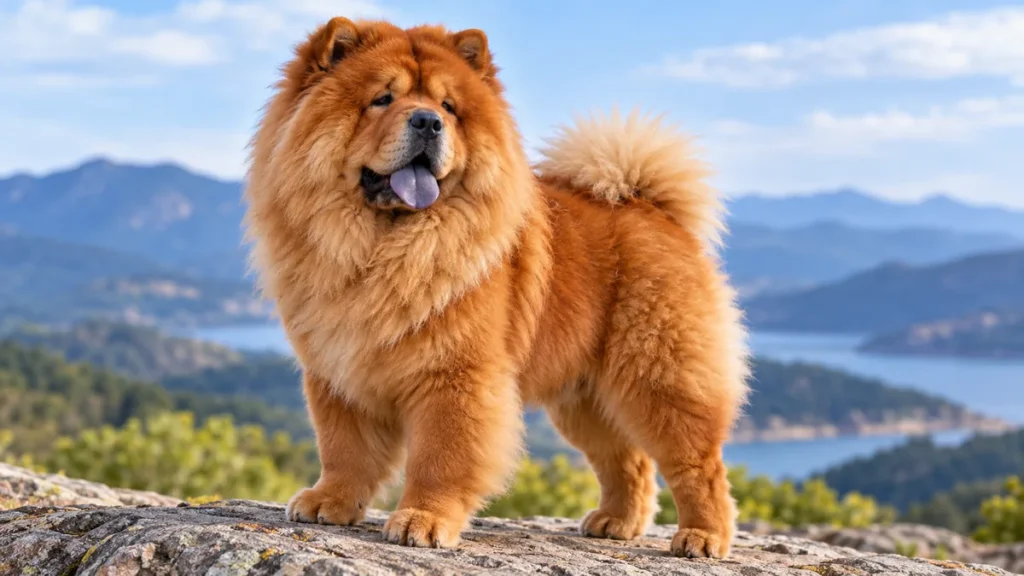
Few dog breeds are as instantly recognizable as the chow chow. With a lion-like mane, compact body, curled tail, deep-set eyes, and distinctive blue-black tongue, this ancient Chinese breed has an appearance all its own. But its personality is just as distinctive as its looks.
A chow chow is a medium-sized, powerfully built dog originating in China. The breed is known for independence, loyalty, dignity, and reserve around strangers. Adults typically stand about 17–20 inches tall and weigh roughly 45–70 pounds. Chow Chows require early socialization, consistent training, regular grooming, moderate exercise, and careful attention to breed-related health concerns. American Kennel Club
Understanding the breed before bringing one home matters. A Chow is not simply a fluffy companion that behaves like an oversized teddy bear. These dogs tend to think independently, value personal space, and often form particularly strong bonds with their family.
Chow Chow at a Glance
| Characteristic | Typical Chow Chow |
|---|---|
| Origin | China |
| Height | About 17–20 inches |
| Weight | About 45–70 pounds |
| Breed group | Non-Sporting (AKC) |
| Coat | Rough or smooth double coat |
| Common colors | Red, black, blue, cinnamon, cream |
| Temperament | Loyal, independent, reserved, intelligent |
| Exercise needs | Moderate |
| Grooming needs | High |
| Shedding | Moderate to heavy |
| Trainability | Intelligent but independent |
| Typical lifespan | Around 11–13 years |
| Distinctive feature | Blue-black tongue |
The American Kennel Club classifies the Chow Chow in its Non-Sporting Group, while the Fédération Cynologique Internationale classifies it among Asian Spitz and related breeds. The FCI identifies China as the breed’s country of origin. American Kennel Club
History and Origin of the Chow Chow
The Chow Chow has deep historical roots in China. The FCI breed standard describes the breed as having been known there for more than 2,000 years and notes its historical roles as both a guard dog and hunting dog. Fédération Cynologique Internationale
Over time, Chows performed several practical jobs. Historical accounts associate them with guarding, hunting, pulling, and companionship. PetMD places their history at least as far back as China’s Han Dynasty, which lasted from 206 BCE to 220 CE. PetMD
The breed eventually reached Europe. According to the FCI historical summary, Chow Chows made their way to England by the late eighteenth century but did not attract substantial attention in Britain until much later; several were exhibited at Crufts in 1925. Fédération Cynologique Internationale
This long working history helps explain the modern Chow’s personality. Independence, alertness, territorial awareness, and a tendency to make its own decisions are not unusual traits for the breed.
What Does a Chow Chow Look Like?
A Chow combines a sturdy frame with an unusually distinctive head and coat. Its appearance is frequently described as leonine, or lion-like.
Size and Build
Adult Chow Chows generally stand around 17–20 inches at the shoulder and weigh approximately 45–70 pounds, although individual dogs vary. American Kennel Club
They have compact, muscular bodies with tails carried over the back. Their movement is also unusual. The breed is known for a comparatively short, stilted gait related to its rear-leg structure. American Kennel Club
A responsible breeder should prioritize healthy, functional structure rather than exaggerating the features that make the breed visually dramatic.
The Famous Blue-Black Tongue
One of the easiest ways to recognize an adult Chow is its blue-black tongue.
Interestingly, Chow puppies are not necessarily born with a fully blue-black tongue. Puppies begin with pink tongues, and the darker pigmentation develops as they mature. American Kennel Club
The color comes from pigmentation and genetics. A naturally dark tongue is normal for the breed, whereas a sudden unexplained change in tongue color in a dog can have an entirely different medical significance. American Kennel Club
Rough vs. Smooth Chow Chow
There are two coat varieties:
Rough-coated Chow Chow: This is the familiar fluffy version, with abundant fur and a pronounced mane-like ruff around the head and shoulders.
Smooth-coated Chow Chow: The coat is shorter and lacks the same dramatic feathering, although it remains dense.
Both have a double coat. The smooth variety may look substantially less fluffy, but it is still unmistakably a Chow in structure and expression. The AKC recognizes both rough and smooth coats. American Kennel Club
Chow Chow Colors
Under the AKC standard, recognized colors include:
- Red
- Black
- Blue
- Cinnamon
- Cream
Red is perhaps the color most commonly associated with the breed, but it is far from the only one. American Kennel Club
Chow Chow Temperament and Personality
Appearance attracts many people to the Chow Chow, but temperament should determine whether the breed actually fits a household.
Chows are typically independent, intelligent, loyal, dignified, and reserved. They can develop extremely strong relationships with their people without constantly demanding physical affection.
That distinction is important.
A Chow that loves its owner may prefer lying nearby rather than climbing into their lap. Some dislike excessive handling or attention from unfamiliar people. PetMD notes that the breed often appreciates having its personal boundaries respected. PetMD
Are Chow Chows Aggressive?
Being reserved is not the same thing as being aggressive.
The breed standard describes the Chow as naturally discerning and reserved with strangers. A properly bred, trained, and socialized dog should not need to behave aggressively simply because someone unfamiliar is present. American Kennel Club
However, the breed’s guarding background and independent temperament mean that poor socialization can create serious management difficulties.
Owners should not wait until adulthood to introduce basic manners and controlled exposure to different environments.
A young Chow should gradually experience appropriate encounters with:
- Different people
- Friendly dogs
- Household sounds
- Vehicles
- Grooming and handling
- Veterinary examinations
- Different surfaces and environments
- Calm visitors to the home
The goal isn’t to force the dog to love everyone. It is to teach it that unfamiliar people, animals, places, and experiences do not automatically represent threats.
Are Chow Chows Affectionate?
Yes, but their affection can be understated.
Many Chows form close bonds with their household and may become particularly attached to one person. PetMD describes them as loyal while noting that they are not generally known for being extremely cuddly. PetMD
This makes expectations important.
Someone wanting an exuberant dog that enthusiastically greets every visitor may find a Chow’s reserved behavior frustrating. Someone comfortable with a quieter companion may appreciate it.
Are Chow Chows Good Family Dogs?
A properly socialized Chow Chow can become a devoted family companion, but this is not necessarily the easiest breed for every family.
The AKC notes that Chow Chows may be better suited to households with older children because they are not generally among the most playful or patient breeds. American Kennel Club
Children should also learn how to behave appropriately around the dog.
They should not:
- Climb on the dog
- Pull its fur or tail
- Disturb it while eating
- Corner it while resting
- Force hugs or physical contact
- Take toys or food away without adult guidance
Interactions between young children and dogs should always be supervised regardless of breed.
Can Chow Chows Live With Other Dogs?
They can, but compatibility should never be assumed.
Chows may be reserved around other dogs and can prefer having their own space. Dogs raised alongside compatible animals from puppyhood may adjust well, but individual temperament matters considerably. PetMD
The Chow Chow Club also warns that some Chows have strong hunting instincts and may have difficulty with smaller animals or dogs of the same sex. American Kennel Club
Careful introductions are therefore much safer than simply placing unfamiliar animals together and expecting them to establish their own relationship.
Training a Chow Chow
A Chow Chow is intelligent, but intelligence should not be confused with automatic obedience.
These dogs can understand what is being asked while still deciding whether they want to do it.
That independence is one reason experienced dog owners often find the breed easier to manage than complete beginners.
Start Training Early
Puppyhood is the ideal time to establish household rules.
Focus early training on practical behaviors such as:
- Responding to a name
- Walking calmly on a leash
- Sitting and waiting
- Accepting brushing and handling
- Remaining calm around visitors
- Entering a crate or designated resting area
- Leaving objects when asked
- Returning attention to the handler
Keep training sessions short enough to maintain interest.
PetMD recommends patient, consistent positive reinforcement, while the AKC similarly emphasizes early puppy training and socialization. American Kennel Club
Positive Reinforcement Works Better
Harsh physical corrections are particularly poor tools for an independent dog.
Instead, reward desirable behavior with things the individual dog values—food, praise, toys, access to an activity, or simply freedom to move forward.
Consistency matters more than confrontation.
If one family member allows a behavior and another punishes it, the dog receives an unclear message. Agree on household rules before the puppy arrives.
Recall Needs Special Attention
Owners should not assume a Chow will develop perfect off-leash reliability.
The Chow Chow Club specifically cautions that the breed can be unreliable when called and recommends keeping Chows leashed outside secure fenced areas. American Kennel Club
A securely enclosed space therefore provides a much safer environment for free movement.
Chow Chow Exercise Requirements
Despite their sturdy build, Chow Chows are not usually high-energy endurance dogs.
They still need daily physical activity, but endless running is unnecessary.
Exercise recommendations differ somewhat among veterinary and animal-welfare sources. PetMD suggests a couple of roughly 20-minute walks daily for many Chows, while PDSA gives a broader recommendation of around an hour of daily exercise, typically divided into multiple sessions. Individual requirements vary with age, health, weather, and conditioning. PetMD
A sensible routine might include walks, sniffing opportunities, brief training sessions, and controlled play.
Be Careful in Hot Weather
Heat deserves particular attention.
A Chow’s dense double coat can make hot conditions challenging, and PetMD also notes the breed’s relatively short muzzle as a factor that can increase overheating risk. PetMD
During warm weather:
- Walk during cooler parts of the day.
- Provide constant access to fresh water.
- Avoid strenuous midday exercise.
- Provide shade and a cool indoor environment.
- Watch closely for signs of overheating.
- Never leave the dog inside a parked vehicle.
The FCI standard itself states that excessive coat should not interfere with activity or cause distress in hot weather. Fédération Cynologique Internationale
Chow Chow Grooming and Shedding
This is one area where prospective owners should be realistic.
The Chow Chow is a high-maintenance grooming breed, particularly in its rough-coated form.
Its dense double coat needs regular brushing to remove loose undercoat, prevent tangles, and reduce matting. Shedding occurs throughout the year and can become considerably heavier during seasonal coat changes. PetMD
How Often Should You Brush a Chow Chow?
Recommendations vary depending on coat type and individual condition.
The AKC recommends brushing at least twice weekly, while PetMD recommends approximately every other day. Some Chows—especially rough-coated dogs during heavy seasonal shedding—benefit from more frequent grooming. American Kennel Club
The important part is brushing thoroughly rather than simply passing a brush over the outer coat.
Pay particular attention to areas prone to tangles, including:
- Behind the ears
- Around the neck
- Legs
- Tail
- Dense undercoat
- Mane or ruff
A professional groomer familiar with double-coated breeds can be useful, especially during seasonal shedding.
Bathing
Bathing requirements depend on lifestyle, skin condition, and coat cleanliness. The AKC suggests roughly monthly bathing as part of routine care, while individual dogs may need different schedules. American Kennel Club
Use products formulated specifically for dogs and dry the dense coat thoroughly.
Persistent redness, odor, itching, hair loss, sores, or flaky skin should not simply be treated as a grooming problem. A veterinarian can determine whether allergies, infection, parasites, or another condition is involved.
Chow Chow Health Problems
No individual Chow is guaranteed to develop a particular disease, but the breed has recognized health concerns prospective owners should understand.
Hip and Elbow Problems
Hip and elbow dysplasia involve abnormal joint development and can contribute to pain, stiffness, reduced mobility, and arthritis.
When obtaining a puppy from a breeder, ask for documented health-screening results rather than relying on verbal assurances that the parents “look healthy.”
PetMD recommends checking that breeding dogs have undergone appropriate evaluation for issues including hips, thyroid, knees, and eyes. PetMD
Entropion and Eye Problems
Entropion occurs when the eyelid rolls inward, allowing hair or eyelashes to irritate the surface of the eye.
Signs may include:
- Excessive tearing
- Redness
- Squinting
- Eye discharge
- Rubbing at the face
- Visible discomfort
The Chow Chow Club warns that untreated entropion can seriously damage the eye, making veterinary assessment important when symptoms appear. American Kennel Club
The UK’s Kennel Club has also specifically referenced eyes being free from entropion in amendments to its Chow Chow breed standard. The Kennel Club
Skin and Coat Issues
Dense fur can conceal developing skin problems.
Regular grooming gives owners an opportunity to check for lumps, irritation, parasites, hot spots, wounds, and unusual hair loss. Skin folds should remain clean and dry because trapped moisture can contribute to irritation or infection. PDSA
Weight Management
A thick coat can make changes in body condition difficult to see.
Owners should learn to assess body condition by touch as well as appearance. Maintaining an appropriate weight reduces unnecessary stress on joints and contributes to general health.
Food quantity should be based on the dog’s age, activity level, body condition, health, and the calorie density of its diet—not simply the serving suggestion printed on a bag.
How Long Do Chow Chows Live?
The lifespan of an individual dog depends on genetics, veterinary care, nutrition, weight, environment, and other factors.
The American Kennel Club lists the Chow Chow at approximately 11–13 years in its overview of canine longevity. American Kennel Club
Preventive care can include regular veterinary examinations, appropriate vaccination and parasite-control plans, dental care, healthy weight management, suitable exercise, and early investigation of unusual symptoms.
No care routine can guarantee a particular lifespan, but detecting health problems early can make a meaningful difference to quality of life.
Feeding a Chow Chow
There is no single diet that is ideal for every Chow.
A complete, balanced diet appropriate to the dog’s life stage is the foundation. Puppies, adults, seniors, highly active dogs, and dogs with medical conditions can have very different nutritional requirements.
Rather than choosing food based on marketing terms alone, focus on:
- Appropriate nutritional adequacy
- Suitable calorie intake
- Reliable manufacturing standards
- Your dog’s body condition
- Veterinary recommendations when medical needs exist
Treats should also count toward daily calorie intake.
Sudden weight gain or loss deserves attention, especially when food intake has not changed.
Is a Chow Chow Hypoallergenic?
No.
Chow Chows shed their dense double coats and are not generally considered hypoallergenic. PetMD notes year-round shedding with heavier seasonal shedding in spring and fall. PetMD
People with dog allergies should spend time around the breed before committing to ownership. Allergic reactions involve proteins found in sources such as dander and saliva, so simply controlling visible fur does not guarantee an allergy-free home.
Can a Chow Chow Live in an Apartment?
Potentially, yes.
Chows are not typically hyperactive dogs, and their relatively calm indoor behavior can make apartment living possible when their needs are met. The AKC notes that the breed can adapt to different environments. American Kennel Club
The bigger considerations are management.
An apartment Chow still requires regular walks, mental stimulation, socialization, grooming, reliable leash handling, and an effective strategy for keeping cool during hot weather.
Shared elevators, narrow hallways, neighbors, children, and unfamiliar dogs can also create frequent close encounters. Early socialization and good leash manners become especially valuable in these environments.
Is a Chow Chow Good for First-Time Owners?
A first-time owner can successfully raise a Chow, but the breed is generally considered more challenging than many beginner-friendly companion dogs.
The combination of independence, guarding tendencies, grooming requirements, and reserved social behavior requires consistency.
Both the AKC and PetMD suggest that Chows tend to be better suited to experienced owners. American Kennel Club
A committed beginner should be prepared to work with a qualified reward-based trainer and learn about canine body language before problems emerge.
Experience helps, but preparation and responsible management matter too.
What to Look for in a Chow Chow Puppy
A puppy’s appearance should not be the only consideration.
If purchasing from a breeder, ask about:
- Health testing of both parents
- Temperament of the parents
- Veterinary records
- Puppy socialization
- Living conditions
- Breed-specific health history
- How puppies are matched with homes
- What support is available after purchase
Responsible breeders should be willing to discuss weaknesses and health risks within the breed rather than presenting their dogs as completely free of potential problems.
PetMD specifically recommends checking for documented screening of breeding dogs for relevant hip, thyroid, knee, and eye concerns. PetMD
Meeting the mother, when possible, can also provide useful information about temperament and condition.
For rescued Chows, complete genetic and parental records may not be available. In that situation, obtain as much medical and behavioral history as possible and arrange a veterinary examination after adoption.
Common Mistakes Chow Chow Owners Make
The most common problems often begin with expectations.
Choosing the Breed Only for Its Appearance
The lion-like coat is impressive, but appearance is not a lifestyle.
Anyone considering the breed needs to be comfortable with grooming, shedding, independent behavior, training, and socialization.
Skipping Early Socialization
A naturally reserved dog does not benefit from being isolated during puppyhood.
Controlled positive exposure helps a Chow learn how to respond calmly to ordinary life.
Expecting Automatic Obedience
Chows can be intelligent without being eager to repeat commands endlessly.
Short, purposeful training sessions usually make more sense than repetitive drills.
Allowing Unrestricted Off-Leash Freedom
Independent dogs with inconsistent recall can quickly place themselves in dangerous situations. Secure fencing and appropriate leash use are safer choices. The breed club specifically cautions against allowing Chows off leash outside fenced areas. American Kennel Club
Neglecting the Undercoat
A coat can look tidy on the surface while becoming tangled closer to the skin.
Regular hands-on grooming lets you find mats and skin problems earlier.
Ignoring Heat
Heavy fur plus warm weather requires active management. Exercise should be adjusted to conditions rather than following the same routine regardless of temperature.
Who Is the Chow Chow Best Suited For?
A Chow Chow may fit someone who appreciates a dog that is relatively calm, dignified, independent, loyal, and comfortable without constant attention.
A suitable owner should also be prepared for substantial grooming and ongoing training.
The breed can work particularly well in a household that provides:
- Consistent rules
- Early socialization
- Respectful handling
- Daily exercise
- Mental stimulation
- Regular coat maintenance
- Secure outdoor management
- Routine veterinary care
It may be a more difficult fit for someone wanting an effortlessly social dog, minimal grooming, highly reliable off-leash obedience, or a companion that constantly seeks physical affection.
Final Thoughts on the Chow Chow
The chow chow stands apart from most companion breeds. More than 2,000 years of history have produced a dog with unmistakable physical features and an equally distinctive temperament. Its blue-black tongue, lion-like appearance, curled tail, dense double coat, and reserved personality make the breed difficult to confuse with anything else. Fédération Cynologique Internationale
Living successfully with one means appreciating the dog behind that dramatic appearance. Early socialization, patient positive-reinforcement training, secure handling, regular grooming, appropriate exercise, heat awareness, and preventive veterinary care are central to responsible ownership.
For the right household, the Chow’s independence is not a flaw that needs to be trained away. It is part of what defines the breed. Understanding that character before bringing a Chow home gives both dog and owner a much better foundation for a stable, rewarding relationship.


